
Abcam and TTP Labtech collaborate to develop sol-R reagent kits
.jpg)
Assay-ready kits will incorporate fully-validated, industry-leading recombinant antibody technology for high throughput research.
TTP Labtech and Abcam has announced a collaboration to further develop reagent kits for the quantification of secreted proteins in multiplexed screening assays.
Following the successful launch last year of sol-R coded beads, TTP Labtech is working with Abcam to meet customer needs by developing assay ready kits which enable researchers to deliver data driven decisions faster and with confidence. The sol-R reagent kits will offer Abcam’s highly validated and quality assured antibodies including recombinant antibody pairs, combined with the reliability of sol-R coded beads and mirrorball fluorescence cytometry technology from TTP Labtech for sample analysis.
Joby Jenkins, director – product strategy, TTP Labtech, commented: “Our sol-R coded beads are designed for secreted protein quantification in multiplexed no-wash immunoassay screens. Working with Abcam on the development of the sol-R reagent kits enables us to combine their advanced antibody technology and reagent expertise with our sol-R bead technology to provide convenient off-the-shelf kits. Since the kits are validated on TTP Labtech’s mirrorball plate-based fluorescent cytometer, repeated wash steps associated with traditional sandwich ELISA’s are no longer necessary, thereby significantly reducing assay times, while delivering data integrity.”
John Baker, Senior Vice President Portfolio and Business Development, at Abcam, said: “The integration of Abcam’s high quality antibody technology with TTP Labtech’s sol-R Reagents will deliver reproducibility, quality and efficiency to life science researchers, accelerating their research. The new kits have been designed for researchers carrying out high-throughput immunoassays including drug discovery in biotech, pharma and contract research organisations.”
Related News
-

News Pharmaceutical Supply Chain People Moves
The latest appointments, promotions, and structural changes across the pharmaceutical supply chain.
-

News Merck KGaA to buy US biotech SpringWorks for US$3.9 billion
The German multinational pharmaceutical company Merck KGaA have signed a deal to buy US biotech company SpringWorks Therapeutics at an equity value of US$3.9 billion in a move to add rare cancer therapeutics to their pipelines.
-

News Cassava Sciences halts Alzheimer's drug trial after limited progress
Cassava Sciences have drawn a close to their investigations and development of the drug simufilam, which they intended to be used for the treatment of Alzheimer’s disease.
-
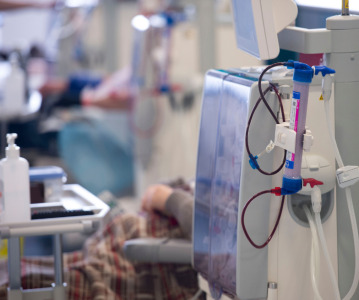
News US FDA adds haemodialysis bloodlines to devices shortage list
On March 14, 2025, the US FDA published an open letter to healthcare providers citing continuing supply disruptions of haemodialysis bloodlines, an essential component of dialysis machines.
-

News Vertex Pharmaceuticals stock jumps as FDA approves non-opioid painkiller
UK-based Vertex Pharmaceuticals saw their stock shares soar as the US FDA signed off on the non-opioid painkiller Journavx, also known as suzetrigine, for patients with moderate to severe acute pain, caused by surgery, accidents, or injuries.
-
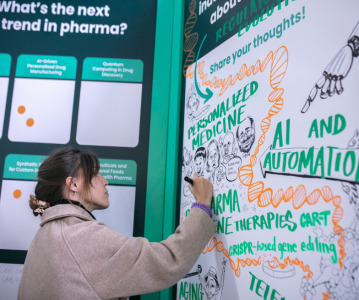
News Lessons from CPHI Milan 2024: Sunny Intervals for Pharma Manufacturing?
As the 2024 CPHI conference wrapped up in Milan, we caught up with L.E.K. Consulting – a global strategy consulting firm with deep expertise in pharma manufacturing – to discuss evolving market perspectives and business outlook. -
News US BIOSECURE Act passed by US House of Representatives
The controversial act, which has already impacted several foreign companies operating in the US, was passed by the House of Representatives on September 9, 2024. It is now headed for the US Senate before it can be signed into law by President Joe Biden... -
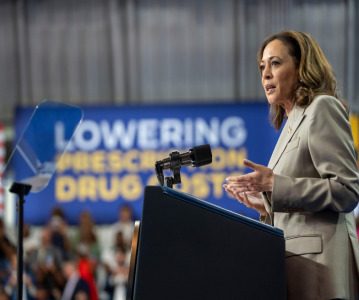
News Drug prices agreed upon as part of the US Inflation Reduction Act
The Inflation Reduction Act brought into constitution by the Biden administation in 2022, which proposed a drug price negotiation between the government and pharmaceutical companies, has reached it's first agreement.