
Aesica Successful?ly Completes the Validation of its High Capacity Manufactur?ing Facility at Queenborou?gh, UK Site
Aesica, the global pharmaceutical contract development and manufacturing organisation (CDMO), has announced that its High Capacity Manufacturing Facility has been successfully validated for commercial production. $45m (USD) has been invested at its Queenborough, UK site.
With the completion of this new facility, Aesica has expanded the commercial production of a solid dose medication used in treating one of the world’s most common lifestyle diseases — Type 2 diabetes in adults. The solid dose product has global sales and is set for worldwide export.
The purpose built facility is capable of producing in excess of 1 billion tablets per annum and designed with future expansion in mind, it is expected the facility will more than double its current capacity to produce more than 2.5 billion tablets a year on expansion.
The facility provides a 10,000 m2 expansion to the existing Queenborough site and has a dedicated workforce of 55 technicians, with future expansion plans increasing the staffing level to more than 100.
The new facility is an advanced unit which contains highly technical and specialist equipment including state-of-the-art spray granulators, coaters, tablet presses, powder handling systems and large capacity blenders.
Dr Robert Hardy, CEO of Aesica Pharmaceuticals commented: “The validation of this facility for commercial production is a major milestone for the company and brings to fruition what has been a significant investment. Aesica is already a major exporter of finished dose products and the investment in this facility reflects the continued growth in export demand. This state-of-the-art facility will allow us to manufacture a high quality product used to treat one of the world’s most prevalent diseases and has the capability to double its capacity in the future, representing an expanding revenue stream for Aesica.”
Related News
-

News Pharmaceutical Supply Chain People Moves
The latest appointments, promotions, and structural changes across the pharmaceutical supply chain.
-

News Merck KGaA to buy US biotech SpringWorks for US$3.9 billion
The German multinational pharmaceutical company Merck KGaA have signed a deal to buy US biotech company SpringWorks Therapeutics at an equity value of US$3.9 billion in a move to add rare cancer therapeutics to their pipelines.
-

News Cassava Sciences halts Alzheimer's drug trial after limited progress
Cassava Sciences have drawn a close to their investigations and development of the drug simufilam, which they intended to be used for the treatment of Alzheimer’s disease.
-
News US FDA adds haemodialysis bloodlines to devices shortage list
On March 14, 2025, the US FDA published an open letter to healthcare providers citing continuing supply disruptions of haemodialysis bloodlines, an essential component of dialysis machines.
-
News Vertex Pharmaceuticals stock jumps as FDA approves non-opioid painkiller
UK-based Vertex Pharmaceuticals saw their stock shares soar as the US FDA signed off on the non-opioid painkiller Journavx, also known as suzetrigine, for patients with moderate to severe acute pain, caused by surgery, accidents, or injuries.
-
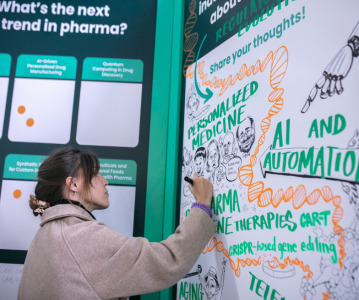
News Lessons from CPHI Milan 2024: Sunny Intervals for Pharma Manufacturing?
As the 2024 CPHI conference wrapped up in Milan, we caught up with L.E.K. Consulting – a global strategy consulting firm with deep expertise in pharma manufacturing – to discuss evolving market perspectives and business outlook. -
News US BIOSECURE Act passed by US House of Representatives
The controversial act, which has already impacted several foreign companies operating in the US, was passed by the House of Representatives on September 9, 2024. It is now headed for the US Senate before it can be signed into law by President Joe Biden... -
News Drug prices agreed upon as part of the US Inflation Reduction Act
The Inflation Reduction Act brought into constitution by the Biden administation in 2022, which proposed a drug price negotiation between the government and pharmaceutical companies, has reached it's first agreement.