
Applied Drug Delivery Institute Recognises Tomorrow's Life Science Innovators in Global Awards
The Catalent Applied Drug Delivery Institute and the American Association of Pharmaceutical Scientists (AAPS) have announced the winners of the “Global Academic Competition for Life Science Leaders of Tomorrow.”
The competition aims to identify emerging scientific talent, foster drug delivery education and reward academic excellence. The four winning entries, chosen from leading US and international European universities with graduate programs in pharmaceutical science, each receive $2000 (USD), a complimentary, one-year membership to the AAPS, and the potential opportunity to have their review published in a peer-reviewed journal.
The 2015 winners are:
• Marius Hittinger and Nicole Schneider-Daum from Helmholtz-Institute for Pharmaceutical Research Saarland, for their submission “Cell And Tissue-Based in vitro Improving the Development of Oral Inhalation Drug Products”
• Mania Dorrani and Bozena Michniak-Kohn of Rutgers University for “Topical siRNA Delivery: Challenges and Prospects”
• Harini Venkata Krishnan and Shilpa Sant from University of Pittsburgh for “Three Dimensional Cell Cultures: Opportunities for Drug Discovery and Development” and;
• Zhijian He, Daria Alakhova, Alexander V. Kabanov University of North Carolina at Chapel Hill for “Nanoformulations of Taxanes.”
“Our goal, for the competition, and for the Institute itself, is to foster education, collaboration and adoption of innovative drug delivery technologies to develop better treatments for patients,” commented Sharon Johnson, Catalent’s Senior VP, Quality, Product Development & Regulatory Affairs. “The standard of entries in this year’s competition was exceptional. We congratulate all the winners and look forward to sharing their reviews with the wider drug delivery community.”
Established in 2012, the Catalent Applied Drug Delivery Institute employs a multi-tiered approach to accelerate the adoption of advanced drug delivery technologies through industry and academic collaboration, research, education, and the sharing of information. In June 2014, the Institute created the Non-Invasive Macro-Molecule Drug Delivery Consortium (NMDC) and established a number of working groups looking at alternative delivery routes to injection for biologics and other large molecule therapeutics. The working groups include oral, pulmonary/nasal, ocular and transdermal delivery and welcome new members who wish to support innovation in non-invasive drug delivery.
Related News
-

News Pharmaceutical Supply Chain People Moves
The latest appointments, promotions, and structural changes across the pharmaceutical supply chain.
-

News Merck KGaA to buy US biotech SpringWorks for US$3.9 billion
The German multinational pharmaceutical company Merck KGaA have signed a deal to buy US biotech company SpringWorks Therapeutics at an equity value of US$3.9 billion in a move to add rare cancer therapeutics to their pipelines.
-

News Cassava Sciences halts Alzheimer's drug trial after limited progress
Cassava Sciences have drawn a close to their investigations and development of the drug simufilam, which they intended to be used for the treatment of Alzheimer’s disease.
-

News US FDA adds haemodialysis bloodlines to devices shortage list
On March 14, 2025, the US FDA published an open letter to healthcare providers citing continuing supply disruptions of haemodialysis bloodlines, an essential component of dialysis machines.
-

News Vertex Pharmaceuticals stock jumps as FDA approves non-opioid painkiller
UK-based Vertex Pharmaceuticals saw their stock shares soar as the US FDA signed off on the non-opioid painkiller Journavx, also known as suzetrigine, for patients with moderate to severe acute pain, caused by surgery, accidents, or injuries.
-
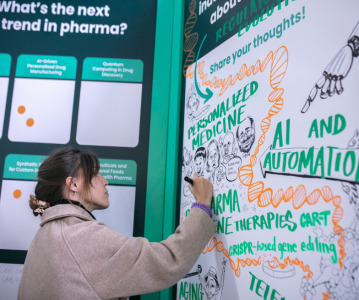
News Lessons from CPHI Milan 2024: Sunny Intervals for Pharma Manufacturing?
As the 2024 CPHI conference wrapped up in Milan, we caught up with L.E.K. Consulting – a global strategy consulting firm with deep expertise in pharma manufacturing – to discuss evolving market perspectives and business outlook. -

News US BIOSECURE Act passed by US House of Representatives
The controversial act, which has already impacted several foreign companies operating in the US, was passed by the House of Representatives on September 9, 2024. It is now headed for the US Senate before it can be signed into law by President Joe Biden... -
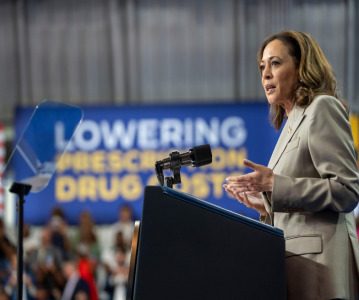
News Drug prices agreed upon as part of the US Inflation Reduction Act
The Inflation Reduction Act brought into constitution by the Biden administation in 2022, which proposed a drug price negotiation between the government and pharmaceutical companies, has reached it's first agreement.