
Are Mega M&As Back in Pharma?

Ranjith Gopinathan, Life Sciences Programme Manager at Frost & Sullivan, comments on the Novartis–GSK deal.
“The pharmaceutical industry is witnessing a new wave of mergers and acquisitions activities, especially mega M&As. Big pharma companies have historically been fighting, albeit with little success, on various issues such as patent expiry of blockbuster molecules, regulatory hurdles, generics competition, under utilization of resources, declining pipeline due to a low R&D productivity and governmental price control. Biopharmaceutical companies with a strong biologics pipeline and low exposure to patent expiries have become the most attractive acquisition targets.
Clearly, big pharma companies are now seeking to strengthen their core business and divest the weak ones. For instance, GSK is exiting its oncology business for approximately $14.5 billion, in return acquiring Novartis’ vaccines business for about $7.1 billion plus royalties. It must also be noted that GSK recently stopped its late stage trial of MAGE-A3 for cancer therapy due to poor clinical trial data. In addition to this, Novartis is divesting its animal health division to Eli Lilly for approximately $5.4 billion.
Vaccines are a low margin business and gaining scale is a critical requirement for GSK. On the other hand, this is a non-priority segment for Novartis. Similarly, Novartis will be able to consolidate its already strong position in the highly lucrative oncology business. Hence, this is a win-win deal for both companies.
Another M&A likely to happen soon is Pfizer’s acquisition of Astra Zeneca. The key driver is Astra Zeneca’s strong pipeline in immunotherapies, which would help Pfizer increase its market share in the lucrative oncology segment. It must be noted that Pfizer’s $68 billion acquisition of Wyeth in 2009 was due to Wyeth’s strong biologics pipeline particularly in CNS.
Moreover, companies such as Shire, Actelion and UCB represent potential acquisition targets, given their promising drug pipeline. One possible outcome of this rapid consolidation is the augmented bargaining power of big pharma against payers and government.”
Related News
-

News Pharmaceutical Supply Chain People Moves
The latest appointments, promotions, and structural changes across the pharmaceutical supply chain.
-

News Merck KGaA to buy US biotech SpringWorks for US$3.9 billion
The German multinational pharmaceutical company Merck KGaA have signed a deal to buy US biotech company SpringWorks Therapeutics at an equity value of US$3.9 billion in a move to add rare cancer therapeutics to their pipelines.
-

News Cassava Sciences halts Alzheimer's drug trial after limited progress
Cassava Sciences have drawn a close to their investigations and development of the drug simufilam, which they intended to be used for the treatment of Alzheimer’s disease.
-

News US FDA adds haemodialysis bloodlines to devices shortage list
On March 14, 2025, the US FDA published an open letter to healthcare providers citing continuing supply disruptions of haemodialysis bloodlines, an essential component of dialysis machines.
-
News Vertex Pharmaceuticals stock jumps as FDA approves non-opioid painkiller
UK-based Vertex Pharmaceuticals saw their stock shares soar as the US FDA signed off on the non-opioid painkiller Journavx, also known as suzetrigine, for patients with moderate to severe acute pain, caused by surgery, accidents, or injuries.
-

News Lessons from CPHI Milan 2024: Sunny Intervals for Pharma Manufacturing?
As the 2024 CPHI conference wrapped up in Milan, we caught up with L.E.K. Consulting – a global strategy consulting firm with deep expertise in pharma manufacturing – to discuss evolving market perspectives and business outlook. -
News US BIOSECURE Act passed by US House of Representatives
The controversial act, which has already impacted several foreign companies operating in the US, was passed by the House of Representatives on September 9, 2024. It is now headed for the US Senate before it can be signed into law by President Joe Biden... -
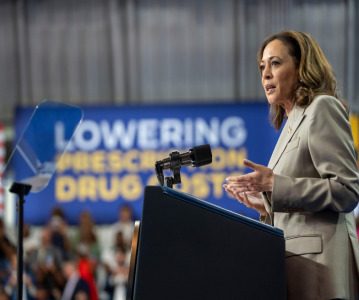
News Drug prices agreed upon as part of the US Inflation Reduction Act
The Inflation Reduction Act brought into constitution by the Biden administation in 2022, which proposed a drug price negotiation between the government and pharmaceutical companies, has reached it's first agreement.