
Asia-Pacific’s Glioblastoma Multiforme Treatment Market Value to More than Double by 2020

The Glioblastoma Multiforme (GBM) therapeutics market in Asia-Pacific (APAC) will more than double in value, from $49.4 million in 2013 to $105.8 million by 2020, at a Compound Annual Growth Rate (CAGR) of 11.5%, says a new report from business intelligence provider GBI Research.
The company’s latest report* states that this impressive growth will result from the anticipated approval and market entries of Rindopepimut, Cotara and Avastin in some APAC countries during the forecast period.
Vijaya Vulapalli, Senior Analyst for GBI Research, says: “The APAC region boasts a strong GBM pipeline, which also includes carmustine implants, currently being developed in China. Novel therapies Rindopepimut and Cotara in particular could have a significant bearing on APAC’s GBM treatment landscape.
“Phase II clinical studies of Rindopepimut demonstrated a relatively high median overall survival (OS) rate among patients. Meanwhile, Cotara’s Phase II studies showed similar OS to Avastin, with slightly more progression-free survival improvement in recurrent GBM. As a single-infusion therapy, Cotara is likely to become an effective second-line treatment option for patients.”
However, GBI Research states that even if these therapies prove successful in late-stage clinical trials, they will experience low uptake in their respective markets due to their high prices and lack of patient access to medicines, mainly in China and India.
Furthermore, APAC’s GBM treatment space is still expected to require new drugs with better efficacy and improved prognosis.
Vulapalli continues: “One of the key reasons for the lack of efficacy exhibited by most therapies is their inability to penetrate the blood–brain barrier, and an urgent unmet need will remain over the forecast period for drugs that can achieve this.
“Efficacy also remains low because therapeutic resistance develops due to the disease heterogeneity, which is believed to be increased by genetic variations arising from mutations. A combined therapy that acts on multiple tumour signaling pathways, rather than a single molecular target, may therefore be more effective and result in a better prognosis,” the analyst concludes.
*Glioblastoma Multiforme Therapeutics in Asia-Pacific Markets to 2020 — Novel Therapeutic Approaches Target High Unmet Need in Newly Diagnosed and Recurrent GBM
Related News
-

News Pharmaceutical Supply Chain People Moves
The latest appointments, promotions, and structural changes across the pharmaceutical supply chain.
-

News Merck KGaA to buy US biotech SpringWorks for US$3.9 billion
The German multinational pharmaceutical company Merck KGaA have signed a deal to buy US biotech company SpringWorks Therapeutics at an equity value of US$3.9 billion in a move to add rare cancer therapeutics to their pipelines.
-

News Cassava Sciences halts Alzheimer's drug trial after limited progress
Cassava Sciences have drawn a close to their investigations and development of the drug simufilam, which they intended to be used for the treatment of Alzheimer’s disease.
-

News US FDA adds haemodialysis bloodlines to devices shortage list
On March 14, 2025, the US FDA published an open letter to healthcare providers citing continuing supply disruptions of haemodialysis bloodlines, an essential component of dialysis machines.
-

News Vertex Pharmaceuticals stock jumps as FDA approves non-opioid painkiller
UK-based Vertex Pharmaceuticals saw their stock shares soar as the US FDA signed off on the non-opioid painkiller Journavx, also known as suzetrigine, for patients with moderate to severe acute pain, caused by surgery, accidents, or injuries.
-

News Lessons from CPHI Milan 2024: Sunny Intervals for Pharma Manufacturing?
As the 2024 CPHI conference wrapped up in Milan, we caught up with L.E.K. Consulting – a global strategy consulting firm with deep expertise in pharma manufacturing – to discuss evolving market perspectives and business outlook. -

News US BIOSECURE Act passed by US House of Representatives
The controversial act, which has already impacted several foreign companies operating in the US, was passed by the House of Representatives on September 9, 2024. It is now headed for the US Senate before it can be signed into law by President Joe Biden... -
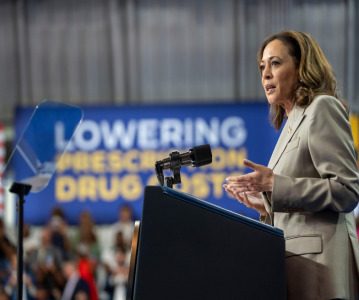
News Drug prices agreed upon as part of the US Inflation Reduction Act
The Inflation Reduction Act brought into constitution by the Biden administation in 2022, which proposed a drug price negotiation between the government and pharmaceutical companies, has reached it's first agreement.