
Automating the process of screening excipients for solubilising drug candidates

Recipharm development.
The process, which uses significantly less materials than the manual alternatives, will ultimately improve drug developers’ clinical pathway.
Drug development is often a lengthy process fraught with difficulties, which increase costs. Selecting the right excipient to improve a compound's solubility is one such hurdle. Amjad Alhalaweh, a research scientist at Recipharm’s development facility in Uppsala, Sweden, offers his insight and expertise on how drug developers can expedite the process of excipient selection.
Often excipients are added to compounds to improve their solubility and dissolution properties during the development process. Why is it important to solubilise compounds with low aqueous properties at this stage of drug development?
A large number of newly discovered molecules have properties which can make the drug development process more complicated. Despite their superior pharmacological properties, these drug molecules risk withdrawal from drug development because of properties such as poor aqueous solubility. During the early drug development phase, it is important to assess the pharmacological, pharmacokinetics and toxicological profile of a compound to determine its safety, quality and efficacy. To do this effectively, they must be tested in liquid formulations hence selecting the optimum excipients to solubilise different compounds is of vital importance.
How do drug developers currently select appropriate excipients to solubilise compounds and what are the challenges that drug developers face following current procedures?
Currently the most popular methods of selecting excipients to solubilise compounds are based on trial and error approaches, so testing excipients manually until they find one that works. Because of the timeframes associated with this method, drug developers risk missing the most appropriate excipient and incurring high costs in terms of human resource and raw materials.
Generally speaking, the process usually takes at least 3-4 weeks and demands a large amount of API to establish a robust formulation. This has always been a problem in drug development, but it has become more prominent in recent years as more complex molecules enter the drug pipeline.
Can the process of selecting excipients be automated?
In short, yes. Recent developments in technology and analytical techniques coupled with the nature of screening excipients mean the process lends itself well to being automated. By selecting a screening list of excipients with a diverse range of solubilisation mechanisms, for example, including non-ionic surfactants, organic liquids and cyclodextrins, it is possible to include enough variations to offer accurate and successful results. Added to this, technologies such as the Tecan automated dispenser are ideal for dispensing the compounds into well-plates prior to the shaking process.
With this in mind, scientists at Recipharm have developed an automated high-throughput screening (HTS) method capable of reducing the timeframe of selecting suitable excipients from 3 to 4 weeks, to 3 to 5 days. The method is now being offered as part of our drug development service.
How much compound is used in your HTS method and what kind of excipient do you use?
Our HTS method can be optimised based on how much material is available but generally speaking we can use this process with about 100-200 mg of raw material. We can use any generally recognised as safe (GRAS) excipients and use specific criteria when selecting which ones to screen, for example, based on the drug delivery system. This flexibility means the method can be optimised to suit specific project requirements.
What are the benefits of automating excipient selection during the drug development phase?
Automating the excipient selection process offers drug developers huge benefits in terms of establishing a robust formulation quickly while using significantly less materials than the manual alternatives. If successfully implemented, automating the process will ultimately improve drug developers’ clinical pathway.
Not only does this have obvious benefits in terms of getting compounds to trials more quickly, but it also saves costs relating to staff resource and raw materials. And, this will be invaluable as more complex molecules with solubility challenges continue to enter the drug pipeline over the next few years. Automating this element of the drug development cycle will help pharmaceutical companies to improve their formulation strategies and in the long-run take new therapeutics to market more efficiently.
Amjad Alhalaweh is responsible for developing solutions for complex formulation challenges for both newly discovered compounds and existing drugs, along with finding new, cost-effective approaches for formulation design. He has specific expertise in the development of liquid formulations through crystallisation, solid-state characterisation and solid form screening and selection. He also delivers lectures at Uppsala University on the formulation of poorly soluble compounds.
Related News
-

News Pharmaceutical Supply Chain People Moves
The latest appointments, promotions, and structural changes across the pharmaceutical supply chain.
-

News Merck KGaA to buy US biotech SpringWorks for US$3.9 billion
The German multinational pharmaceutical company Merck KGaA have signed a deal to buy US biotech company SpringWorks Therapeutics at an equity value of US$3.9 billion in a move to add rare cancer therapeutics to their pipelines.
-

News Cassava Sciences halts Alzheimer's drug trial after limited progress
Cassava Sciences have drawn a close to their investigations and development of the drug simufilam, which they intended to be used for the treatment of Alzheimer’s disease.
-

News US FDA adds haemodialysis bloodlines to devices shortage list
On March 14, 2025, the US FDA published an open letter to healthcare providers citing continuing supply disruptions of haemodialysis bloodlines, an essential component of dialysis machines.
-

News Vertex Pharmaceuticals stock jumps as FDA approves non-opioid painkiller
UK-based Vertex Pharmaceuticals saw their stock shares soar as the US FDA signed off on the non-opioid painkiller Journavx, also known as suzetrigine, for patients with moderate to severe acute pain, caused by surgery, accidents, or injuries.
-
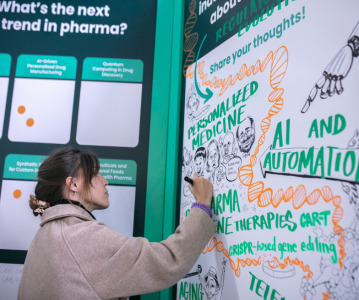
News Lessons from CPHI Milan 2024: Sunny Intervals for Pharma Manufacturing?
As the 2024 CPHI conference wrapped up in Milan, we caught up with L.E.K. Consulting – a global strategy consulting firm with deep expertise in pharma manufacturing – to discuss evolving market perspectives and business outlook. -

News US BIOSECURE Act passed by US House of Representatives
The controversial act, which has already impacted several foreign companies operating in the US, was passed by the House of Representatives on September 9, 2024. It is now headed for the US Senate before it can be signed into law by President Joe Biden... -
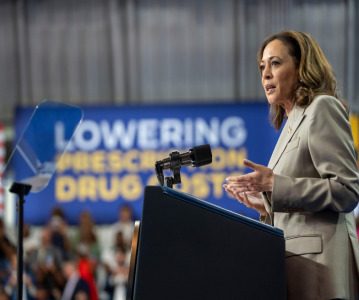
News Drug prices agreed upon as part of the US Inflation Reduction Act
The Inflation Reduction Act brought into constitution by the Biden administation in 2022, which proposed a drug price negotiation between the government and pharmaceutical companies, has reached it's first agreement.