
BARDA Grants $43.2 million USD to Sanofi Pasteur for Zika

Funds will be used for Phase II development and manufacturing.
Sanofi and its vaccines global business unit Sanofi Pasteur have announced that the Biomedical Advanced Research and Development Authority (BARDA) within the Office of the Assistant Secretary for Preparedness and Response in the US Department of Health and Human Services has agreed to a proposal to fund the manufacture of an inactivated Zika vaccine for Phase II development. Sanofi Pasteur committed to researching and developing a vaccine to prevent Zika in February, shortly after the World Health Organization declared an emergency.
In July 2016, Sanofi Pasteur announced a Cooperative Research and Development Agreement with the Walter Reed Army Institute of Research (WRAIR) on the co-development of a Zika vaccine candidate. The BARDA funding is to take WRAIR's Zika purified inactivated virus (ZPIV) vaccine into phase II development with manufacturing and characterization of the vaccine product as well as optimization of the upstream process to improve production yields.
Sanofi Pasteur is in the process of creating a clinical development and regulatory strategy while WRAIR and the National Institute of Allergy and Infectious Diseases (NIAID) - part of the US National Institutes of Health (NIH) - are conducting a series of Phase I ZPIV trials. Beyond the funding provided by BARDA for the two Phase I/II clinical trials, there is an option in the contract that BARDA can exercise for continuing support through Phase III industrial and clinical development.
"Given the devastating effects that this infectious disease can have on babies of infected mothers and the fact that the disease appears to rapidly spread, Sanofi Pasteur decided to get involved early on" said David Loew, Sanofi Executive Vice President and Head of Sanofi Pasteur. "We are very pleased that the US government is committed to working with us to develop a Zika vaccine. Based on this collaboration, we can bring together resources and expertise which are essential in fighting this public-health concern."
Related News
-

News Pharmaceutical Supply Chain People Moves
The latest appointments, promotions, and structural changes across the pharmaceutical supply chain.
-

News Merck KGaA to buy US biotech SpringWorks for US$3.9 billion
The German multinational pharmaceutical company Merck KGaA have signed a deal to buy US biotech company SpringWorks Therapeutics at an equity value of US$3.9 billion in a move to add rare cancer therapeutics to their pipelines.
-

News Cassava Sciences halts Alzheimer's drug trial after limited progress
Cassava Sciences have drawn a close to their investigations and development of the drug simufilam, which they intended to be used for the treatment of Alzheimer’s disease.
-
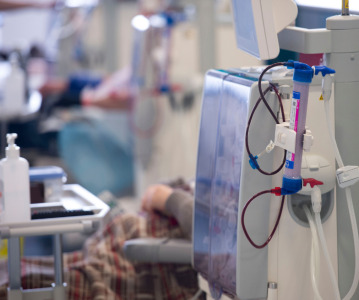
News US FDA adds haemodialysis bloodlines to devices shortage list
On March 14, 2025, the US FDA published an open letter to healthcare providers citing continuing supply disruptions of haemodialysis bloodlines, an essential component of dialysis machines.
-

News Vertex Pharmaceuticals stock jumps as FDA approves non-opioid painkiller
UK-based Vertex Pharmaceuticals saw their stock shares soar as the US FDA signed off on the non-opioid painkiller Journavx, also known as suzetrigine, for patients with moderate to severe acute pain, caused by surgery, accidents, or injuries.
-

News Lessons from CPHI Milan 2024: Sunny Intervals for Pharma Manufacturing?
As the 2024 CPHI conference wrapped up in Milan, we caught up with L.E.K. Consulting – a global strategy consulting firm with deep expertise in pharma manufacturing – to discuss evolving market perspectives and business outlook. -

News US BIOSECURE Act passed by US House of Representatives
The controversial act, which has already impacted several foreign companies operating in the US, was passed by the House of Representatives on September 9, 2024. It is now headed for the US Senate before it can be signed into law by President Joe Biden... -
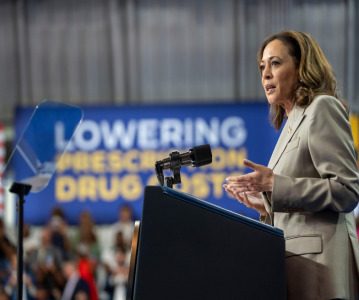
News Drug prices agreed upon as part of the US Inflation Reduction Act
The Inflation Reduction Act brought into constitution by the Biden administation in 2022, which proposed a drug price negotiation between the government and pharmaceutical companies, has reached it's first agreement.