
BASF and Poietis Sign R&D Agreement on 3D Bioprinting Technology for Advanced Skin Care Applications
BASF and Poietis, the first company in the world for 3D laser-assisted bioprinting, have signed an agreement on research and development in cosmetics. Based on the combined expertise of both companies in tissue engineering and bioprinting, the agreement aims to apply the bioprinting technology of Poietis to improve BASF’s skin equivalent model Mimeskin. The terms and conditions of this agreement were not disclosed.
The 3D laser-assisted bioprinting technology, by which organic tissues can be reproduced, allows for a precise positioning of the skin cells in three-dimensional structures. Through this, cells are cultivated within BASF’s skin model Mimeskin, which is the closest equivalent to the original physiological tissue of human skin. Dr Fabien Guillemot, Founder and President of Poietis, remarks: “We are extremely pleased about this collaboration. Having long-term expertise in solutions for the dermocosmetics market, BASF understands the benefits of 3D laser-assisted bioprinting compared to conventional cell culture technologies and other bioprinting methods. The partnership also emphasizes bioprinted tissue models as an alternative to animal testing in cosmetics and dermopharmacy.”
Poietis’ bioprinting technology refines BASF’s skin model Mimeskin due to its advanced printing resolution. The laser-assisted bioprinting technology will be used in a first step to allow for automated reproduction of Mimeskin, followed by more advanced models containing additional cell types. Dr Sebastien Cadau, responsible for tissue engineering development at BASF, points out: “Compared to other bioprinting methods the laser-assisted technology provides higher resolution when it comes to the patterning of cells. The partnership with Poietis allows BASF to secure its strategic advantage in better understanding the skin mechanisms that support the development and testing of advanced cosmetic bioactives for skin care applications.”
Related News
-

News Pharmaceutical Supply Chain People Moves
The latest appointments, promotions, and structural changes across the pharmaceutical supply chain.
-

News Merck KGaA to buy US biotech SpringWorks for US$3.9 billion
The German multinational pharmaceutical company Merck KGaA have signed a deal to buy US biotech company SpringWorks Therapeutics at an equity value of US$3.9 billion in a move to add rare cancer therapeutics to their pipelines.
-

News Cassava Sciences halts Alzheimer's drug trial after limited progress
Cassava Sciences have drawn a close to their investigations and development of the drug simufilam, which they intended to be used for the treatment of Alzheimer’s disease.
-
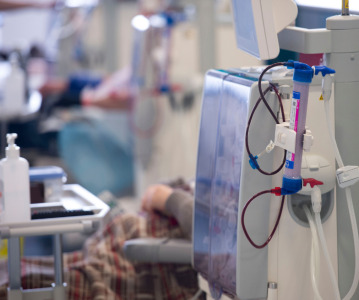
News US FDA adds haemodialysis bloodlines to devices shortage list
On March 14, 2025, the US FDA published an open letter to healthcare providers citing continuing supply disruptions of haemodialysis bloodlines, an essential component of dialysis machines.
-

News Vertex Pharmaceuticals stock jumps as FDA approves non-opioid painkiller
UK-based Vertex Pharmaceuticals saw their stock shares soar as the US FDA signed off on the non-opioid painkiller Journavx, also known as suzetrigine, for patients with moderate to severe acute pain, caused by surgery, accidents, or injuries.
-
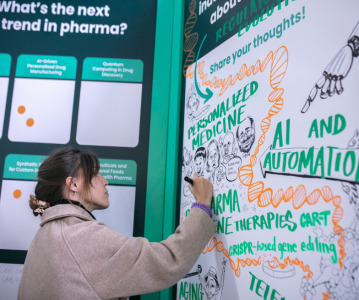
News Lessons from CPHI Milan 2024: Sunny Intervals for Pharma Manufacturing?
As the 2024 CPHI conference wrapped up in Milan, we caught up with L.E.K. Consulting – a global strategy consulting firm with deep expertise in pharma manufacturing – to discuss evolving market perspectives and business outlook. -

News US BIOSECURE Act passed by US House of Representatives
The controversial act, which has already impacted several foreign companies operating in the US, was passed by the House of Representatives on September 9, 2024. It is now headed for the US Senate before it can be signed into law by President Joe Biden... -
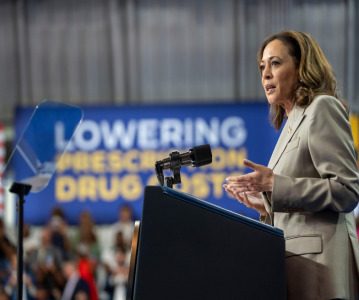
News Drug prices agreed upon as part of the US Inflation Reduction Act
The Inflation Reduction Act brought into constitution by the Biden administation in 2022, which proposed a drug price negotiation between the government and pharmaceutical companies, has reached it's first agreement.