
Bavarian Nordic announces collaboration to evaluate CV301 and Tecentriq in bladder cancer

Collaboration is the second to evaluate a combination of CV301 with a checkpoint inhibitor.
Bavarian Nordic has announced an agreement with F. Hoffmann-La Roche (Roche) whereby Roche has agreed to supply their PD-L1 blocking antibody Tecentriq (atezolizumab) for a clinical study combining Bavarian Nordic's cancer vaccine, CV301, and Tecentriq in patients with urothelial carcinoma, or bladder cancer.
Bavarian Nordic plans to conduct a Phase II study in patients with locally advanced or metastatic urothelial carcinoma (mUC) who have disease progression during or following platinum-containing chemotherapy or have disease progression within 12 months of neoadjuvant or adjuvant treatment with platinum-containing chemotherapy, a patient population where Tecentriq has accelerated approval in the US. CV301 is designed to generate a T cell response to both CEA and MUC1, two tumour antigens that are highly over expressed in bladder cancers. This study will evaluate the hypothesis that combining a checkpoint inhibitor with a cancer vaccine such as CV301 could be synergistic by enhancing the immune response seen in this patient population to date. The study is anticipated to initiate around the end of 2017.
"In keeping with our strategy to expand the potential of CV301, we are extremely pleased to enter into this collaboration with Roche. This represents our second collaboration in the advancement of CV301 as combination therapy in multiple cancers. We look forward to the initiation of this study and to explore the potential synergy of our programs for the benefit of patients with bladder cancer," said Paul Chaplin, President and CEO of Bavarian Nordic.
Under the terms of the agreement, Roche has committed to supplying Tecentriq to Bavarian Nordic during the Phase II trial. Bavarian Nordic will be responsible for conducting the clinical trial, and both companies will share data from the trial. Bavarian Nordic continues to retain all commercial rights to CV301.
Related News
-

News Pharmaceutical Supply Chain People Moves
The latest appointments, promotions, and structural changes across the pharmaceutical supply chain.
-

News Merck KGaA to buy US biotech SpringWorks for US$3.9 billion
The German multinational pharmaceutical company Merck KGaA have signed a deal to buy US biotech company SpringWorks Therapeutics at an equity value of US$3.9 billion in a move to add rare cancer therapeutics to their pipelines.
-

News Cassava Sciences halts Alzheimer's drug trial after limited progress
Cassava Sciences have drawn a close to their investigations and development of the drug simufilam, which they intended to be used for the treatment of Alzheimer’s disease.
-

News US FDA adds haemodialysis bloodlines to devices shortage list
On March 14, 2025, the US FDA published an open letter to healthcare providers citing continuing supply disruptions of haemodialysis bloodlines, an essential component of dialysis machines.
-

News Vertex Pharmaceuticals stock jumps as FDA approves non-opioid painkiller
UK-based Vertex Pharmaceuticals saw their stock shares soar as the US FDA signed off on the non-opioid painkiller Journavx, also known as suzetrigine, for patients with moderate to severe acute pain, caused by surgery, accidents, or injuries.
-

News Lessons from CPHI Milan 2024: Sunny Intervals for Pharma Manufacturing?
As the 2024 CPHI conference wrapped up in Milan, we caught up with L.E.K. Consulting – a global strategy consulting firm with deep expertise in pharma manufacturing – to discuss evolving market perspectives and business outlook. -

News US BIOSECURE Act passed by US House of Representatives
The controversial act, which has already impacted several foreign companies operating in the US, was passed by the House of Representatives on September 9, 2024. It is now headed for the US Senate before it can be signed into law by President Joe Biden... -
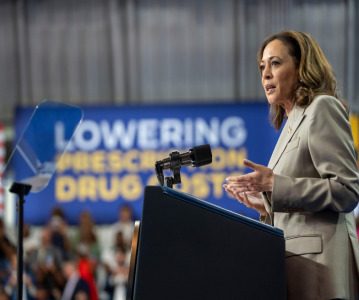
News Drug prices agreed upon as part of the US Inflation Reduction Act
The Inflation Reduction Act brought into constitution by the Biden administation in 2022, which proposed a drug price negotiation between the government and pharmaceutical companies, has reached it's first agreement.