
Big Pharma Becomes a Smaller Employer While Biotech Booms

Big Pharma employment dropped by 3% in the decade 2003–2013, allaying fears that industry consolidation and restructuring would lead to significantly reduced headcounts and payrolls, a new jobs report published by EP Vantage reveals.
The new report shows that when it comes to pharmaceutical industry jobs, big biotech and specialty drugmakers are growing in significance, more than offsetting the loss of jobs in Big Pharma.
Headcount more than doubled over the last decade at companies with market capitalizations of more than $30 billion, but who are not traditionally considered big pharma. Some of those gains were the result of acquisitions — such as Valeant — but groups such as Novo Nordisk, Gilead Sciences and Regeneron have seen their staff double, triple, or even quadruple based primarily on organic growth, the report finds.
“Large drug makers such as Gilead are now not only out performing Big Pharma, but are out hiring it,” said Lisa Urquhart, EP Vantage Editor. “With the focus still on cost cutting in Big Pharma, if you want a long-term career in the industry you might be better off with a smaller player.”
Among the report’s key findings:
• Novartis is the biggest employer in the pharma sector, with a workforce of more than 135,000 people. Its 2010 merger with eye specialist Alcon brought on board nearly 16,000 new workers, but that explains only part of the 57,000 it added between 2003–2013.
• Bristol-Myers Squibb and Pfizer topped the industry in terms of shrinking headcount, each firing 36% of their employees. In the case of Pfizer, the reduction is dramatic because the decade saw it rationalizing the workforce of two companies it acquired, Pharmacia and Wyeth.
• Valeant and its acquisitions aside, the biggest hirer of 2013 in percentage terms was Pharmacyclics, which more than doubled its headcount to 484 to support the launch of cancer drug Imbruvica.
The “Big Pharma Becomes a Smaller Employer While Biotech Booms” report, based on market intelligence and analysis from EvaluatePharma, can be found at www.evaluategroup.com/PharmaJobNumbers.
Related News
-

News Pharmaceutical Supply Chain People Moves
The latest appointments, promotions, and structural changes across the pharmaceutical supply chain.
-

News Merck KGaA to buy US biotech SpringWorks for US$3.9 billion
The German multinational pharmaceutical company Merck KGaA have signed a deal to buy US biotech company SpringWorks Therapeutics at an equity value of US$3.9 billion in a move to add rare cancer therapeutics to their pipelines.
-

News Cassava Sciences halts Alzheimer's drug trial after limited progress
Cassava Sciences have drawn a close to their investigations and development of the drug simufilam, which they intended to be used for the treatment of Alzheimer’s disease.
-

News US FDA adds haemodialysis bloodlines to devices shortage list
On March 14, 2025, the US FDA published an open letter to healthcare providers citing continuing supply disruptions of haemodialysis bloodlines, an essential component of dialysis machines.
-

News Vertex Pharmaceuticals stock jumps as FDA approves non-opioid painkiller
UK-based Vertex Pharmaceuticals saw their stock shares soar as the US FDA signed off on the non-opioid painkiller Journavx, also known as suzetrigine, for patients with moderate to severe acute pain, caused by surgery, accidents, or injuries.
-

News Lessons from CPHI Milan 2024: Sunny Intervals for Pharma Manufacturing?
As the 2024 CPHI conference wrapped up in Milan, we caught up with L.E.K. Consulting – a global strategy consulting firm with deep expertise in pharma manufacturing – to discuss evolving market perspectives and business outlook. -

News US BIOSECURE Act passed by US House of Representatives
The controversial act, which has already impacted several foreign companies operating in the US, was passed by the House of Representatives on September 9, 2024. It is now headed for the US Senate before it can be signed into law by President Joe Biden... -
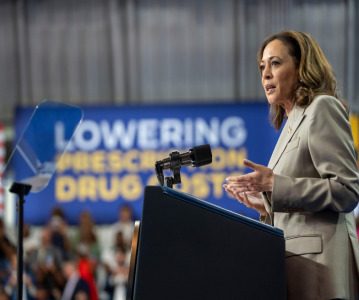
News Drug prices agreed upon as part of the US Inflation Reduction Act
The Inflation Reduction Act brought into constitution by the Biden administation in 2022, which proposed a drug price negotiation between the government and pharmaceutical companies, has reached it's first agreement.