
BMS to license anti-eTau and anti-myostatic compounds

Two separate agreements with Biogen and Roche.
Bristol-Myers Squibb (BMS) has entered into two separate agreements to license BMS-986168, an anti-eTau compound in development for Alzheimer's disease and Progressive Supranuclear Palsy (PSP), to Biogen, and BMS-986089, an anti-myostatin adnectin in development for Duchenne Muscular Dystrophy (DMD), to Roche.
“Licensing these assets to Biogen and Roche will enable BMS to prioritize the other promising opportunities for asset development that have advanced across our diversified portfolio,” said Mike Burgess, head of Cardiovascular, Fibrosis and Immunoscience Development, BMS. “We recognize the significant unmet medical needs for patients with PSP and with DMD, and are pleased to put the future development of these compounds into the hands of Biogen and Roche, who both have strong capabilities, focus and leadership in neurodegenerative and rare diseases.”
“Biogen aims to be a leader in Alzheimer’s disease and we are building a pipeline with multiple approaches to address the complex, devastating process of neurodegeneration,” said Michael Ehlers, executive vice president, research & development, Biogen. “Based on encouraging safety and efficacy data, we believe BMS-986168 is a promising anti-tau candidate that may represent the next wave of medicines for Alzheimer’s disease as well as the first real answer for PSP.”
Under the agreement to license BMS-986168, Biogen will pay to BMS an upfront payment of $300 million with potential milestone payments of up to $410 million. Biogen also will assume all remaining obligations to the former stockholders of iPierian, related to BMS’s acquisition of the company in 2014. Under the agreement to license BMS-986089, Roche will pay to BMS an upfront payment of $170 million with potential milestone payments of up to $205 million. BMS will receive tiered double-digit royalties if either asset is approved and commercialized. These agreements are subject to clearance under the Hart-Scott-Rodino Antitrust Improvements Act, and are expected to close in the second quarter of 2017.
Related News
-

News Pharmaceutical Supply Chain People Moves
The latest appointments, promotions, and structural changes across the pharmaceutical supply chain.
-

News Merck KGaA to buy US biotech SpringWorks for US$3.9 billion
The German multinational pharmaceutical company Merck KGaA have signed a deal to buy US biotech company SpringWorks Therapeutics at an equity value of US$3.9 billion in a move to add rare cancer therapeutics to their pipelines.
-

News Cassava Sciences halts Alzheimer's drug trial after limited progress
Cassava Sciences have drawn a close to their investigations and development of the drug simufilam, which they intended to be used for the treatment of Alzheimer’s disease.
-

News US FDA adds haemodialysis bloodlines to devices shortage list
On March 14, 2025, the US FDA published an open letter to healthcare providers citing continuing supply disruptions of haemodialysis bloodlines, an essential component of dialysis machines.
-

News Vertex Pharmaceuticals stock jumps as FDA approves non-opioid painkiller
UK-based Vertex Pharmaceuticals saw their stock shares soar as the US FDA signed off on the non-opioid painkiller Journavx, also known as suzetrigine, for patients with moderate to severe acute pain, caused by surgery, accidents, or injuries.
-

News Lessons from CPHI Milan 2024: Sunny Intervals for Pharma Manufacturing?
As the 2024 CPHI conference wrapped up in Milan, we caught up with L.E.K. Consulting – a global strategy consulting firm with deep expertise in pharma manufacturing – to discuss evolving market perspectives and business outlook. -

News US BIOSECURE Act passed by US House of Representatives
The controversial act, which has already impacted several foreign companies operating in the US, was passed by the House of Representatives on September 9, 2024. It is now headed for the US Senate before it can be signed into law by President Joe Biden... -
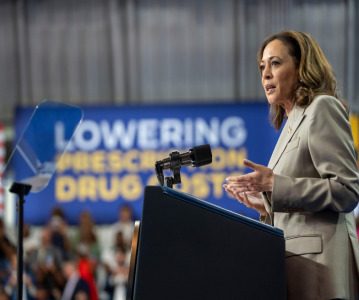
News Drug prices agreed upon as part of the US Inflation Reduction Act
The Inflation Reduction Act brought into constitution by the Biden administation in 2022, which proposed a drug price negotiation between the government and pharmaceutical companies, has reached it's first agreement.