
Bosch at Achema - New Manesty TPR Tablet Press Range
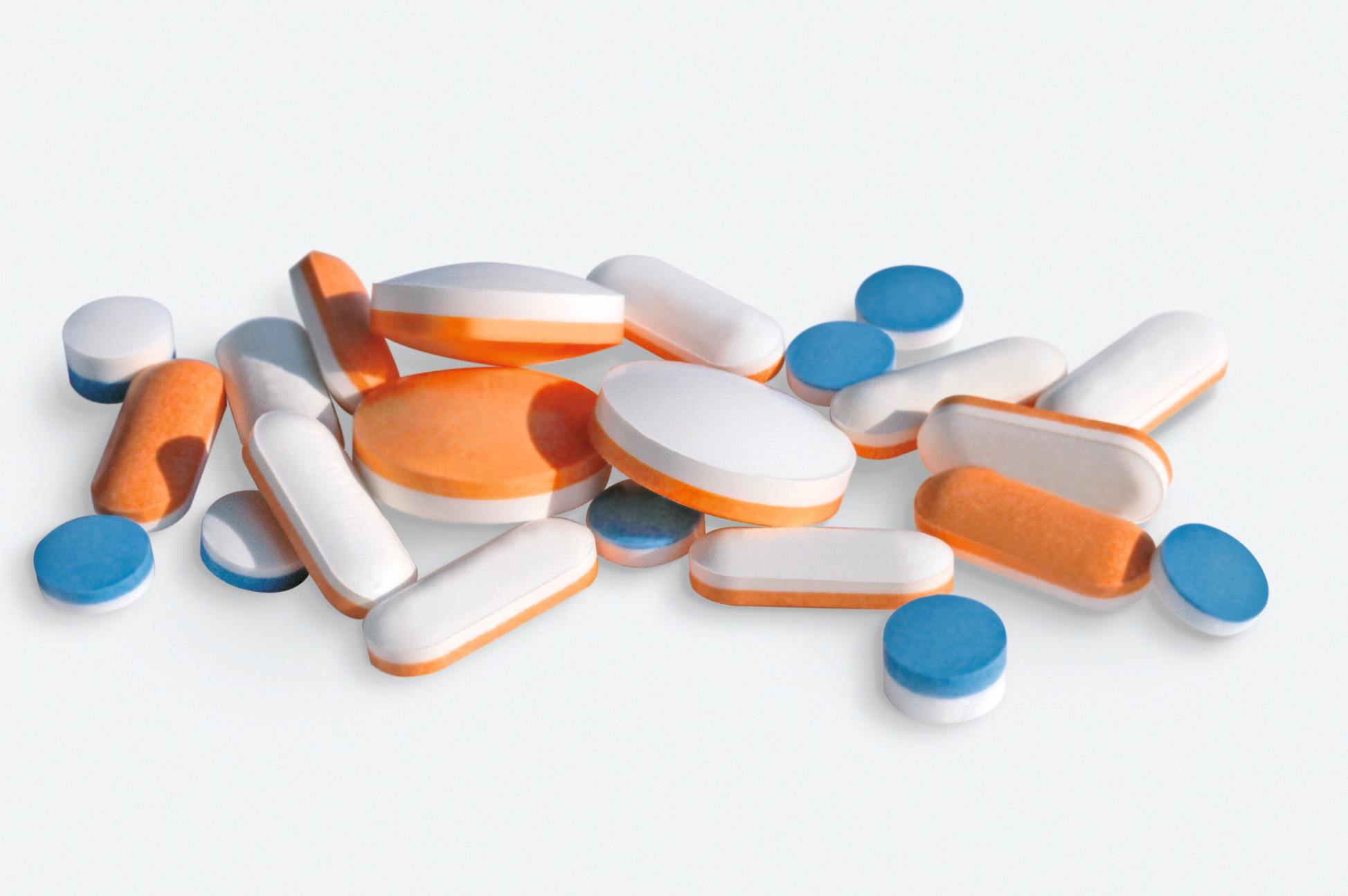
At Achema 2015, Bosch Packaging Technology showcases the new range of Manesty TPR tablet presses. Following the introduction of the versatile TPR 500 at last year´s Interpack in Germany, Bosch has now added the TPR 200 for small to medium batches and the TPR 700 for high production volumes to its line-up. Designed to improve Overall Equipment Effectiveness (OEE), all three machines offer an integrated die option, modular powder feeding system and an easy-to-operate Human Machine Interface (HMI).
“The successful launch of the TPR 500 confirms that the new range offers exactly what pharmaceutical manufacturers require,” says John Murphy, product manager at Bosch Packaging Technology in Knowsley, UK. “Based on their feedback, we have now developed two further models to meet the industry’s demands for high yields as well as flexible and efficient production.”
High output and outstanding flexibility
All three tablet presses have been developed to significantly improve OEE in terms of availability, quality and output. Combined with an exchangeable turret, the patented integrated die plate offers increased flexibility, fast, safe and easy changeover, as well as reduced cleaning times. “Depending on the machine model and type of tablets, output capacities are improved by up to 40%,” explains Murphy. Furthermore, the "True Flow" tablet discharge chute eliminates product damage by reducing mechanical stress with an optimized take-off angle for a smooth tablet delivery.
The TPR range also features an extendable powder feeding system, which offers higher flexibility and production efficiency. The ergonomically designed twopaddle feeder can easily be upgraded to three paddles. The simple, precise and repeatable feeder set-up contributes to efficient production. A choice of
rectangular or round paddle blades increases the range of materials that can be compressed.
Efficient and easy operation
The TPR range is easy to operate with a 21-inch HMI touchscreen and Windows 7 as the standard application system. Latest off-the-shelf Beckhoff controls ensure efficient operation as well as simple machine set-up. As part of a total productive maintenance plan, the latest wireless RFID (Radio Frequency Identification Device) technology enables operator log-in and identification at any time, thus significantly reducing the risk of operator errors.
Three machines for different batch sizes
The TPR 500, which was launched at Interpack 2014 in Dusseldorf, Germany, can produce more than 400,000 tablets per hour, using standard tooling on a small footprint. It is particularly suited for MUPS (multiple unit pellet system) products without any additional equipment. “This also demonstrates Bosch’s line
competence, as the pellets can be made on a Hüttlin system and then either enclosed in capsules or pressed as tablets,” Murphy explains.
The new TPR 200 is designed for small to medium batches with outputs of up to 230,000 tablets per hour. “With the TPR 200, we offer customers an economic machine with a hygienic easy-to-clean design and compact footprint,” Murphy says. “Its modular data acquisition system makes it the ideal platform for the development and evaluation of tableting formulations.” Its flexible design includes options for R&D configuration, containment applications, as well as bi-layer tablets. The latter is also available on the new double-sided TPR 700. Both tablet presses can be quickly converted into a bi-layer version that ensures a clear demarcation between the different tablet layers, thus avoiding crosscontamination.
As the largest tablet press of the series, the TPR 700 is capable of producing more than one million tablets per hour. It is suited for a wide range of compressible products including non-pharmaceutical materials such as vitamins. The length of the feeding system provides excellent weight consistency at high speeds. Due to its ergonomic design, both production and technical areas of the tablet press are easily accessible. Moreover, a unique two-level production zone ensures the complete segregation of production and technical areas even when removing the exchangeable turret.
Related News
-

News Pharmaceutical Supply Chain People Moves
The latest appointments, promotions, and structural changes across the pharmaceutical supply chain.
-

News Merck KGaA to buy US biotech SpringWorks for US$3.9 billion
The German multinational pharmaceutical company Merck KGaA have signed a deal to buy US biotech company SpringWorks Therapeutics at an equity value of US$3.9 billion in a move to add rare cancer therapeutics to their pipelines.
-

News Cassava Sciences halts Alzheimer's drug trial after limited progress
Cassava Sciences have drawn a close to their investigations and development of the drug simufilam, which they intended to be used for the treatment of Alzheimer’s disease.
-
News US FDA adds haemodialysis bloodlines to devices shortage list
On March 14, 2025, the US FDA published an open letter to healthcare providers citing continuing supply disruptions of haemodialysis bloodlines, an essential component of dialysis machines.
-

News Vertex Pharmaceuticals stock jumps as FDA approves non-opioid painkiller
UK-based Vertex Pharmaceuticals saw their stock shares soar as the US FDA signed off on the non-opioid painkiller Journavx, also known as suzetrigine, for patients with moderate to severe acute pain, caused by surgery, accidents, or injuries.
-
News Lessons from CPHI Milan 2024: Sunny Intervals for Pharma Manufacturing?
As the 2024 CPHI conference wrapped up in Milan, we caught up with L.E.K. Consulting – a global strategy consulting firm with deep expertise in pharma manufacturing – to discuss evolving market perspectives and business outlook. -
News US BIOSECURE Act passed by US House of Representatives
The controversial act, which has already impacted several foreign companies operating in the US, was passed by the House of Representatives on September 9, 2024. It is now headed for the US Senate before it can be signed into law by President Joe Biden... -
News Drug prices agreed upon as part of the US Inflation Reduction Act
The Inflation Reduction Act brought into constitution by the Biden administation in 2022, which proposed a drug price negotiation between the government and pharmaceutical companies, has reached it's first agreement.