
Bosch expands downstream portfolio for syringes
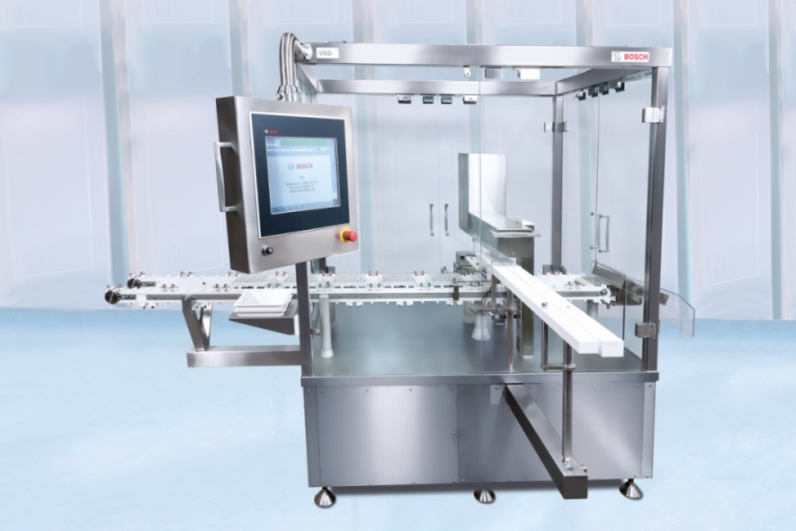
USD de-nester for pre-sterilized syringes
Flexible processing of pre-sterilized syringes.
Bosch Packaging Technology is further expanding its line competence in the filling and processing of pre-sterilized syringes. “After successfully establishing our fill-finish portfolio, we also strengthen our line competence in downstream processes,” says Klaus Ullherr, product manager at Bosch Packaging Technology. “Two steps are required: the rod has to be inserted and the pre-filled syringes have to be inspected. The USD de-nester and the RIL rod insertion and labelling machine are ideal additions to our filling and closing machines, such as the recently launched FXS Combi.” First machine combinations are already in operation in Europe and Asia.
Gentle removal and transportation
The syringes filled with liquid pharmaceuticals are either manually or automatically placed on the infeed belt of the de-nester in tubs. Using a gripper, the USD removes the syringes in rows and gently transfers them to a horizontal single-lane transport belt. The products remain in a safe and controlled position at all times. Depending on the model, the USD de-nester achieves an output of up to 400 syringes per minute. In combination with the respective inspection machines for particle and cosmetic inspection as well as leak detection, a ZPS buffer system and a RIL rod insertion and labelling machine, lines for middle and high performance can be implemented.
Safety for products, operators and patients
The high-performance machines of the RIL series accomplish exact and gentle rod insertion, and provide for reliable labelling of the syringes. First, the transport belt transfers the syringes to a segment wheel, which ensures that screwing in of the rod is done at optimum conditions in standstill mode. A separate sorting device conveys the rods to a star wheel, which positions the rods and inserts them accurately into the rubber stoppers. The torque control makes sure that the stoppers do not move. In the next step, the segment wheel transfers the syringes to the labelling station, where the labels are applied and checked with a control sensor. A number of additional options are available to read out label data or inspect the quality, readability and coding of the labels.
To ensure optimum product and operator safety as well as high product quality, the RIL models are equipped with a tip closure control, which checks the presence of the protecting cap on the injection needle. All defect syringes are conveyed to a customer-specific reject station via a star wheel. After rod insertion, labelling and inspection, the processed syringes can be additionally equipped with a backstopper on the RIL. Designed for patient safety and ease of use, the stopper prevents the plunger head from being pulled out of the syringe and also broadens the finger flange.
First machine combinations in operation
“The downstream equipment is an important part of our line competence for syringes,” says Klaus Ullherr. “The new models meet the requirements in the European, as well as in the growing Asian market. Our specialists have already delivered, installed and put into operation several machines together with our customers.” Further steps for a consequent portfolio expansion are in the planning stage, such as the integration of so-called safety devices for syringes.
Related News
-

News Pharmaceutical Supply Chain People Moves
The latest appointments, promotions, and structural changes across the pharmaceutical supply chain.
-

News Merck KGaA to buy US biotech SpringWorks for US$3.9 billion
The German multinational pharmaceutical company Merck KGaA have signed a deal to buy US biotech company SpringWorks Therapeutics at an equity value of US$3.9 billion in a move to add rare cancer therapeutics to their pipelines.
-

News Cassava Sciences halts Alzheimer's drug trial after limited progress
Cassava Sciences have drawn a close to their investigations and development of the drug simufilam, which they intended to be used for the treatment of Alzheimer’s disease.
-
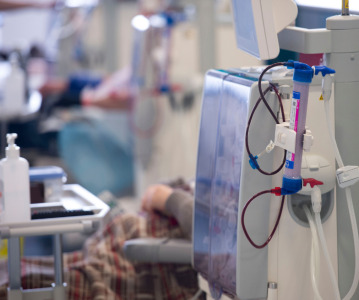
News US FDA adds haemodialysis bloodlines to devices shortage list
On March 14, 2025, the US FDA published an open letter to healthcare providers citing continuing supply disruptions of haemodialysis bloodlines, an essential component of dialysis machines.
-

News Vertex Pharmaceuticals stock jumps as FDA approves non-opioid painkiller
UK-based Vertex Pharmaceuticals saw their stock shares soar as the US FDA signed off on the non-opioid painkiller Journavx, also known as suzetrigine, for patients with moderate to severe acute pain, caused by surgery, accidents, or injuries.
-
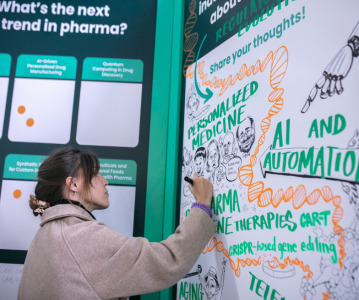
News Lessons from CPHI Milan 2024: Sunny Intervals for Pharma Manufacturing?
As the 2024 CPHI conference wrapped up in Milan, we caught up with L.E.K. Consulting – a global strategy consulting firm with deep expertise in pharma manufacturing – to discuss evolving market perspectives and business outlook. -

News US BIOSECURE Act passed by US House of Representatives
The controversial act, which has already impacted several foreign companies operating in the US, was passed by the House of Representatives on September 9, 2024. It is now headed for the US Senate before it can be signed into law by President Joe Biden... -
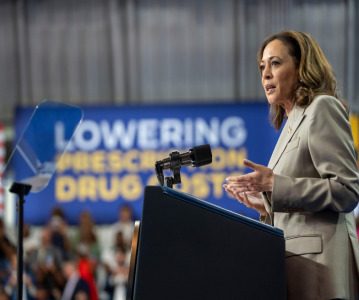
News Drug prices agreed upon as part of the US Inflation Reduction Act
The Inflation Reduction Act brought into constitution by the Biden administation in 2022, which proposed a drug price negotiation between the government and pharmaceutical companies, has reached it's first agreement.