
Bosch Expands Portfolio for Serialization of Pharmaceutical Packaging
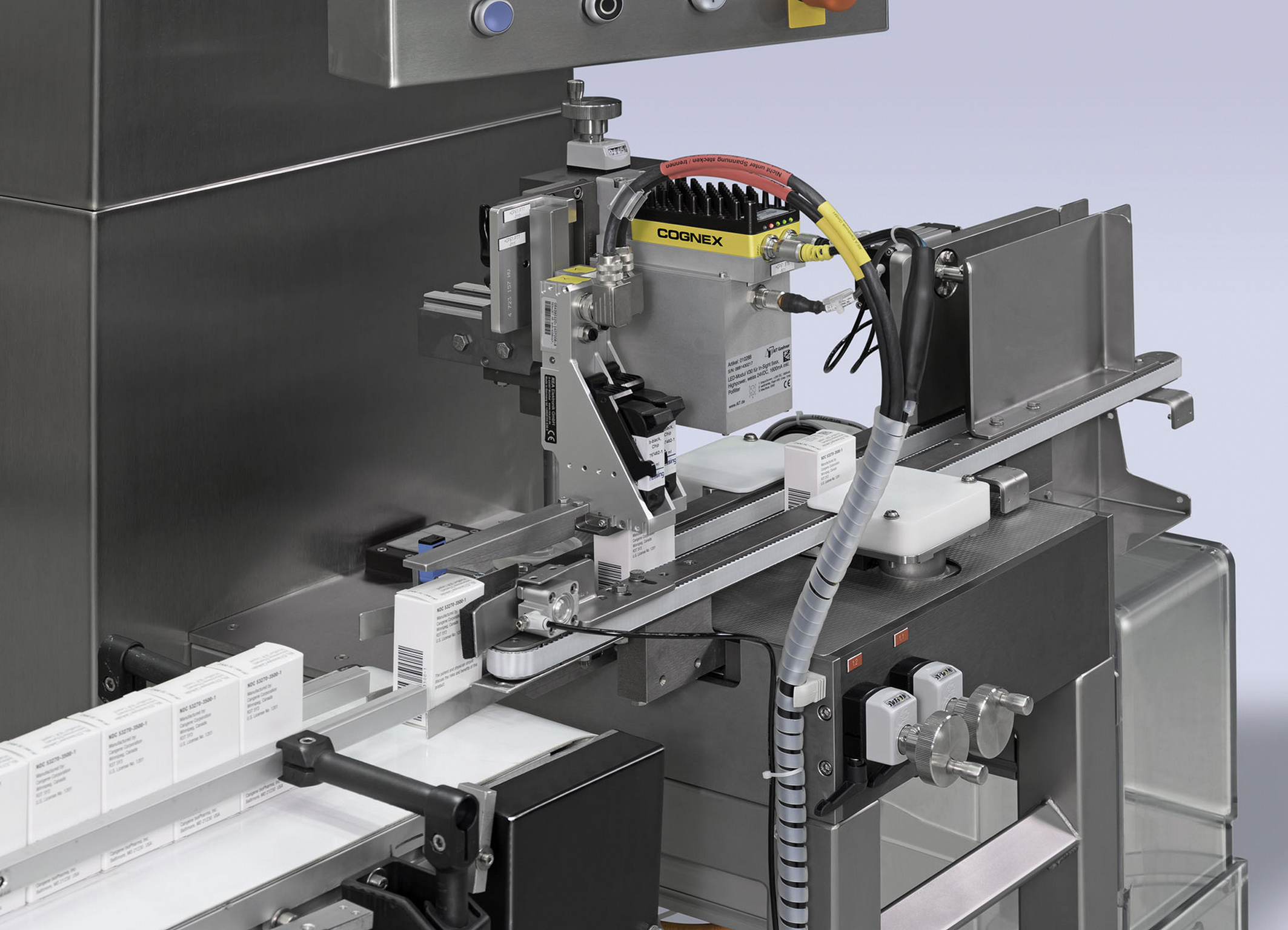
Bosch Packaging Technology has expanded its portfolio for the serialization of pharmaceutical packaging. In the fight against counterfeit drugs, many countries are about to implement legislation changes for a stricter labelling of pharmaceuticals. Consequently, drug manufacturers require safer and more flexible solutions. “With our serialization concept, we offer customers more than just a machine,” explains Daniel Sanwald, product manager at Bosch Packaging Technology. “Bosch offers the complete package, which also includes the corresponding IT.”
Connection of Machine and Software
The CPS (Carton Printing System) forms the basis of all serialization solutions from Bosch. It has been continuously developed regarding flexibility and user-friendliness. Depending on customer requirements, the system prints 1D or 2D data matrix codes on up to 400 folding cartons per minute. Thanks to an upgrade of the camera system, both codes can now be checked on different carton qualities even more reliably. If the contrast and readability of the data matrix codes do not conform with the required level of quality, the products are automatically sorted out. The machine is easy to operate from the front, so that mechanical components are easily and quickly accessible in case of format changes. An optimized threading of the labelling tape reduces downtime of the CPS 1900 to a minimum.
The CPS systems can be connected to both machine software and company IT in a multi-level process, ensuring that serial numbers are attributed reliably. Therefore, Bosch Packaging Technology has adapted the proven automation technology from Bosch’s automotive sector to the specific requirements of the pharmaceutical industry. “This experience enables us to offer our customers IT solutions that not only process the entire order management; they also control both import and export of the serial numbers,” Daniel Sanwald explains. Depending on country and guideline, the numbers are either allocated centrally or generated by the company. Contract manufacturers in turn receive the numbers from their clients. According to Sanwald, “our IT system is equipped for all three cases. The Bosch machines can also be flexibly combined with systems from other IT providers.” The IT concept has further advantages for production companies: production parameters and data of all packaging lines are clearly visible at all times. “For instance, in the case of unforeseen events like downtime or modification, capacities are automatically re-planned,” Sanwald says. “The connection of our machines with the corresponding IT offers companies a new production foresight.”
Modular Design for Additional Safety
Thanks to its modular design, the CPS system can be extended by further modules. For example, a weighing module inspects the weight of each folding carton individually. Existing machines can also be equipped with a Tamper Evident module. The labeller applies additional safety seals across the side flap of the folding carton, thus offering optimum protection against manipulation. Sensor systems carry out safe and reproducible checks of seal presence and correct application. The machine and all applications, such as the camera, are operated via a single HMI (Human Machine Interface). “The operator has a uniform look and feel, and does not need to switch between different HMIs. Moreover, this makes the central audit trail a lot easier,” Sanwald underlines.
Growing Global Need for Serialization
According to the Bosch experts, the need for serialization technology will continue to grow over the coming years. Amongst others, 2015 will see the implementation of new guidelines in Saudi Arabia, where drug packaging must be equipped with a data matrix code step by step, followed by serial numbers in 2016. In Brazil, individual batches must be serialized as of 2015, before it becomes obligatory the following year. The FDA aspires to implement a standardized identification for all prescription drugs in form of a 2D data matrix code in a step-by-step approach until the end of 2023. The European Union’s Falsified Medicines Directive 2011/62/EU stipulates coded packaging with a 2D data matrix code and a unique serial number for nearly all prescription drugs, presumably from the first quarter of 2018. With the flexible serialization solutions from Bosch, pharmaceutical manufacturers are well-equipped for all regulatory requirements worldwide.
Related News
-

News Pharmaceutical Supply Chain People Moves
The latest appointments, promotions, and structural changes across the pharmaceutical supply chain.
-

News Merck KGaA to buy US biotech SpringWorks for US$3.9 billion
The German multinational pharmaceutical company Merck KGaA have signed a deal to buy US biotech company SpringWorks Therapeutics at an equity value of US$3.9 billion in a move to add rare cancer therapeutics to their pipelines.
-

News Cassava Sciences halts Alzheimer's drug trial after limited progress
Cassava Sciences have drawn a close to their investigations and development of the drug simufilam, which they intended to be used for the treatment of Alzheimer’s disease.
-

News US FDA adds haemodialysis bloodlines to devices shortage list
On March 14, 2025, the US FDA published an open letter to healthcare providers citing continuing supply disruptions of haemodialysis bloodlines, an essential component of dialysis machines.
-

News Vertex Pharmaceuticals stock jumps as FDA approves non-opioid painkiller
UK-based Vertex Pharmaceuticals saw their stock shares soar as the US FDA signed off on the non-opioid painkiller Journavx, also known as suzetrigine, for patients with moderate to severe acute pain, caused by surgery, accidents, or injuries.
-

News Lessons from CPHI Milan 2024: Sunny Intervals for Pharma Manufacturing?
As the 2024 CPHI conference wrapped up in Milan, we caught up with L.E.K. Consulting – a global strategy consulting firm with deep expertise in pharma manufacturing – to discuss evolving market perspectives and business outlook. -

News US BIOSECURE Act passed by US House of Representatives
The controversial act, which has already impacted several foreign companies operating in the US, was passed by the House of Representatives on September 9, 2024. It is now headed for the US Senate before it can be signed into law by President Joe Biden... -

News Drug prices agreed upon as part of the US Inflation Reduction Act
The Inflation Reduction Act brought into constitution by the Biden administation in 2022, which proposed a drug price negotiation between the government and pharmaceutical companies, has reached it's first agreement.