Cambrex Expands Peptide Manufacturing Capabilities in Waltham, Massachusetts
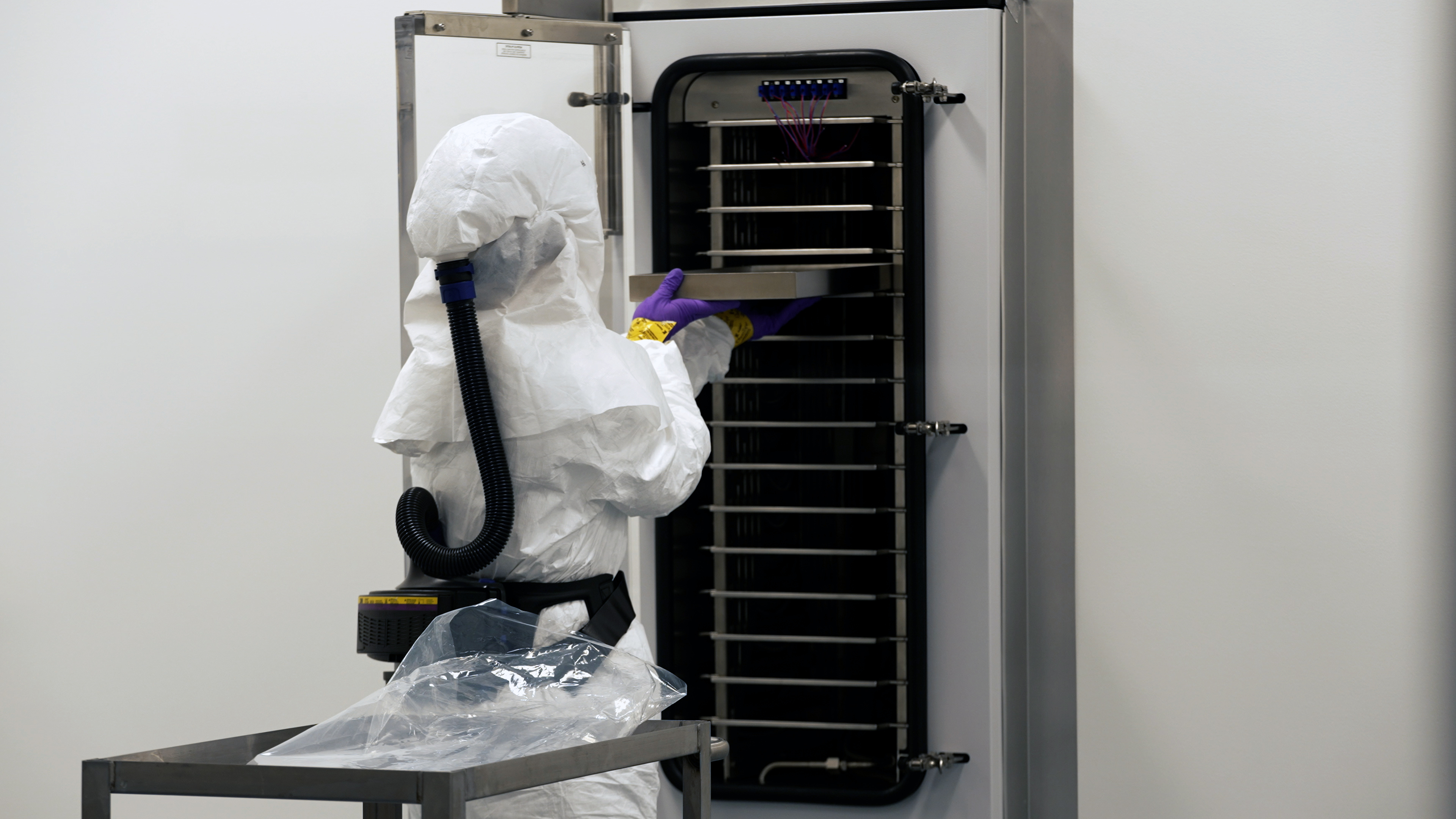
Snapdragon Chemistry Expansion
Cambrex announced today that Snapdragon Chemistry, a Cambrex
company, has expanded its active pharmaceutical ingredient (API) facility in
Waltham, Massachusetts to further support the development and manufacturing of
peptide therapies.
Cambrex, a leading global contract development and manufacturing
organization (CDMO), today announced that Snapdragon Chemistry, a Cambrex
company, has expanded its active pharmaceutical ingredient (API) facility in
Waltham, Massachusetts to further support the development and manufacturing of
peptide therapies.
The new GMP manufacturing suite increases the overall facility footprint
by 20% and includes an ISO-7 cleanroom for preparative HPLC chromatography and
lyophilization, cold storage for raw materials and a product storage suite. With
the completion of this investment, Snapdragon can now support peptide projects
from development to GMP manufacturing using solid-phase peptide synthesis (SPPS),
liquid-phase peptide synthesis (LPPS), or hybrid approaches.
“We designed this facility with a three-step strategy in mind for the
development of peptide drug candidates,” said Dr. Eric Fang, General Manager at
Snapdragon Chemistry. “We start with automated SPPS technology for
proof-of-concept. In parallel, we optimize the process using LPPS technology to
accelerate development and reduce manufacturing cost. We can then transfer the
process to our large manufacturing facilities, such as Charles City, Iowa, to
produce materials in traditional large batch reactors, significantly reducing
the cost of those drugs.”
Snapdragon’s LPPS technology utilizes traditional API batch reactors and
continuous flow, obviating the dependency on specialized, solid-phase reactors.
This new LPPS technology materially reduces solvent demand and the need for excess
reagents compared to standard solid-state peptide synthesis processes.
“SPPS certainly has its place. We use it in early development to get to
the clinic and to proof-of-concept quickly, but it’s not a scalable
solution if you want to supply a huge patient population,” said Dr. Matt Bio, Chief Scientific Officer, Cambrex. “We
designed the LPPS process so that we can leverage all 1.4 million Liters of
capacity within Cambrex to deliver peptide therapies.”
Cambrex continues to invest in
R&D across complex synthetic modalities, including further innovation for peptide
manufacturing, as well as new research on the application of artificial
intelligence for the optimization of oligonucleotide processes.