
Catalyst Pharmaceuticals to reduce workforce as part of operating expense management plan

Reduction is part of the company's ongoing efforts to conserve cash as it works to complete the requirements for an NDA submission of Firdapse (amifampridine phosphate) for the treatment of Lambert-Eaton myasthenic syndrome and congenital myasthenic syndromes.
Catalyst Pharmaceuticals has announced that the company is reducing its workforce by approximately 30%. The reduction in workforce, which affects employees from Catalyst's commercial team, is part of Catalyst's ongoing efforts to conserve cash as it works to complete the requirements for an NDA submission of Firdapse (amifampridine phosphate) for the treatment of Lambert-Eaton myasthenic syndrome (LEMS) and congenital myasthenic syndromes (CMS).
"I would like to express my sincere appreciation to those employees affected by this difficult but necessary action. This is a loss to our Catalyst family of talented and dedicated individuals who have worked with integrity and passion towards improving the lives of people living with rare diseases," said Patrick J. McEnany, Chairman and Chief Executive Officer. "The decision to reduce the company's workforce has been extremely difficult, but we believe that it is a necessary step to better align our resources and enable us to achieve our goal of bringing Firdapse to market for patients with LEMS and CMS."
In addition to Catalyst's continuing efforts with respect to the development of Firdapse for LEMS and related neuromuscular diseases, as well as the other programs in the product pipeline, Catalyst will continue to grow its expanded access program with participating physicians and eligible patients suffering with LEMS and CMS. Further, and while there can be no assurance, Catalyst continues to believe that its currently available resources will be sufficient to complete the development of and refile an NDA for Firdapse for LEMS and CMS.
Catalyst expects to complete the reduction in workforce immediately.
Related News
-

News Pharmaceutical Supply Chain People Moves
The latest appointments, promotions, and structural changes across the pharmaceutical supply chain.
-

News Merck KGaA to buy US biotech SpringWorks for US$3.9 billion
The German multinational pharmaceutical company Merck KGaA have signed a deal to buy US biotech company SpringWorks Therapeutics at an equity value of US$3.9 billion in a move to add rare cancer therapeutics to their pipelines.
-

News Cassava Sciences halts Alzheimer's drug trial after limited progress
Cassava Sciences have drawn a close to their investigations and development of the drug simufilam, which they intended to be used for the treatment of Alzheimer’s disease.
-
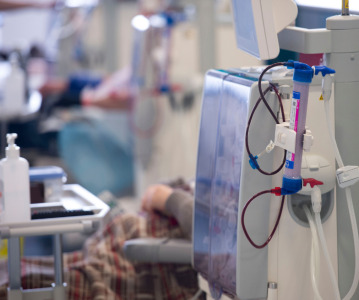
News US FDA adds haemodialysis bloodlines to devices shortage list
On March 14, 2025, the US FDA published an open letter to healthcare providers citing continuing supply disruptions of haemodialysis bloodlines, an essential component of dialysis machines.
-

News Vertex Pharmaceuticals stock jumps as FDA approves non-opioid painkiller
UK-based Vertex Pharmaceuticals saw their stock shares soar as the US FDA signed off on the non-opioid painkiller Journavx, also known as suzetrigine, for patients with moderate to severe acute pain, caused by surgery, accidents, or injuries.
-

News Lessons from CPHI Milan 2024: Sunny Intervals for Pharma Manufacturing?
As the 2024 CPHI conference wrapped up in Milan, we caught up with L.E.K. Consulting – a global strategy consulting firm with deep expertise in pharma manufacturing – to discuss evolving market perspectives and business outlook. -

News US BIOSECURE Act passed by US House of Representatives
The controversial act, which has already impacted several foreign companies operating in the US, was passed by the House of Representatives on September 9, 2024. It is now headed for the US Senate before it can be signed into law by President Joe Biden... -
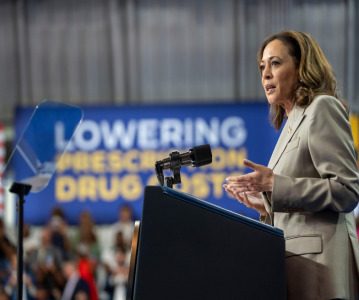
News Drug prices agreed upon as part of the US Inflation Reduction Act
The Inflation Reduction Act brought into constitution by the Biden administation in 2022, which proposed a drug price negotiation between the government and pharmaceutical companies, has reached it's first agreement.