
CEVEC's CAP-GT sets a new standard through RCA-free production of adenoviral vectors for gene therapy applications

The technology is underway to replace HEK293 as current production host for adenoviral vectors.
CEVEC Pharmaceuticals has announced that the company's proprietary cell-expression system, CAP-GT, has delivered the production of safe adenoviral (AV) gene therapy vectors with the proven absence of RCAs.
For most adenoviral-based gene therapy applications, adenoviral vectors are modified in such a way to deliver the gene of interest to the target cell but cannot replicate within the cells of the patient. The commonly used producer cell line for vector production, HEK 293, bears the inherent risk of accidentally generating, by homologous recombination, replication-competent adenoviruses. The absence of RCAs in clinical production lots can only be proven through intensive testing to eliminate the risk of involuntarily spreading the infective vector.
CEVEC's CAP-GT prohibits the formation of RCAs as the CAP cells do not allow homologous recombination events to occur with the AV vector genome. No RCAs are found in 5 x 10¹⁰ virus particles (VP) of CAP-GT-derived adenoviral vectors, whereas adenoviral vector preparations from HEK293 cells contain 5-500 RCAs per 1010 VPs. RCA was measured using an in vitro assay. The observed titers in the CAP-GT derived adenoviral vector production results matched and exceeded titers seen in production when using HEK293 cells.
"We have delivered superior results with the production of CAP-GT-derived adenoviral vectors," commented Frank Ubags, CEO of CEVEC Pharmaceuticals GmbH. "The advantages in terms of safety and productivity, as well as the easy industrial scale up of the CAP-GT suspension cell lines, create an unique position in gene therapy vector manufacturing with the clear goal to replace HEK293 as the current production host."
CEVEC's CAP-GT technology meets the necessary regulatory requirements. Derived from a non-tumour human origin and grown in serum-free suspension culture, the cell line was developed according to industrial standards with complete documentation and full certification of materials. A master file is currently in process to be submitted to the FDA.
Related News
-

News Pharmaceutical Supply Chain People Moves
The latest appointments, promotions, and structural changes across the pharmaceutical supply chain.
-

News Merck KGaA to buy US biotech SpringWorks for US$3.9 billion
The German multinational pharmaceutical company Merck KGaA have signed a deal to buy US biotech company SpringWorks Therapeutics at an equity value of US$3.9 billion in a move to add rare cancer therapeutics to their pipelines.
-

News Cassava Sciences halts Alzheimer's drug trial after limited progress
Cassava Sciences have drawn a close to their investigations and development of the drug simufilam, which they intended to be used for the treatment of Alzheimer’s disease.
-

News US FDA adds haemodialysis bloodlines to devices shortage list
On March 14, 2025, the US FDA published an open letter to healthcare providers citing continuing supply disruptions of haemodialysis bloodlines, an essential component of dialysis machines.
-

News Vertex Pharmaceuticals stock jumps as FDA approves non-opioid painkiller
UK-based Vertex Pharmaceuticals saw their stock shares soar as the US FDA signed off on the non-opioid painkiller Journavx, also known as suzetrigine, for patients with moderate to severe acute pain, caused by surgery, accidents, or injuries.
-

News Lessons from CPHI Milan 2024: Sunny Intervals for Pharma Manufacturing?
As the 2024 CPHI conference wrapped up in Milan, we caught up with L.E.K. Consulting – a global strategy consulting firm with deep expertise in pharma manufacturing – to discuss evolving market perspectives and business outlook. -

News US BIOSECURE Act passed by US House of Representatives
The controversial act, which has already impacted several foreign companies operating in the US, was passed by the House of Representatives on September 9, 2024. It is now headed for the US Senate before it can be signed into law by President Joe Biden... -
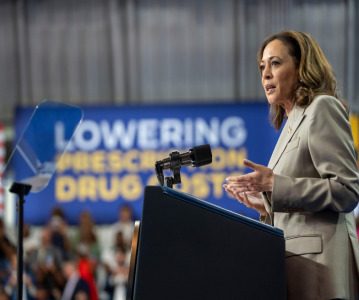
News Drug prices agreed upon as part of the US Inflation Reduction Act
The Inflation Reduction Act brought into constitution by the Biden administation in 2022, which proposed a drug price negotiation between the government and pharmaceutical companies, has reached it's first agreement.