
Comparative analysis of a complex monoclonal antibody
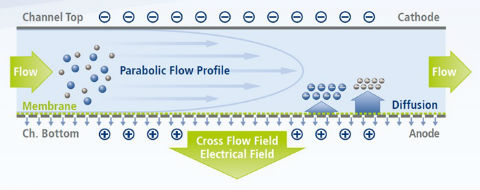
New poster describes how the EAF4 module enabled simultaneous measurement of size and surface charge characteristics of antibodies and proteins.
Postnova Analytics has published a new poster that compares the suitability of Electrical Asymmetrical Flow Field Flow Fractionation (EAF4) and Size Exclusion Chromatography (SEC) for determining the physicochemical and biophysical attributes of monoclonal antibodies.
In the described work, a reference monoclonal antibody (RM 8671 mAb), from the US National Institute of Standards and Technology (NIST), was used to compare separation, aggregation quantification, and recovery parameters for an EAF4-UV-MALS versus SEC-UV-MALS techniques. The NIST mAb provides a representative test molecule for development of novel technology for therapeutic protein characterization.
The poster describes how the EAF4 module enabled simultaneous measurement of size and surface charge characteristics (electrophoretic mobility) of antibodies and proteins. Further, although no aggregates were detected by SEC, the FFF system showed protein/antibody aggregates represented 10% of the total mass injected. The researchers concluded that the FFF open channel design may allow for better recovery of injected mass than SEC which is particularly important when seeking to quantify aggregates present in small amounts.
Postnova Analytics EAF4 technology uniquely combines the principle of Electrical and Asymmetrical Flow FFF in just one system. In an EAF2000 system, Electrical and Cross Flow Fields are applied simultaneously across the FFF channel enabling separations by size and particle charge based on electrophoretic mobility. Combining these two powerful separation techniques in a single platform opens the door to characterising complex proteins, antibodies and viruses as well as environmental and charged nanoparticles or polymers that have proven intractable to other techniques.
Related News
-

News Pharmaceutical Supply Chain People Moves
The latest appointments, promotions, and structural changes across the pharmaceutical supply chain.
-

News Merck KGaA to buy US biotech SpringWorks for US$3.9 billion
The German multinational pharmaceutical company Merck KGaA have signed a deal to buy US biotech company SpringWorks Therapeutics at an equity value of US$3.9 billion in a move to add rare cancer therapeutics to their pipelines.
-

News Cassava Sciences halts Alzheimer's drug trial after limited progress
Cassava Sciences have drawn a close to their investigations and development of the drug simufilam, which they intended to be used for the treatment of Alzheimer’s disease.
-
News US FDA adds haemodialysis bloodlines to devices shortage list
On March 14, 2025, the US FDA published an open letter to healthcare providers citing continuing supply disruptions of haemodialysis bloodlines, an essential component of dialysis machines.
-
News Vertex Pharmaceuticals stock jumps as FDA approves non-opioid painkiller
UK-based Vertex Pharmaceuticals saw their stock shares soar as the US FDA signed off on the non-opioid painkiller Journavx, also known as suzetrigine, for patients with moderate to severe acute pain, caused by surgery, accidents, or injuries.
-
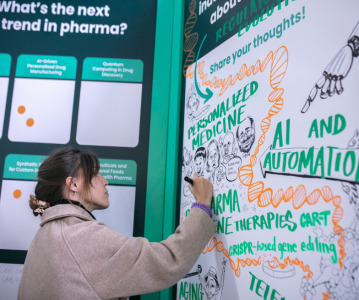
News Lessons from CPHI Milan 2024: Sunny Intervals for Pharma Manufacturing?
As the 2024 CPHI conference wrapped up in Milan, we caught up with L.E.K. Consulting – a global strategy consulting firm with deep expertise in pharma manufacturing – to discuss evolving market perspectives and business outlook. -
News US BIOSECURE Act passed by US House of Representatives
The controversial act, which has already impacted several foreign companies operating in the US, was passed by the House of Representatives on September 9, 2024. It is now headed for the US Senate before it can be signed into law by President Joe Biden... -
News Drug prices agreed upon as part of the US Inflation Reduction Act
The Inflation Reduction Act brought into constitution by the Biden administation in 2022, which proposed a drug price negotiation between the government and pharmaceutical companies, has reached it's first agreement.