
CPHI Milan Speaker Spotlight: Manufacturing 5.0 Keynote addresses partnerships and patient access
.png)
In the run-up to CPHI Milan, we sit down with some of the experts and thought-leaders speaking at this year's conference.
Elisabeth Stampa, Board Member at Medichem SA and President for Medicines for Europe, speaks to us about her keynote address for the Manufacturing 5.0 track. She explores how shifting partnerships are shaping pharmaceutical manufacturing, and what to look out for in Pharma 5.0.
 Elisabeth, boasting over two decades of Pharma industry experience and a proven track record in business growth and strategic transformation, currently chairs the Board of Medichem SA. and is the President of Medicines for Europe since March 2022. Formerly CEO of Medichem SA, she led the company’s evolution from a pure active ingredients firm to a competitive vertically integrated player. With a career spanning various executive roles within the corporate family business, Elisabeth commenced her journey at Laboratorios Esteve. Armed with a BSc in Pharmacy and an MBA (ESADE Business School, Barcelona), she contributes to the Board of Trustees of IQS (Institut Quimic Sarrià, Universitat Ramon Llull Barcelona) and the Board of Catalonia Health (largest Lifesciences cluster in Spain). Elisabeth’s proactive involvement in national and international trade associations aligns with her advocacy for legislative changes aimed to enhancing patient access to affordable medicines and fortifying the European Pharma Generic and Biosimilar industry on a global scale.
1. What are you most looking forward to from the Manufacturing 5.0 track at CPHI this year?
Mostly, to learn about trends, from digital to nanotech and continuous manufacturing. To understand how these new technologies can add value to the industry, particularly how patients can benefit from them. All while complying with the compliance and manufacturing standards, which need to adapt to new technologies, processes and products. This will be so invaluable for the industry.
2. How are shifts in partnerships shaping the future of pharma manufacturing? From CDMO relationships to working with Start-Ups?
Partnerships have always existed and will continue to grow. Many new products and newer technologies start at small companies or start-ups. Then, larger, innovative pharma firms develop them. The relationship between CDMOs and start-ups is a prime example of collaboration. It shows how independent businesses can thrive together using each other's strengths. One of the best and recent collaborations happened with the development and massive production of some of the COVID-19 vaccines.
3. How are companies scaling up manufacturing capacity to meet demand in certain areas, for example in the production of vaccines or blockbuster medicines such as obesity drugs?
Recently, many companies have started or boosted sterile production capacity. This expansion started with the demand for COVID-19 vaccines and continues to grow with GLP-1 drug needs. The acquisition of Novo by Catalent is a prime example. Not only research firms are growing. Both small and large contract development manufacturing organisations (CDMOs) are also ramping up production. They aim to meet rising demand and adhere to stricter regulations, like Europe's Annex 1. This has a spill-over effect on equipment & parts as well as on active ingredients and excipients, all experiencing increasing demand and production.
4. What initiatives do Medicines for Europe have for changing manufacturing capabilities to increase patients’ access to medicine?
A significant number of Medicines for Europe’s members have expanded in capacity both with new plants as well as with relevant expansions in existing sites in the past years, despite generic and biosimilar products’ declining margins. To further sustain the manufacturing capacity growth trend, Medicines for Europe is advocating to strengthen the competitiveness of the EU manufacturing base with new incentives, which can be financial, legal or regulatory. Also to ensure the greening, modernisation, and sustainability of the already existing manufacturing capacity.
Additionally, Medicines for Europe is aiming at a harmonised bolar provision that allows to manufacture and launch generics and biosimilars at day -1 after IP expiry, including pricing and reimbursement listing. This will allow the production of commercial amounts of the products ensuring timely and equitable access to affordable medicines for patients.
A wider regulatory flexibility and digitalisation (such as the electronic patient information leaflet – EPIL) are also incentives that would help to streamline manufacturing processes.
5. Will these different processes help to increase the sustainability and security of the supply chain globally?
New technologies and digitalisation should create greener processes and products. These can increase and strengthen Europe's supply chains.
6. How is AI and digitalisation being used to push manufacturing into the future?
Digitalisation is helping to establish the best manufacturing conditions by defining “golden batches”, which lead to reduced waste, increase yield, and process validation & optimisation. In manufacturing, other areas benefiting from digitalisation and AI are scale-up, increased automation, demand planning, stock forecasting, and manufacturing plant maintenance.
CPHI Milan takes place October 8-10 at the historic Fiera Milan and there's still time to register! Click here to find out more.
Related News
-

News An in-depth look at sustainability through the people at CPHI Milan
CPHI Milan was the stage for the launch of The Sustainability Collective from CPHI, aiming to bring together experts, companies, and initiatives in sustainability across the industry to action menaingful change.
-
News CPHI Milan Wrap-Up Report: Conference Highlights
Discover the emerging and trending topics of the pharmaceutical industry with our CPHI Milan Conference Highlights, with exclusive insight from pharmaceutical leaders and experts!
-
News SCHOTT Pharma’s sustainable journey with CPHI
Sustainability is of paramount importance in the pharmaceutical industry. See how a recent partnership between CPHI and SCHOTT Pharma has helped to highlight and accelerate their sustainability journey to reach global goals.
-
News Lessons from CPHI Milan 2024: Sunny Intervals for Pharma Manufacturing?
As the 2024 CPHI conference wrapped up in Milan, we caught up with L.E.K. Consulting – a global strategy consulting firm with deep expertise in pharma manufacturing – to discuss evolving market perspectives and business outlook. -
News CPHI Milan 2024: Excerpts from the Exhibitors
After another successful year of bringing the pharmaceutical community together at CPHI Milan in October, hear direct from the exhibitors on why the event is so important for them and the industry as a whole.
-
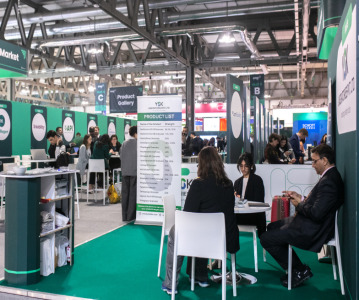
News Scaling the Industry: CPHI Scale-Up Market interview with YSK Laboratories
For the first time, CPHI Milan hosted the CPHI Start-Up Market, expanding support for emerging and small-sized enterprises in their transition to the next level of growth. In this interview, we spoke with Yuvansh Khokhani, Managing Director of YSK Labo... -
News Key Insights from the Heart of Pharma: an exclusive CPHI Online report
CPHI Milan, held from October 8–10, 2024 in the historic Fiera Milano, celebrated its 35th edition of bringing together the pharmaceutical industry and supply chain for 3 days of collaborating and innovating. Our first CPHI Wrap-Up Report brings ... -
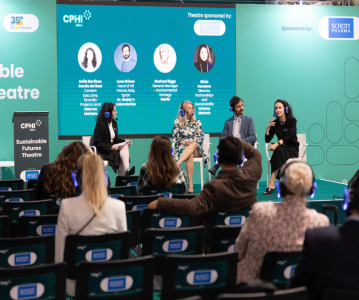
News Women in Pharma: Moving beyond discussions and into best practice at CPHI Milan
In this second CPHI Milan special of our monthly series, we cover the key takeaways from the Diversity & Wellbeing track held on October 10, 2024.