
Demand for natural ingredients in beauty products boosts sales
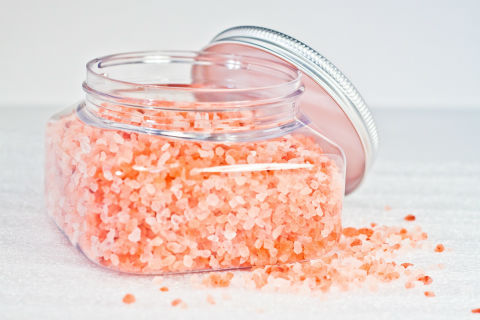
Salt has contributed 37% to the value growth of facial scrubs.
Four out of 10 of the top selling facial scrub brands use clay, sugar, salt or fruits as alternatives to microbeads.
New Government legislation introduced at the start of this year banning the manufacturing of products containing plastic microbeads found in facial scrubs, as well as general consumer interest in products that promote wellness and health, whilst being environmentally friendly, has lead to a plethora of new natural ingredients being introduced in the facial scrub market over the last year. The latest market data from IRI, the provider of big data and predictive analytics for FMCG manufacturers and retailers, illustrates that new product development (NPD) in facial scrubs has added +£1.4 million in sales in the last year (Source: IRI Infoscan 52 weeks to 27 Jan 2018).
Microbeads are very small pieces of plastic used in facial scrubs and other skincare products. Concern with the thousands of tonnes of plastic microbeads washing into the sea every year and harming marine life led to a Government ban and consumer concern about buying these products. Skincare brands took products off the shelves and have rapidly innovated so that they could offer their customers the same benefits of daily exfoliation – principally a glowing complexion – but with natural ingredients that biodegrade and pose no harm to marine life.
As a result, NPD using natural ingredients made a huge contribution to sales in this category during the last year. Clay has contributed a massive 339% to the value growth of facial scrubs, with sugar and salt contributing 39% and 37% respectively. The health benefits of clay are widely accepted – it draws out impurities from the skin, offers circulation boosting properties and assists with skin break-outs – but its use in the facial scrub market is new; historically it has been used in facial masks. Salt is an ingredient most commonly associated with cooking but its high mineral content, particularly in sea salt, can help reduce inflammation and breathe new life into skin. Sugar is a natural source of glycolic acid that penetrates the skin and encourages cell turnover, retaining moisture and keeping skin hydrated. Facial scrubs containing sugar have grown by £74k in just one year. There are some other natural alternatives that we may start to see more of as brands get creative; oats, walnut shells, jojoba beads and coffee grounds.
Since 2017, the facial scrub market overall has gained +2% in value sales to £11.7 million.
Kaajal Bhatti, Senior Insight Manager at IRI commented: “The landscape of brands operating in this popular skincare segment is changing. New product innovation has clearly hit the mark and proved a huge winner with customers – with sales of new products adding £1.4m to the category in the last year. Sales of the biggest brands in 2017 declined whereas new entrants, offering natural and environmentally friendly ingredients and packaging, demonstrated positive sales growth. Established brands will have to be more nimble to adapt to changing consumer trends and broader environmental concerns. It will be interesting to see how the marketing strategies of both segments play out and what natural product will be next for our skincare exfoliation regime.”
Related News
-

News Pharmaceutical Supply Chain People Moves
The latest appointments, promotions, and structural changes across the pharmaceutical supply chain.
-

News Merck KGaA to buy US biotech SpringWorks for US$3.9 billion
The German multinational pharmaceutical company Merck KGaA have signed a deal to buy US biotech company SpringWorks Therapeutics at an equity value of US$3.9 billion in a move to add rare cancer therapeutics to their pipelines.
-

News Cassava Sciences halts Alzheimer's drug trial after limited progress
Cassava Sciences have drawn a close to their investigations and development of the drug simufilam, which they intended to be used for the treatment of Alzheimer’s disease.
-

News US FDA adds haemodialysis bloodlines to devices shortage list
On March 14, 2025, the US FDA published an open letter to healthcare providers citing continuing supply disruptions of haemodialysis bloodlines, an essential component of dialysis machines.
-

News Vertex Pharmaceuticals stock jumps as FDA approves non-opioid painkiller
UK-based Vertex Pharmaceuticals saw their stock shares soar as the US FDA signed off on the non-opioid painkiller Journavx, also known as suzetrigine, for patients with moderate to severe acute pain, caused by surgery, accidents, or injuries.
-

News Lessons from CPHI Milan 2024: Sunny Intervals for Pharma Manufacturing?
As the 2024 CPHI conference wrapped up in Milan, we caught up with L.E.K. Consulting – a global strategy consulting firm with deep expertise in pharma manufacturing – to discuss evolving market perspectives and business outlook. -

News US BIOSECURE Act passed by US House of Representatives
The controversial act, which has already impacted several foreign companies operating in the US, was passed by the House of Representatives on September 9, 2024. It is now headed for the US Senate before it can be signed into law by President Joe Biden... -

News Drug prices agreed upon as part of the US Inflation Reduction Act
The Inflation Reduction Act brought into constitution by the Biden administation in 2022, which proposed a drug price negotiation between the government and pharmaceutical companies, has reached it's first agreement.