
Demand for safe packaging to combat illicit drug market rackets on the rise
Pharma manufacturers are feeling encouraged to explore new possibilities.
Future Market Insights offers key insights on the global anti-counterfeit pharmaceutical packaging market in a new report titled, "Anti-counterfeit Pharmaceutical Packaging Market: Global Industry Analysis and Opportunity Assessment, 2016-2026". The global anti-counterfeit pharmaceutical packaging market is projected to register a robust CAGR of 12.1% during the forecast period 2016-2026. The report provides in-depth information on the global anti-counterfeit pharmaceutical packaging market pertaining to the market trends, competitive landscape, market dynamics, and market estimation and forecast for the projected ten-year period.
Demand for safe packaging to combat illicit drug market rackets spread across the globe is increasing. The present market is plagued by forged pharmaceutical formulas. The soaring market size of counterfeit drugs is creating a parallel economy in the global market. The emerging threat has a rippling effect on all the stakeholders as well as on the consumers. This dark underbelly of the pharmaceutical industry is crippling the growth of the market. The increasing dominance of counterfeit drugs has compelled pharma manufacturers to set up a safety ring to guard them against this threat. Anti-counterfeiting packaging is one of the measures that pharma majors are relying on. They are also using conventional solutions such as integrating authentication overt features with covert elements, forensics, and track & trace elements. These measures have fetched fruitful results for pharmaceutical companies and tier II pharma organisations in the recent past. Mushrooming popularity of anti-counterfeit pharmaceutical packaging technology is affecting the global demand for anti-counterfeit pharmaceutical packaging.
The efforts of WHO and FDA to ensure safe-conduct practices across the pharmaceutical industry value chain by integrating advanced anti-counterfeit packaging technology has encouraged pharma manufacturers to explore new possibilities. This, in turn, is creating value for suppliers of anti-counterfeit packaging technology to the pharmaceutical industry. The global anti-counterfeit pharmaceutical packaging market is responding with a positive growth rate, which is likely to continue during the forecast period.
Segmentation highlights
The global anti-counterfeit pharmaceutical packaging market is segmented on the basis of usage feature (convert features, divert features, forensic markers, tamper evidence and track & trace technologies [sterilization and identification system]) and technology (RFID [active tags, passive tags, semi-active tags], security inks and coatings, security printing and graphics, hologram, mass encoding [Barcode Application, Digital Mass Serialization, Digital Mass Encryption], others [Electromagnetic, surveillance technologies]).
Regional market projections
The report covers the global anti-counterfeit pharmaceutical packaging market across seven key regions namely - North America, Latin America, Western Europe, Eastern Europe, Japan, Asia Pacific Excl. Japan (APEJ), and the Middle East and Africa (MEA). On the basis of region, North America region is projected to remain dominant in the global anti-counterfeit pharmaceutical packaging market throughout the forecast period. Anti-counterfeit pharmaceutical packaging market in North America is expected to take a major leap within the forecast period given the active presence of major pharma companies, swelling exports and several biologics research hubs that are likely to expedite market growth.
Anti-counterfeit pharmaceutical packaging is expected to witness robust growth in the APAC market driven by increasing demand for anti-counterfeit measures in the region and the market is growing at the CAGR of 18.9 % over the forecast period. In MEA region the new wave of economic reforms is wooing foreign investors. Africa is an emerging economy that is influencing local as well as international players. The anti-counterfeit pharmaceutical market in Middle East & Africa is estimated to expand at a fast-paced CAGR of 11.5% by 2026 owing to the staggering growth in the economy of the region.
Related News
-

News Pharmaceutical Supply Chain People Moves
The latest appointments, promotions, and structural changes across the pharmaceutical supply chain.
-

News Merck KGaA to buy US biotech SpringWorks for US$3.9 billion
The German multinational pharmaceutical company Merck KGaA have signed a deal to buy US biotech company SpringWorks Therapeutics at an equity value of US$3.9 billion in a move to add rare cancer therapeutics to their pipelines.
-

News Cassava Sciences halts Alzheimer's drug trial after limited progress
Cassava Sciences have drawn a close to their investigations and development of the drug simufilam, which they intended to be used for the treatment of Alzheimer’s disease.
-

News US FDA adds haemodialysis bloodlines to devices shortage list
On March 14, 2025, the US FDA published an open letter to healthcare providers citing continuing supply disruptions of haemodialysis bloodlines, an essential component of dialysis machines.
-
News Vertex Pharmaceuticals stock jumps as FDA approves non-opioid painkiller
UK-based Vertex Pharmaceuticals saw their stock shares soar as the US FDA signed off on the non-opioid painkiller Journavx, also known as suzetrigine, for patients with moderate to severe acute pain, caused by surgery, accidents, or injuries.
-

News Lessons from CPHI Milan 2024: Sunny Intervals for Pharma Manufacturing?
As the 2024 CPHI conference wrapped up in Milan, we caught up with L.E.K. Consulting – a global strategy consulting firm with deep expertise in pharma manufacturing – to discuss evolving market perspectives and business outlook. -
News US BIOSECURE Act passed by US House of Representatives
The controversial act, which has already impacted several foreign companies operating in the US, was passed by the House of Representatives on September 9, 2024. It is now headed for the US Senate before it can be signed into law by President Joe Biden... -
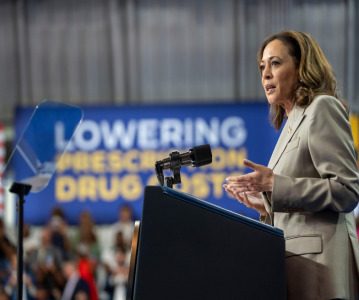
News Drug prices agreed upon as part of the US Inflation Reduction Act
The Inflation Reduction Act brought into constitution by the Biden administation in 2022, which proposed a drug price negotiation between the government and pharmaceutical companies, has reached it's first agreement.