
Depression drugs sales in the US will reach $4.6 billion by 2025

The US will not only remain the largest major market for MDD drugs, but will extend its lead over other countries, says GlobalData.
The US market for major depressive disorders (MDD) will rise from $2.4 billion in 2015 to $4.6 billion by 2025, at a strong compound annual growth rate (CAGR) of 6.6%, according to research and consulting firm GlobalData.
The company’s report states that the US will not only remain the largest major market for MDD drugs, but will extend its lead over other countries, primarily due to the wide-ranging availability of treatments and the commercial success of atypical antipsychotics, which generated 39% of the sales in the US market in 2015.
Christos Michaelides, GlobalData’s Analyst covering Neurology and Ophthalmology, explains: “As a class, atypical antipsychotics are due to retain their market share during the forecast period and are expected to generate sales of $1.9 billion in 2025, with a CAGR of 7.1%, which will represent a little over two-fifths of the US MDD market.
“The main driver behind the success of atypical antipsychotics in the MDD market is the high price for drugs in this class. Although Abilify generated the greatest revenue for the atypical antipsychotics in 2015, its sales will remain static during the forecast period. This will be due to increasing use of generic aripiprazole, and competition from Otsuka/Lundbeck’s Rexulti, which is due to see its US sales increase rapidly to just under $588 million by 2025.”
GlobalData estimates that five products in the late-stage pipeline will enter the MDD market in the US during the forecast period: Alkermes’ ALKS-5461, Allergan/Gedeon Richter/Mitsubishi Tanabe’s Vraylar, Axsome Therapeutics’ AXS-05, Janssen’s esketamine, and Allergan’s rapastinel. By 2025, GlobalData expects that these pipeline drugs will generate over $800 million, of which Janssen’s esketamine will achieve the greatest share.
Related News
-

News Pharmaceutical Supply Chain People Moves
The latest appointments, promotions, and structural changes across the pharmaceutical supply chain.
-

News Merck KGaA to buy US biotech SpringWorks for US$3.9 billion
The German multinational pharmaceutical company Merck KGaA have signed a deal to buy US biotech company SpringWorks Therapeutics at an equity value of US$3.9 billion in a move to add rare cancer therapeutics to their pipelines.
-

News Cassava Sciences halts Alzheimer's drug trial after limited progress
Cassava Sciences have drawn a close to their investigations and development of the drug simufilam, which they intended to be used for the treatment of Alzheimer’s disease.
-
News US FDA adds haemodialysis bloodlines to devices shortage list
On March 14, 2025, the US FDA published an open letter to healthcare providers citing continuing supply disruptions of haemodialysis bloodlines, an essential component of dialysis machines.
-
News Vertex Pharmaceuticals stock jumps as FDA approves non-opioid painkiller
UK-based Vertex Pharmaceuticals saw their stock shares soar as the US FDA signed off on the non-opioid painkiller Journavx, also known as suzetrigine, for patients with moderate to severe acute pain, caused by surgery, accidents, or injuries.
-
News Lessons from CPHI Milan 2024: Sunny Intervals for Pharma Manufacturing?
As the 2024 CPHI conference wrapped up in Milan, we caught up with L.E.K. Consulting – a global strategy consulting firm with deep expertise in pharma manufacturing – to discuss evolving market perspectives and business outlook. -
News US BIOSECURE Act passed by US House of Representatives
The controversial act, which has already impacted several foreign companies operating in the US, was passed by the House of Representatives on September 9, 2024. It is now headed for the US Senate before it can be signed into law by President Joe Biden... -
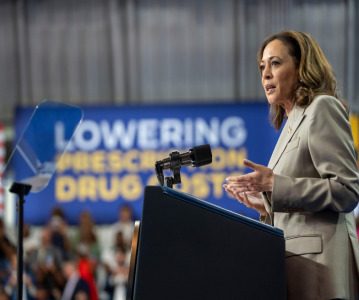
News Drug prices agreed upon as part of the US Inflation Reduction Act
The Inflation Reduction Act brought into constitution by the Biden administation in 2022, which proposed a drug price negotiation between the government and pharmaceutical companies, has reached it's first agreement.