
Eleven Biotherapeutics acquires Viventia Bio to create targeted protein therapeutics oncology company

Viventia’s Lead Product Candidate, ViciniumTM, being developed for high-grade non-muscle invasive bladder cancer, with topline Phase 3 data expected in 1H 2018.
Eleven Biotherapeutics and Viventia Bio have announced that the two companies and the shareholders of Viventia entered into a definitive share purchase agreement under which Eleven Biotherapeutics agreed to, and simultaneously completed, the acquisition of Viventia. Under the agreement, Eleven purchased all of the outstanding capital stock of Viventia in exchange for the issuance of 4,013,431 newly issued shares of Eleven common stock, which represented approximately 19.9% of the voting power of Eleven as of immediately prior to the issuance of such shares, and the agreement by Eleven to pay to the selling shareholders certain post-closing contingent cash payments upon the achievement of specified milestones and based upon net sales related to Viventia’s lead product candidate, Vicinium.
The acquisition creates a NASDAQ-listed company focused on the development of novel therapies based upon antibody fragments genetically fused to cytotoxic proteins, or targeted protein therapeutics (TPTs), as new treatments in areas of oncology with significant unmet need. The combined company will continue to be named Eleven Biotherapeutics, and Stephen Hurly, formerly Viventia’s chief executive officer, was appointed President and CEO of Eleven in connection with the acquisition. Abbie C. Celniker, Eleven’s former President and Chief Executive Officer, will remain a director of Eleven Biotherapeutics.
Eleven’s pipeline now includes Viventia’s lead product candidates Vicinium and Proxinium. Vicinium is in a Phase III clinical trial for high grade non-muscle invasive bladder cancer (NMIBC), with topline data expected in the first half of 2018. To date, Vicinium has been evaluated in more than 100 patients. In a Phase II clinical trial, Vicinium demonstrated a complete response rate of 40% at three months with no drug-related serious adverse events observed in the trial.
Proxinium is expected to enter Phase II development in early 2017 for the treatment of late-stage squamous cell carcinoma of the head and neck. In previous clinical trials, Proxinium was generally safe and well-tolerated and showed signs of anti-tumour activity. Proxinium has received Orphan Drug Designation from the FDA and the European Medicines Agency (EMA), and Fast Track designation from the FDA. Both product candidates are anti-EpCAM (epithelial cell adhesion molecule) fusion proteins that have been optimized for local tumour administration.
Eleven’s pipeline now also includes Viventia’s earlier stage pipeline of next generation TPT candidates that are designed and optimized for systemic administration for the potential treatment of a broader spectrum of cancer types.
“We are excited to join with Eleven to create a company with extensive experience in engineering and developing novel protein therapeutics for local delivery that we believe may maximize efficacy and reduce toxicity. Our TPTs combine specific tumour targeting with a protein based tumour killing payload, and will be developed to serve cancer patients in areas of high unmet need. Together we have a strong Board of Directors, management team, product pipeline and technology platform, and the capital needed to support the Company’s development plans into 2018,” said Stephen Hurly, CEO of Eleven Biotherapeutics.
“As previously announced, Eleven performed an extensive review of our strategic alternatives, and our Board of Directors believes that the acquisition of Viventia offers Eleven shareholders a compelling opportunity for enhancing long-term value,” said Abbie Celniker, former President and CEO of Eleven Biotherapeutics and current member of Eleven’s Board of Directors. “Our combined company will continue to support Roche as they develop EBI-031, and will benefit from the capital contributed by this partnership, which provides the necessary funding to enable further development of Vicinium and Proxinium.”
Related News
-

News Pharmaceutical Supply Chain People Moves
The latest appointments, promotions, and structural changes across the pharmaceutical supply chain.
-

News Merck KGaA to buy US biotech SpringWorks for US$3.9 billion
The German multinational pharmaceutical company Merck KGaA have signed a deal to buy US biotech company SpringWorks Therapeutics at an equity value of US$3.9 billion in a move to add rare cancer therapeutics to their pipelines.
-

News Cassava Sciences halts Alzheimer's drug trial after limited progress
Cassava Sciences have drawn a close to their investigations and development of the drug simufilam, which they intended to be used for the treatment of Alzheimer’s disease.
-

News US FDA adds haemodialysis bloodlines to devices shortage list
On March 14, 2025, the US FDA published an open letter to healthcare providers citing continuing supply disruptions of haemodialysis bloodlines, an essential component of dialysis machines.
-

News Vertex Pharmaceuticals stock jumps as FDA approves non-opioid painkiller
UK-based Vertex Pharmaceuticals saw their stock shares soar as the US FDA signed off on the non-opioid painkiller Journavx, also known as suzetrigine, for patients with moderate to severe acute pain, caused by surgery, accidents, or injuries.
-

News Lessons from CPHI Milan 2024: Sunny Intervals for Pharma Manufacturing?
As the 2024 CPHI conference wrapped up in Milan, we caught up with L.E.K. Consulting – a global strategy consulting firm with deep expertise in pharma manufacturing – to discuss evolving market perspectives and business outlook. -

News US BIOSECURE Act passed by US House of Representatives
The controversial act, which has already impacted several foreign companies operating in the US, was passed by the House of Representatives on September 9, 2024. It is now headed for the US Senate before it can be signed into law by President Joe Biden... -
News Drug prices agreed upon as part of the US Inflation Reduction Act
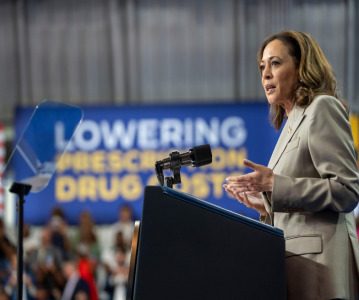
The Inflation Reduction Act brought into constitution by the Biden administation in 2022, which proposed a drug price negotiation between the government and pharmaceutical companies, has reached it's first agreement.