
ESCMID Warns of Antibiotic Armageddon in UK and Europe by 2025

The European Society of Clinical Microbiology and Infectious Disease (ESCMID) has warned that Britain and Europe collectively could face more than a million deaths in an impending "Antibiotic Armageddon” unless more is done to develop new cures, rapid diagnostics and preventative measures to combat the spread of drug-resistant diseases.
Experts at ESCMID issued the warning ahead of its annual conference — Copenhagen, 25–28 April — adding that without more money being spent on developing new drugs and the rationing of existing supplies, deaths across Europe could pass the grim milestone of a million by 2025. In Britain alone an estimated 10,000 people die a year and experts at ESCMID fear this number could triple, or even quadruple, within the next 10 years.
Currently, the best available figures were published back in 2009 and estimated that around 25–30,000 Europeans die each year due to antimicrobial resistance and the total number of deaths is now over 400,000. The European Centre for Disease Prevention and Control (ECDC) will make 2013 figures available later this year. However, due to new outbreaks with almost impossible to treat micro-organisms, ESCMID predicts that the current (true) mortality rate is almost certain to have risen significantly. Furthermore, ESCMID predicts that within the next 10 years, annual deaths in Europe could top 50,000 per year. The global position is even more critical, and by the year 2050, deaths per year are projected to rise to 10 million, surpassing major killers such as cancer, diabetes and road traffic accidents.
Murat Akova, ESCMID President, commenting on the scale of the problem: "The worrying aspect for Europe is that there is clearly a huge risk, particularly across some of the Mediterranean states. However, no one really knows just how big the problem currently is, let alone how big it’s going to become in the future. Although, we could see European national numbers remain broadly the same, it is far more likely to double, treble or even quadruple in the next 10 years. The other major problem is that bacteria do not respect country boundaries, so we are likely to see highly-resistant microbes spreading out from nations with a more severe problem. We need both European-wide and global strategies, as well as national initiatives, as the problem will not remain regionalised for long.”
The worst affected nations in Europe are Greece, Spain and Italy, which are facing an imminent antibiotic Armageddon, as an increasing number of bacteria within these countries are now resistant to most, or all, forms of known antibiotics. ESCMID cautions that this is not simply down to the lack of new antibiotics, but is being exacerbated by poor monitoring and control of drugs supply, and insufficient infection control in many hospitals and institutions. Worryingly, the implications of this change extend far beyond just a rising death toll, as it is fundamentally jeopardising modern healthcare, with costs rapidly increasing, and therapies and hospital stays being prolonged. The estimated global economic costs associated with this rise is $100 trillion, potentially resulting in a significant reduction in GDP [~6%] across all countries, with the poorest countries projected to experience the largest relative loss in GDP. The economic cost in Europe is already approximately €1.5 billion and rising.
Akova added: "Deaths in the UK alone could very easily triple over the next 10 years. But focusing only on the death toll by antimicrobial resistance obfuscates the gigantic problem of not being able to offer patients many of the modern healthcare victories. The rapid increase in antimicrobial resistance in Europe and the world is jeopardizing modern healthcare. And resistance is spreading to the UK from across other European nations.”
This year’s annual congress will again bring this issue into acute focus and the society is calling on governments and the pharma community to remain vigilant in the fight. ESCMID states that it is vital that new investments are made and we increase implementation of infection prevention and control strategies. Improved education and training is demanded, alongside further funding of R&D across new antibiotics, and crucially, increasing the durability of existing antibiotics through prudent use and antimicrobial stewardship.
The European Committee on Antimicrobial Susceptibility Testing — organized by ESCMID — functions as the breakpoint committee of EMA (European Medicines Agency) and ECDC, and will be announcing an update across European nations at this year’s congress.
Related News
-

News Pharmaceutical Supply Chain People Moves
The latest appointments, promotions, and structural changes across the pharmaceutical supply chain.
-

News Merck KGaA to buy US biotech SpringWorks for US$3.9 billion
The German multinational pharmaceutical company Merck KGaA have signed a deal to buy US biotech company SpringWorks Therapeutics at an equity value of US$3.9 billion in a move to add rare cancer therapeutics to their pipelines.
-

News Cassava Sciences halts Alzheimer's drug trial after limited progress
Cassava Sciences have drawn a close to their investigations and development of the drug simufilam, which they intended to be used for the treatment of Alzheimer’s disease.
-
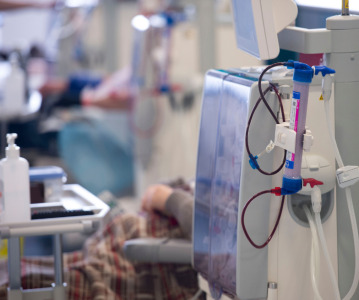
News US FDA adds haemodialysis bloodlines to devices shortage list
On March 14, 2025, the US FDA published an open letter to healthcare providers citing continuing supply disruptions of haemodialysis bloodlines, an essential component of dialysis machines.
-

News Vertex Pharmaceuticals stock jumps as FDA approves non-opioid painkiller
UK-based Vertex Pharmaceuticals saw their stock shares soar as the US FDA signed off on the non-opioid painkiller Journavx, also known as suzetrigine, for patients with moderate to severe acute pain, caused by surgery, accidents, or injuries.
-

News Lessons from CPHI Milan 2024: Sunny Intervals for Pharma Manufacturing?
As the 2024 CPHI conference wrapped up in Milan, we caught up with L.E.K. Consulting – a global strategy consulting firm with deep expertise in pharma manufacturing – to discuss evolving market perspectives and business outlook. -

News US BIOSECURE Act passed by US House of Representatives
The controversial act, which has already impacted several foreign companies operating in the US, was passed by the House of Representatives on September 9, 2024. It is now headed for the US Senate before it can be signed into law by President Joe Biden... -
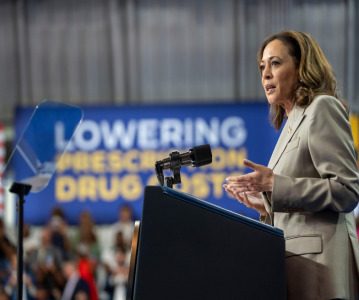
News Drug prices agreed upon as part of the US Inflation Reduction Act
The Inflation Reduction Act brought into constitution by the Biden administation in 2022, which proposed a drug price negotiation between the government and pharmaceutical companies, has reached it's first agreement.