
European Commission approves BMS's Opdivo for Hodgkin's

Opdivo is now the first and only PD-1 inhibitor approved for a hematologic malignancy in the European Union.
Bristol-Myers Squibb (BMS) has received approval from the European Commission for Opdivo (nivolumab) for the treatment of adult patients with relapsed or refractory classical Hodgkin lymphoma (cHL) after autologous stem cell transplant (ASCT) and treatment with brentuximab vedotin. Opdivo is now the first and only PD-1 inhibitor approved for a hematologic malignancy in the European Union (EU). This approval allows for the expanded marketing of Opdivo in relapsed or refractory cHL in all 28 Member States of the EU.
The approval is based on an integrated analysis of data from the Phase II CheckMate -205 and the Phase I CheckMate -039 trials, evaluating patients with relapsed or refractory cHL after ASCT and treatment with brentuximab vedotin. In the subset of patients in the efficacy population, the primary endpoint of objective response rate (ORR) as assessed by an independent radiologic review committee was 66%. The percentage of patients with a complete response was 6%, and the percentage of patients with a partial response was 60%. At 12 months, the progression-free survival rate was 57%.
Emmanuel Blin, senior vice president and chief strategy officer, BMS, commented: “We’re incredibly proud of this approval for Opdivo and what it means for adult patients with relapsed or refractory cHL after ASCT and treatment with brentuximab vedotin, as it marks the first and only PD-1 inhibitor approved for a hematologic malignancy in the EU. This also is BMS’s second immuno-oncology agent approved for a blood cancer in the EU within just 6 months.”
“As a practicing hematologist, I have experienced the challenge of managing classical Hodgkin lymphoma and the need among previously treated patients,” said Andreas Engert, lead investigator and professor of Internal Medicine, Hematology and Oncology, University Hospital of Cologne, Cologne, Germany. “It is incredibly exciting that with today’s approval ... we now have an entirely new treatment approach that has shown impressive response rates and durability of response in this difficult-to-treat population.”
Related News
-

News Pharmaceutical Supply Chain People Moves
The latest appointments, promotions, and structural changes across the pharmaceutical supply chain.
-

News Merck KGaA to buy US biotech SpringWorks for US$3.9 billion
The German multinational pharmaceutical company Merck KGaA have signed a deal to buy US biotech company SpringWorks Therapeutics at an equity value of US$3.9 billion in a move to add rare cancer therapeutics to their pipelines.
-

News Cassava Sciences halts Alzheimer's drug trial after limited progress
Cassava Sciences have drawn a close to their investigations and development of the drug simufilam, which they intended to be used for the treatment of Alzheimer’s disease.
-

News US FDA adds haemodialysis bloodlines to devices shortage list
On March 14, 2025, the US FDA published an open letter to healthcare providers citing continuing supply disruptions of haemodialysis bloodlines, an essential component of dialysis machines.
-

News Vertex Pharmaceuticals stock jumps as FDA approves non-opioid painkiller
UK-based Vertex Pharmaceuticals saw their stock shares soar as the US FDA signed off on the non-opioid painkiller Journavx, also known as suzetrigine, for patients with moderate to severe acute pain, caused by surgery, accidents, or injuries.
-

News Lessons from CPHI Milan 2024: Sunny Intervals for Pharma Manufacturing?
As the 2024 CPHI conference wrapped up in Milan, we caught up with L.E.K. Consulting – a global strategy consulting firm with deep expertise in pharma manufacturing – to discuss evolving market perspectives and business outlook. -

News US BIOSECURE Act passed by US House of Representatives
The controversial act, which has already impacted several foreign companies operating in the US, was passed by the House of Representatives on September 9, 2024. It is now headed for the US Senate before it can be signed into law by President Joe Biden... -
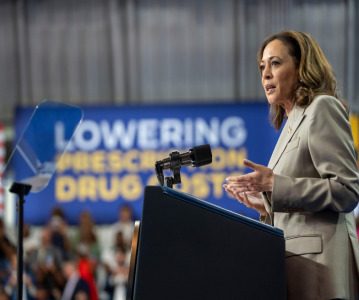
News Drug prices agreed upon as part of the US Inflation Reduction Act
The Inflation Reduction Act brought into constitution by the Biden administation in 2022, which proposed a drug price negotiation between the government and pharmaceutical companies, has reached it's first agreement.