
Field flow fractionation of proteins, macromolecules and nanoparticles
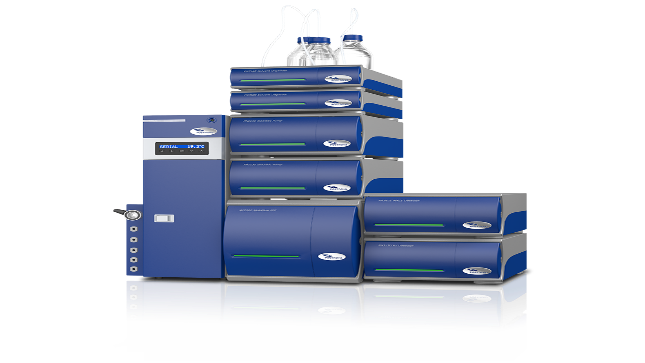
The Postnova AF2000 MultiFlow reported to offer more flexibility, better performance and more robust results than any system before.
The Postnova AF2000 MultiFlow is a high performance Flow Field-Flow Fractionation (FFF) platform for separation of proteins, macromolecules and nanoparticles.
Modular in design, the AF2000 MultiFlow incorporates the combined experience, expertise and technological advances from Postnova Analytics' nearly two decades of leadership in FFF. Incorporating a range of FFF modules in a single integrated system to provide universal separation, the AF2000 MultiFlow offers more flexibility, better performance and more robust results than any system before.
The AF2000 MultiFlow platform is based on the Flow FFF principles using a unique crossflow field design in which samples are separated by their dynamic diffusion on the basis of molar mass or particle size. Because of this design and the absence of any stationary phase, field-flow fractionation on the AF2000 MultiFlow can be performed without exerting shear forces and stress on the molecules or particles being separated.
The AF2000 can be run with different eluents, wide ranging temperature conditions and the same system can be used for running planar Asymmetric Flow FFF (AF4) or circular Hollow Fiber Flow FFF separations (HF5). Consequently, the AF2000 MultiFlow is an ideal platform for the characterization of proteins, antibodies, aggregates, vaccines, VLPs, liposomes, nanoparticles and natural or synthetic polymers.
The AF2000 MultiFlow is available in a series of different models. Various add-on modules, extra options and special FFF detectors are available, such as Multi-Angle Light Scattering (MALS) and Dynamic Light Scattering (DLS). All Postnova FFF modules and detectors have been especially developed for FFF and are perfectly optimised not only for the use with the AF2000 MultiFlow, but also for the other Postnova FFF systems. Additionally, the AF2000 Series has been designed for easy interfacing with high-end detection technologies, such as ICP-MS, from other suppliers that may already be at use in laboratories.
Related News
-

News Pharmaceutical Supply Chain People Moves
The latest appointments, promotions, and structural changes across the pharmaceutical supply chain.
-

News Merck KGaA to buy US biotech SpringWorks for US$3.9 billion
The German multinational pharmaceutical company Merck KGaA have signed a deal to buy US biotech company SpringWorks Therapeutics at an equity value of US$3.9 billion in a move to add rare cancer therapeutics to their pipelines.
-

News Cassava Sciences halts Alzheimer's drug trial after limited progress
Cassava Sciences have drawn a close to their investigations and development of the drug simufilam, which they intended to be used for the treatment of Alzheimer’s disease.
-

News US FDA adds haemodialysis bloodlines to devices shortage list
On March 14, 2025, the US FDA published an open letter to healthcare providers citing continuing supply disruptions of haemodialysis bloodlines, an essential component of dialysis machines.
-

News Vertex Pharmaceuticals stock jumps as FDA approves non-opioid painkiller
UK-based Vertex Pharmaceuticals saw their stock shares soar as the US FDA signed off on the non-opioid painkiller Journavx, also known as suzetrigine, for patients with moderate to severe acute pain, caused by surgery, accidents, or injuries.
-

News Lessons from CPHI Milan 2024: Sunny Intervals for Pharma Manufacturing?
As the 2024 CPHI conference wrapped up in Milan, we caught up with L.E.K. Consulting – a global strategy consulting firm with deep expertise in pharma manufacturing – to discuss evolving market perspectives and business outlook. -

News US BIOSECURE Act passed by US House of Representatives
The controversial act, which has already impacted several foreign companies operating in the US, was passed by the House of Representatives on September 9, 2024. It is now headed for the US Senate before it can be signed into law by President Joe Biden... -

News Drug prices agreed upon as part of the US Inflation Reduction Act
The Inflation Reduction Act brought into constitution by the Biden administation in 2022, which proposed a drug price negotiation between the government and pharmaceutical companies, has reached it's first agreement.