
Four Key Factors to Consider when Choosing an Effective Regulatory Outsourcing Partner

A decline in revenues from approved products and rising competition in generics are adding pressure to pharmaceutical, biotechnology and medical device companies and their internal resources. Company resources continue to shrink and approval processes and postapproval requirements have become more complex. This has led companies to look for additional support and expertise for clearing regulatory hurdles to commercialisation and for keeping approved products on the market.
While it's often tempting for pharmaceutical companies to keep development and regulatory processes in-house, outsourcing provides a variety of solutions. Tapping into outside expertise uniquely positions organisations to have a competitive advantage to guide products to approval and meet postapproval requirements. Furthermore, it saves valuable time and allows internal teams to focus on other pipeline projects. When considering an outsourcing partner, companies need to make sure the partner they choose is a good fit for their business, needs and budgets.
The Cardinal Health Regulatory Sciences team recently published a white paper that explores the four key factors that help pharmaceutical and biotech companies understand the why, what and how of selecting a successful regulatory partner.
1. Knowing when to consider outsourcing regulatory services; for example, when you need to augment the expertise of your current staff; expand capacity; overcome unique regulatory challenges; or manage costs by only using outsourced regulatory expertise on an as-needed basis.
2. What functions are best outsourced — theoretically, the entire preapproval and postapproval technical writing process can be outsourced. But more practically, it makes the most sense to outsource those regulatory approval functions that require a high level of expertise or are resource intensive.
3. How pharmaceutical and biotech companies can benefit — whether it's immediate access to highly experienced consultants or additional capacity to address unforeseen challenges, outsourcing regulatory consultation services can offer a broad array of benefits.
4. How to select the right partner for your needs — it's important to start your search for an outsourcing partner early, and to make sure you're asking the right questions to get the answers you need to help you make the best choice.
Related News
-

News Pharmaceutical Supply Chain People Moves
The latest appointments, promotions, and structural changes across the pharmaceutical supply chain.
-

News Merck KGaA to buy US biotech SpringWorks for US$3.9 billion
The German multinational pharmaceutical company Merck KGaA have signed a deal to buy US biotech company SpringWorks Therapeutics at an equity value of US$3.9 billion in a move to add rare cancer therapeutics to their pipelines.
-

News Cassava Sciences halts Alzheimer's drug trial after limited progress
Cassava Sciences have drawn a close to their investigations and development of the drug simufilam, which they intended to be used for the treatment of Alzheimer’s disease.
-

News US FDA adds haemodialysis bloodlines to devices shortage list
On March 14, 2025, the US FDA published an open letter to healthcare providers citing continuing supply disruptions of haemodialysis bloodlines, an essential component of dialysis machines.
-

News Vertex Pharmaceuticals stock jumps as FDA approves non-opioid painkiller
UK-based Vertex Pharmaceuticals saw their stock shares soar as the US FDA signed off on the non-opioid painkiller Journavx, also known as suzetrigine, for patients with moderate to severe acute pain, caused by surgery, accidents, or injuries.
-

News Lessons from CPHI Milan 2024: Sunny Intervals for Pharma Manufacturing?
As the 2024 CPHI conference wrapped up in Milan, we caught up with L.E.K. Consulting – a global strategy consulting firm with deep expertise in pharma manufacturing – to discuss evolving market perspectives and business outlook. -

News US BIOSECURE Act passed by US House of Representatives
The controversial act, which has already impacted several foreign companies operating in the US, was passed by the House of Representatives on September 9, 2024. It is now headed for the US Senate before it can be signed into law by President Joe Biden... -
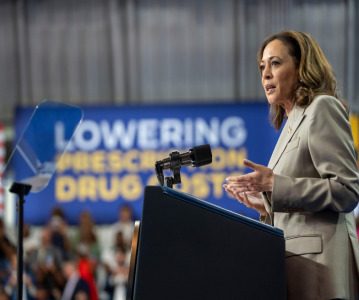
News Drug prices agreed upon as part of the US Inflation Reduction Act
The Inflation Reduction Act brought into constitution by the Biden administation in 2022, which proposed a drug price negotiation between the government and pharmaceutical companies, has reached it's first agreement.