
FTC files amicus brief explaining that pharmaceutical “product hopping” can violate the antitrust laws

The FTC filed its amicus brief in a private antitrust action in which Mylan Phamraceuticals Inc. alleges that Warner Chilcott PLC/Mayne Pharma Group maintained a monopoly in the market for its antibiotic Doryx by suppressing generic competition through three successive insignificant reformulations of the drug, combined with various efforts to curtail the availability of the original formulations.
The Federal Trade Commission (FTC) filed an amicus brief before the US Court of Appeals for the Third Circuit explaining that the district court made significant analytical errors in ruling for defendants in a dispute involving allegations of pharmaceutical “product hopping”. The brief explains that, in examining whether such conduct is unlawful, courts should account for the unique aspects of the pharmaceutical marketplace, including the nature of competition between branded pharmaceutical products and their generic counterparts.
Generic competition through state automatic substitution laws saves American consumers billions of dollars each year. Brand-name pharmaceutical companies can avoid this competition and preserve monopoly profits by combining minor product reformulations with efforts to damage or destroy the market for the original formulation. This tactic, commonly called product hopping, can harm consumers.
As the brief explains, “If a brand-name manufacturer tweaks its brand-name product shortly before anticipated generic entry and begins eliminating the market for the original formulation, it can impede competition from would-be generic entrants, which have sought FDA approval to sell a generic version only of the original formulation but not the replacement.” Such conduct could deprive generic companies of their most-efficient means of distribution — automatic substitution at the pharmacy — and, as a result, maintain the brand’s monopoly through illegal means.
The FTC filed its amicus brief in a private antitrust action in which Mylan Phamraceuticals Inc. alleges that Warner Chilcott PLC/Mayne Pharma Group maintained a monopoly in the market for its antibiotic Doryx by suppressing generic competition through three successive insignificant reformulations of the drug, combined with various efforts to curtail the availability of the original formulations. The district court granted the defendants’ motion for summary judgment, and the plaintiffs appealed that ruling to the US Court of Appeals for the Third Circuit.
The FTC takes no position on the ultimate merits of this case. The brief explains, however, that the district court’s broad ruling effectively embraces a rule of nearly per se legality for product-hopping conduct: “The district court held that a brand company may with impunity destroy what is often the only means of generic distribution — automatic substitution — so long as generics remain hypothetically free to pursue new and more costly distribution alternatives, such as direct advertising to physicians.” That outcome, the brief states, conflicts with the law of the Third Circuit, as well as other circuits.
The FTC’s brief also explains that the district court’s analysis of the monopoly-power question failed to account for the special characteristics of the pharmaceutical marketplace, including that generics are unique sources of competition for brand-name prescription drugs.
The FTC vote approving the amicus brief filing was 3-1, with Commissioner Maureen Ohlhausen voting no. It was filed on 30 September 2015.
Related News
-

News Pharmaceutical Supply Chain People Moves
The latest appointments, promotions, and structural changes across the pharmaceutical supply chain.
-

News Merck KGaA to buy US biotech SpringWorks for US$3.9 billion
The German multinational pharmaceutical company Merck KGaA have signed a deal to buy US biotech company SpringWorks Therapeutics at an equity value of US$3.9 billion in a move to add rare cancer therapeutics to their pipelines.
-

News Cassava Sciences halts Alzheimer's drug trial after limited progress
Cassava Sciences have drawn a close to their investigations and development of the drug simufilam, which they intended to be used for the treatment of Alzheimer’s disease.
-

News US FDA adds haemodialysis bloodlines to devices shortage list
On March 14, 2025, the US FDA published an open letter to healthcare providers citing continuing supply disruptions of haemodialysis bloodlines, an essential component of dialysis machines.
-

News Vertex Pharmaceuticals stock jumps as FDA approves non-opioid painkiller
UK-based Vertex Pharmaceuticals saw their stock shares soar as the US FDA signed off on the non-opioid painkiller Journavx, also known as suzetrigine, for patients with moderate to severe acute pain, caused by surgery, accidents, or injuries.
-

News Lessons from CPHI Milan 2024: Sunny Intervals for Pharma Manufacturing?
As the 2024 CPHI conference wrapped up in Milan, we caught up with L.E.K. Consulting – a global strategy consulting firm with deep expertise in pharma manufacturing – to discuss evolving market perspectives and business outlook. -

News US BIOSECURE Act passed by US House of Representatives
The controversial act, which has already impacted several foreign companies operating in the US, was passed by the House of Representatives on September 9, 2024. It is now headed for the US Senate before it can be signed into law by President Joe Biden... -
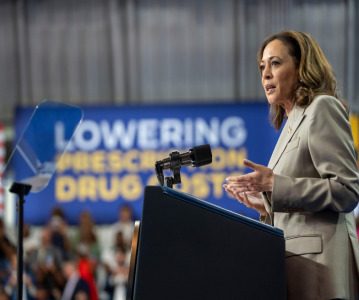
News Drug prices agreed upon as part of the US Inflation Reduction Act
The Inflation Reduction Act brought into constitution by the Biden administation in 2022, which proposed a drug price negotiation between the government and pharmaceutical companies, has reached it's first agreement.