
Generics companies to move away from "little white pills"
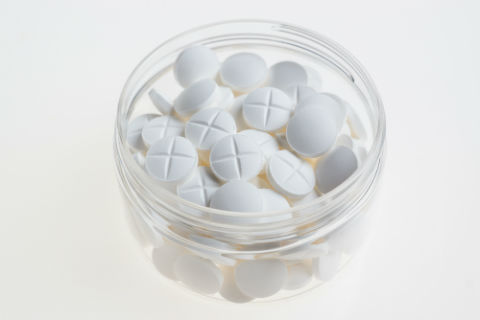
Accepting more complexity and risk is key for those generics companies seeking competitive differentiation by diversifying their product portfolios.
In an increasingly competitive market, it is widely accepted that generics companies are facing enormous downward pricing pressure. The mix of new product opportunities is changing, innovators are devising stronger defensive strategies, and the regulatory burden is becoming more expensive.
Drawing from his recent White Paper, "Generics companies, responding to tough times, steer towards higher-risk portfolio strategies", Brandon Boyd of Clarivate Analytics outlined the various portfolio strategies open to generics companies and their uptake to a packed audience at CPHI Worldwide in Madrid. Common to all was a willingness to accept higher levels of risk.
First, serving new channels such as hospitals and even government programs leads to demands on a whole range of factors from packaging through to final documentation. Second, enhancing entry strategies with patent challenges offers the extremely high risk/reward option compared with waiting for patent expiry. Third, moving up the product value chain from oral solids ("little white pills") to injectables and drug-device combinations, while appealing, often requires entering complex partnerships or M&As with all the attached unknowns.
As examples of this he pointed to the case of generic Advair, which still hasn’t been approved despite repeated attempts and generic Copaxone which, while approved with multiple players, still seems a risky area.
So, will generics companies take these risks? The answer according to Boyd appears to be 'yes' – in particular, Indian and Chinese companies are taking some or even all three of the above options. He concluded that meeting the challenge to differentiate will dominate the sector for the foreseeable future and that only those with patience, an unswerving focus on quality and execution will survive.
Related News
-

News Pharmaceutical Supply Chain People Moves
The latest appointments, promotions, and structural changes across the pharmaceutical supply chain.
-

News Merck KGaA to buy US biotech SpringWorks for US$3.9 billion
The German multinational pharmaceutical company Merck KGaA have signed a deal to buy US biotech company SpringWorks Therapeutics at an equity value of US$3.9 billion in a move to add rare cancer therapeutics to their pipelines.
-

News Cassava Sciences halts Alzheimer's drug trial after limited progress
Cassava Sciences have drawn a close to their investigations and development of the drug simufilam, which they intended to be used for the treatment of Alzheimer’s disease.
-

News US FDA adds haemodialysis bloodlines to devices shortage list
On March 14, 2025, the US FDA published an open letter to healthcare providers citing continuing supply disruptions of haemodialysis bloodlines, an essential component of dialysis machines.
-

News Vertex Pharmaceuticals stock jumps as FDA approves non-opioid painkiller
UK-based Vertex Pharmaceuticals saw their stock shares soar as the US FDA signed off on the non-opioid painkiller Journavx, also known as suzetrigine, for patients with moderate to severe acute pain, caused by surgery, accidents, or injuries.
-
News Lessons from CPHI Milan 2024: Sunny Intervals for Pharma Manufacturing?
As the 2024 CPHI conference wrapped up in Milan, we caught up with L.E.K. Consulting – a global strategy consulting firm with deep expertise in pharma manufacturing – to discuss evolving market perspectives and business outlook. -
News US BIOSECURE Act passed by US House of Representatives
The controversial act, which has already impacted several foreign companies operating in the US, was passed by the House of Representatives on September 9, 2024. It is now headed for the US Senate before it can be signed into law by President Joe Biden... -
News Drug prices agreed upon as part of the US Inflation Reduction Act
The Inflation Reduction Act brought into constitution by the Biden administation in 2022, which proposed a drug price negotiation between the government and pharmaceutical companies, has reached it's first agreement.