
Global Pandemic of Fake Medicines Poses Urgent Risk, Scientists Say

Poor quality medicines are a real and urgent threat that could undermine decades of successful efforts to combat HIV/AIDS, malaria and tuberculosis, according to the editors of a collection of journal articles published recently. Scientists report up to 41% of specimens failed to meet quality standards in global studies of about 17,000 drug samples. Among the collection is an article describing the discovery of falsified and substandard malaria drugs that caused an estimated 122,350 deaths in African children in 2013. Other studies identified poor quality antibiotics, which may harm health and increase antimicrobial resistance. However, new methodologies are being developed to detect problem drugs at the point of purchase and show some promise, scientists say.
Seventeen articles in all, detailing various aspects of the issue and proposing possible solutions, are included in a special journal supplement “The Global Pandemic of Falsified Medicines: Laboratory and Field Innovations and Policy Perspectives,” published online ahead of print by The American Journal of Tropical Medicine and Hygiene. Several articles suggest policy interventions, including an international framework and the adoption of stricter national laws against drug counterfeiting.
“This problem continues to spread globally, creating an even greater challenge to cooperation among stakeholders, many with limited resources,” noted the supplement’s co-editor, Joel Breman, senior scientist emeritus at the National Institutes of Health’s Fogarty International Center. “The need is urgent for collaboration among those with expertise in policy, science, technology, surveillance, epidemiology and logistics, in order to secure global supply chains.”
In an introductory essay, former FDA Commissioner Margaret Hamburg, says globalization has added layers of complexity to the drug supply chain that require greater oversight. “Today’s medical-product landscape blurs the line between domestic and foreign production, drawing attention to the need for global quality and safety oversight to prevent patient exposure to falsified products,” wrote Dr Hamburg, who was recently named foreign secretary of the Institute of Medicine.
Scientists inspected the quality of about 16,800 samples of anti-malarials, anti-tuberculosis medicines, antibiotics and anti-leishmaniasis drugs and reported 9–41% failed to meet the specifications. Seven separate studies were done, primarily in low-resource settings, and included samples from public and private sources.
“The pandemic of falsified and substandard medicines is pervasive and underestimated, particularly in low- and middle-income countries where drug regulatory systems are weak or non-existent, as shown by field studies in the supplement,” says Jim Herrington, co-editor of the supplement and director of the University of North Carolina’s Gillings Global Gateway at Chapel Hill. Until recently, Herrington was director of Fogarty’s international relations division.
New methodologies to test drug quality are emerging and scientists reported the results of four investigations. Simple paper-based test cards proved to be an economical and portable method to identify very low quality anti-malarials. More sophisticated approaches using fluorescent and luminescent techniques or other novel technologies can measure with greater precision, but may be difficult to use in remote settings. All of these promising tools require further testing to provide a greater evidence base to guide policymakers, the authors say.
An urgent and coordinated international response is required to address the pandemic of poor quality drugs, the scientists maintain. Policy proposals include a global agreement, similar to the Framework Convention on Tobacco Control External Web Site Policy, and stricter national laws to prosecute those who knowingly sell counterfeit medicines.
Related News
-

News Pharmaceutical Supply Chain People Moves
The latest appointments, promotions, and structural changes across the pharmaceutical supply chain.
-

News Merck KGaA to buy US biotech SpringWorks for US$3.9 billion
The German multinational pharmaceutical company Merck KGaA have signed a deal to buy US biotech company SpringWorks Therapeutics at an equity value of US$3.9 billion in a move to add rare cancer therapeutics to their pipelines.
-
News Cassava Sciences halts Alzheimer's drug trial after limited progress
Cassava Sciences have drawn a close to their investigations and development of the drug simufilam, which they intended to be used for the treatment of Alzheimer’s disease.
-
News US FDA adds haemodialysis bloodlines to devices shortage list
On March 14, 2025, the US FDA published an open letter to healthcare providers citing continuing supply disruptions of haemodialysis bloodlines, an essential component of dialysis machines.
-
News Vertex Pharmaceuticals stock jumps as FDA approves non-opioid painkiller
UK-based Vertex Pharmaceuticals saw their stock shares soar as the US FDA signed off on the non-opioid painkiller Journavx, also known as suzetrigine, for patients with moderate to severe acute pain, caused by surgery, accidents, or injuries.
-
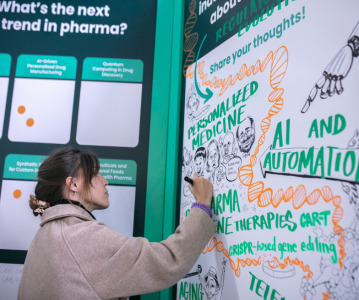
News Lessons from CPHI Milan 2024: Sunny Intervals for Pharma Manufacturing?
As the 2024 CPHI conference wrapped up in Milan, we caught up with L.E.K. Consulting – a global strategy consulting firm with deep expertise in pharma manufacturing – to discuss evolving market perspectives and business outlook. -
News US BIOSECURE Act passed by US House of Representatives
The controversial act, which has already impacted several foreign companies operating in the US, was passed by the House of Representatives on September 9, 2024. It is now headed for the US Senate before it can be signed into law by President Joe Biden... -
News Drug prices agreed upon as part of the US Inflation Reduction Act
The Inflation Reduction Act brought into constitution by the Biden administation in 2022, which proposed a drug price negotiation between the government and pharmaceutical companies, has reached it's first agreement.