
Global Spending on Medicines to Increase 30% by 2018, to $1.3 Trillion
More specialty drug innovation, greater patient access to medicines and reduced impact from patent expiries will be the primary drivers of an increase in global medicine spending of up to 30% by 2018. The increase in annual spending will spike this year when absolute growth will be about $70 billion, up from $44 billion in 2013 and $26 billion in 2012, according to new research released by the IMS Institute for Healthcare Informatics.
The report, The Global Outlook for Medicines Through 2018, found that the total global spend for pharmaceuticals will increase by $305-335 billion on a constant-dollar basis, compared to $219 billion during the past 5 years. Global spending is forecast to grow at a 4–7% compound annual rate over the next 5 years, with most countries experiencing an increase in drug expenditure per capita. Spending is measured at the ex-manufacturer level before adjusting for rebates, discounts, taxes and other adjustments that affect net sales received by manufacturers. The impact of these factors is estimated to reduce growth by $60–80 billion, or approximately 25% of the growth forecast over the next 5 years.
“The higher level of spending growth we’re projecting during the next 5 years reflects an unusual combination of higher spending on the surge of innovative medicines for patients and lower savings from patent expiries,” said Murray Aitken, IMS Health senior vice president and executive director of the IMS Institute for Healthcare Informatics. “This is particularly evident this year and next in developed countries — and especially in the US, which accounts for more than a third of the global market.”
In its latest study, the IMS Institute highlights the following findings:
• Growth in spending in developed markets will spike in 2014–15. This year, developed markets are seeing strong growth due to fewer patent expiries, the launch of innovative medicines and price increases. The greater contribution to growth from developed countries through 2018 is being led by the US and Japan, with France, Germany, Spain, UK and Italy maintaining relatively low growth levels. While these markets will moderate as cost-containment measures further limit price levels, rising volumes will continue to contribute to overall market growth.
• Spending on medicines in pharmerging markets will rise more than 50% over the next 5 years. The 21 pharmerging countries that now account for 25% of global spending on medicines will continue to broaden access to treatments as their economies expand and governments advance efforts to provide universal health coverage. More than 80% of the forecasted growth in drug spending will be for non-branded medicines, including greater use of biologic therapies. China, already the world’s second largest pharmaceutical market, will reach spending levels of $155–185 billion in 2018. Implementation of health reforms is increasing demand for medicines, while pricing regulations are being used more frequently to manage overall growth levels.
• Specialty medicines will contribute a projected 40% of total global spending growth through 2018. Higher spending on specialty medicines is expected over the next 5 years, particularly in developed markets. Much of this growth is from medicines bringing new treatment options to patients, including breakthrough therapies or even cures that often reduce complications or hospitalizations while improving outcomes. Advances will be particularly notable in the oncology, autoimmune, respiratory, anti-virals and immunosuppressants therapy areas.
• The surge in cancer drug innovation in recent years will continue and contribute to global spending on all oncology drugs — reaching about $100 billion in 2018, up from $65 billion last year. The introduction and uptake of potent new medicines for treating Hepatitis C are expected to result in about $100 billion in total spending over the 5-year period ending 2018.
• Nearly 200 new drugs are forecast to be launched in the next 5 years. A high number of new molecular entities (NMEs) are expected to be launched annually, continuing a second wave of innovation similar to levels seen in the mid-2000s. More than 2000 products are currently in late-stage clinical development, of which oncology therapies make up fully one-fourth of that total. The growing number of medicines receiving the FDA’s Breakthrough Therapy Designation is contributing to an acceleration of approvals. The availability of new medicines to patients around the world, however, varies significantly by country and disease: on average, fewer than half of the medicines initially launched over the prior five years are available across the major developed markets.
Related News
-

News Pharmaceutical Supply Chain People Moves
The latest appointments, promotions, and structural changes across the pharmaceutical supply chain.
-

News Merck KGaA to buy US biotech SpringWorks for US$3.9 billion
The German multinational pharmaceutical company Merck KGaA have signed a deal to buy US biotech company SpringWorks Therapeutics at an equity value of US$3.9 billion in a move to add rare cancer therapeutics to their pipelines.
-

News Cassava Sciences halts Alzheimer's drug trial after limited progress
Cassava Sciences have drawn a close to their investigations and development of the drug simufilam, which they intended to be used for the treatment of Alzheimer’s disease.
-

News US FDA adds haemodialysis bloodlines to devices shortage list
On March 14, 2025, the US FDA published an open letter to healthcare providers citing continuing supply disruptions of haemodialysis bloodlines, an essential component of dialysis machines.
-

News Vertex Pharmaceuticals stock jumps as FDA approves non-opioid painkiller
UK-based Vertex Pharmaceuticals saw their stock shares soar as the US FDA signed off on the non-opioid painkiller Journavx, also known as suzetrigine, for patients with moderate to severe acute pain, caused by surgery, accidents, or injuries.
-

News Lessons from CPHI Milan 2024: Sunny Intervals for Pharma Manufacturing?
As the 2024 CPHI conference wrapped up in Milan, we caught up with L.E.K. Consulting – a global strategy consulting firm with deep expertise in pharma manufacturing – to discuss evolving market perspectives and business outlook. -

News US BIOSECURE Act passed by US House of Representatives
The controversial act, which has already impacted several foreign companies operating in the US, was passed by the House of Representatives on September 9, 2024. It is now headed for the US Senate before it can be signed into law by President Joe Biden... -
News Drug prices agreed upon as part of the US Inflation Reduction Act
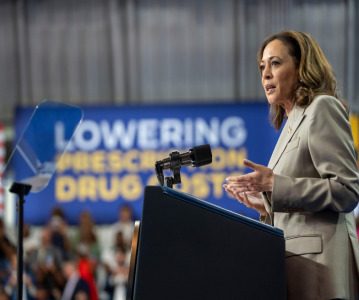
The Inflation Reduction Act brought into constitution by the Biden administation in 2022, which proposed a drug price negotiation between the government and pharmaceutical companies, has reached it's first agreement.