
Heating Block System Marks a Milestone
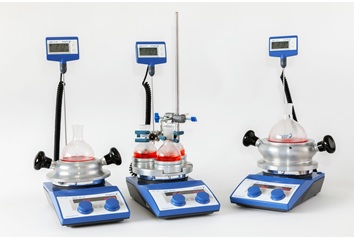
Asynt has announced that its DrySyn Heating block range is now used by over 1000 establishments worldwide including many leading universities and highly respected companies.
First introduced over 11 years ago and continuously improved since, many scientists worldwide have come to rely on its unique design and safety features for their chemistry experiments. The DrySyn Classic was the first model introduced by Asynt to the chemistry community. Today the DrySyn range additionally includes Scholar, Multi, Maxi and Snowstorm models for heated and cooled reactions.
New engineering techniques have enabled Asynt to develop the latest generation of DrySyn Classic Heating Blocks which deliver faster heating rates and unmatched safety features.
Completely compatible with all previous models, the 2015 DrySyn Classic Heating Block range offers excellent heat transfer performance up to 300°C, faster heating rates and stronger coupling for magnetic stirring — all in a compact footprint. The DrySyn Classic includes as standard heat resistant safety lifting handles to allow fast, easy and safe lifting of your reaction flask from the heater/stirrer. To enhance its versatility, removable and adjustable feet enable the DrySyn Classic to be used with all magnetic stirring hotplates.
Used in combination with a standard hotplate stirrer, DrySyn Classic units are proven to outperform the heat-conducting properties of oil baths. They pose a far lower fire risk and their use makes the clean-up of glassware far easier as there is no residual oil contamination on the outside of the flasks. The DrySyn Classic also provides a superior alternative to heating mantles. In addition to accelerating your chemical reactions - DrySyn Classic heating blocks ensure a safer, cleaner, healthier working environment.
The highly affordable DrySyn Classic system consists of a base that will accommodate 1000-mL flasks and four inserts for 500 mL, 250 mL, 100 mL and 50 mL flasks. Solid anodised aluminium construction delivers outstanding thermal and magnetic transfer efficiency and the durability suitable for use in any laboratory environment.
Related News
-

News Pharmaceutical Supply Chain People Moves
The latest appointments, promotions, and structural changes across the pharmaceutical supply chain.
-

News Merck KGaA to buy US biotech SpringWorks for US$3.9 billion
The German multinational pharmaceutical company Merck KGaA have signed a deal to buy US biotech company SpringWorks Therapeutics at an equity value of US$3.9 billion in a move to add rare cancer therapeutics to their pipelines.
-

News Cassava Sciences halts Alzheimer's drug trial after limited progress
Cassava Sciences have drawn a close to their investigations and development of the drug simufilam, which they intended to be used for the treatment of Alzheimer’s disease.
-

News US FDA adds haemodialysis bloodlines to devices shortage list
On March 14, 2025, the US FDA published an open letter to healthcare providers citing continuing supply disruptions of haemodialysis bloodlines, an essential component of dialysis machines.
-

News Vertex Pharmaceuticals stock jumps as FDA approves non-opioid painkiller
UK-based Vertex Pharmaceuticals saw their stock shares soar as the US FDA signed off on the non-opioid painkiller Journavx, also known as suzetrigine, for patients with moderate to severe acute pain, caused by surgery, accidents, or injuries.
-

News Lessons from CPHI Milan 2024: Sunny Intervals for Pharma Manufacturing?
As the 2024 CPHI conference wrapped up in Milan, we caught up with L.E.K. Consulting – a global strategy consulting firm with deep expertise in pharma manufacturing – to discuss evolving market perspectives and business outlook. -

News US BIOSECURE Act passed by US House of Representatives
The controversial act, which has already impacted several foreign companies operating in the US, was passed by the House of Representatives on September 9, 2024. It is now headed for the US Senate before it can be signed into law by President Joe Biden... -

News Drug prices agreed upon as part of the US Inflation Reduction Act
The Inflation Reduction Act brought into constitution by the Biden administation in 2022, which proposed a drug price negotiation between the government and pharmaceutical companies, has reached it's first agreement.