
How innovation and strategy at CPHI Frankfurt are shaping investment trends
.png)
This interview with consultants, CCD Partners, explores the evolving investment landscape in the pharmaceutical industry, highlighting challenges for smaller firms, the growing focus on sustainability and biologics, and the increasing role of AI and reshoring trends.
Matthew Wise, Head of Data at CCD Partners, gives valuable insights into these topics, as well as the critical role of strategic partnerships and emerging trends in shaping the future landscape.
How has the investment landscape in the pharmaceutical industry evolved over the past year for small to medium-sized companies? And how does this compare to larger businesses?
It’s been a tougher year for smaller firms, with investors becoming more selective and focusing their capital on larger and more established opportunities. In a relatively crowded market, in the lower-mid market it’s all about standing out. The good news is that private equity and trade buyers continue to see value in niche players where innovation and uniqueness are front-and-centre.
Are you observing a shift in investor focus towards more sustainable and long-term solutions including green chemicals and biosimilars?
Absolutely. Green chemistry has moved from being a nice-to-have to a real investment theme, especially as consumer and regulatory pressures align. We’re also seeing strong momentum in biosimilars as more biologics come off patent.
How has the movement towards biologics, as opposed to traditional small molecules, influenced investment strategies in the pharmaceutical industry in recent years?
The shift toward biologics has definitely changed investor priorities. Biologics, cell therapies, and gene therapies now attract more funding because they’re high growth and high impact. For smaller companies, having a biologics angle often makes them more attractive to investors. This is heightened as there aren’t as many strong small-molecule focused bolt-on investments on the market at the moment, partly due to the fact they’ve been subject to consolidation over the past decade.
How are investors viewing the scalability and long-term potential of AI-driven infrastructure in smaller pharmaceutical firms?
There’s a lot of interest, especially as AI can enable smaller firms to punch above their weight in R&D or manufacturing – and therefore achieve stronger growth curves. But the investors are becoming increasingly cautious, especially as the (potential!) AI bubble starts to deflate. If a company can show how AI genuinely improves efficiency or speeds up development, then it becomes a very compelling investment.
Are you seeing an increase in local investment due to reshoring trends and geopolitical shifts? How is this impacting pharmaceutical companies?
Yes – reshoring and supply chain resilience are front of mind of many businesses and investors. We’re seeing more capital flow into local manufacturing and service providers, particularly in North America (where this has naturally been accentuated by the tariffs). For smaller firms with a strong local footprint, this has opened new opportunities, as investors see them as critical to building more stable supply chains.
How important are strategic partnerships and collaborations for smaller pharmaceutical companies and start-ups in attracting investment?
Partnerships are very useful – getting brand recognition alongside a larger player gives smaller companies instant credibility and de-risks the narrative for potential investors. Beyond capital, partnerships bring expertise and market access – and therefore the smaller businesses can grow faster with these unique market insights.
What emerging trends or technologies do you anticipate will shape the investment landscape in the next few years?
I’d highlight three: continued growth in advanced therapies like cell and gene treatments, wider adoption of AI across the value chain, and a sharper focus on sustainability and local supply. A horizontal theme cutting across all of these is private equity remaining active in consolidating niche players in the lower-mid market.
What are you most looking forward to seeing at CPHI Frankfurt this October?
It’s about meeting the “disruptors” – i.e. the lower-mid market companies doing something genuinely different. I’m particularly keen to see new developments in green chemistry, biologics, and AI-driven tools. And of course, CPHI is a great chance to connect with both friends and colleagues – everybody in the industry will be there!
To see the watchlist that CCD Partners has created in partnership with CPHI Frankurt highlighting the lower mid-sized and independent companies exhibiting at the show, click here.
Related News
-
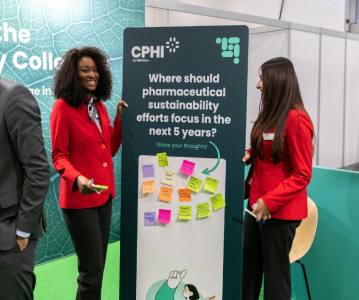
News Rethinking Sustainability in the Pharmaceutical Industry – CPHI Frankfurt Interview
On site in the Messe Frankfurt for CPHI Frankfurt 2025 we had the chance to interview some of the speakers in the conference theatre, including Vera Carvalho Correia, Global ESG Senior Manager at Centrient Pharmaceuticals.
-
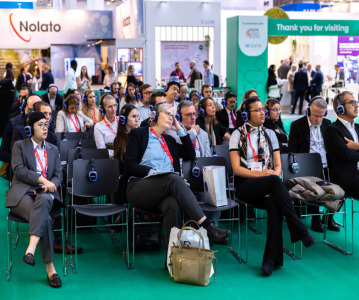
News CPHI Podcast Series: CPHI Frankfurt special – the future of health
Welcome to this special on-site episode of our podcast, recorded live at CPHI Frankfurt 2025. The following episode encapsulates the key themes that were discussed at CPHI Frankfurt this year.
-
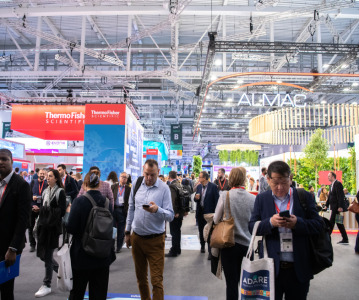
News A Day in the Life of an Exhibitor at CPHI Frankfurt
This month's Day in the Life of interview looks a little different! After a successful week at CPHI Frankfurt, we catch up with one of our exhibitors to get a peak behind the scenes and see how they spend their days on site.
-
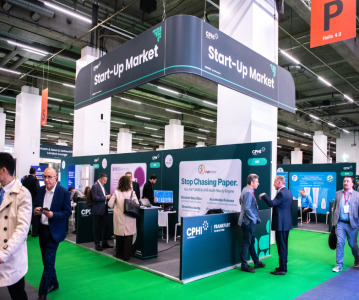
News A snapshot into the life of a Start-Up at CPHI Frankfurt
This interview captures a snapshot into what it is like for a Start-Up company attending CPHI Frankfurt for the first time, under the Start-Up Programme the event has been running for the last couple of years, and what this means to the people beh... -
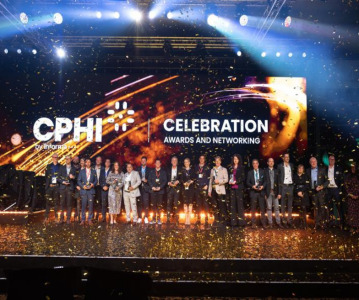
News CPHI Celebration - the winners from the 2025 CPHI Pharma Awards
CPHI Celebration was held on the first night of CPHI Frankfurt 2025 in October 2025, whereby pre-eminent pharma players came together to recognise winners of the 2025 CPHI Pharma Awards.
-
News CPHI Frankfurt 2025 – From the Floor
In a full-circle moment, our From the Floor blog returns to Frankfurt for the 2025 edition of CPHI Frankfurt. Taking place over 3 days from 28–30 October, we're excited to be back in a city of global innovation to meet, collaborate, and grow ... -
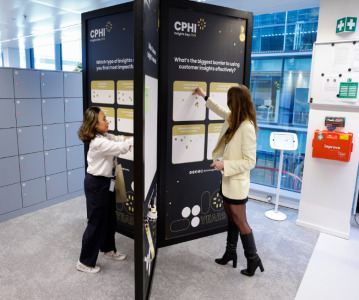
News Pharma in Focus: Key Findings from the CPHI community
Explore what the CPHI community has to say about the top trends emerging from the pharmaceutical industry and supply chain with our annual Strategic Insights infographic.
-
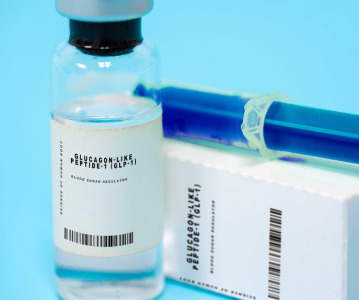
News CPHI Podcast Series: From Patents to Public Health: The GLP-1 Journey
The latest episode of the CPHI Podcast Series delves into the future of obesity management globally, offering opinins on might happen after patent expirys and new globals players entering the fray.