
HPAPIs and biologic manufacturing present strong growth opportunities for CMOs

Providing value added development services will allow participants to edge out competition, finds Frost & Sullivan's Transformational Health team.
The global contract manufacturing organization (CMO) market is transforming to leverage changes in the pharmaceutical industry. Pharmaceutical companies continue to gain financially and overcome marketplace challenges, source innovative ideas, processes, skills and technologies by outsourcing to CMOs. However, the "vendor approach" model is not generating optimal results for the CMO industry. Expanding services into early stage drug development, complex technology transfer contracts, and flexible capacity supply agreements will enable CMOs to create a "transformational partnership approach" model with pharmaceutical companies.
Global Pharmaceutical Contract Manufacturing Organization (CMO) Market is part of Frost & Sullivan's Life Sciences Growth Partnership Service program, which also includes insights on contract research, biosimilars, orphan drugs, generics, immuno-oncology therapeutics, regenerative medicines, pharmaceutical regulatory landscape and market access.
"In addition to cost benefits and the freedom to focus on core competencies, outsourcing will allow pharma companies to optimize manufacturing capacity utilization rates as blockbuster drugs come off patent," said Transformational Health Program Manager Unmesh Lal. "Several CMOs are already repositioning themselves from low- to high-margin formulation manufacturers in order to attract crucial upstream and downstream biopharma processing operations."
CMOs need to enhance their technical capabilities and amend business models to access the huge market. Along with early-stage of drugs, CMOs must explore opportunities in virtual biotech, out-licensing, and risk sharing business models with clients. Expanding services into biologics and biosimilars manufacturing as well as high-potency active pharmaceutical ingredient (HPAPIs) will present enormous growth opportunities. The challenges lie in the reservations of biopharma companies regarding breach of patent and IP information, concerns regarding the loss of manufacturing control, the stickiness of the CMO business, and the existing, expanding in-house manufacturing capacity of big pharma. Further, personalized therapy products outsourcing is not as attractive for large-scale CMOs.
"To strengthen their position and integrate into the value-chain of pharmaceutical companies, CMOs are turning into one-stop-shop contract development and manufacturing organizations (CDMOs) to provide value-added services," noted Lal. "Increasingly focusing on pre-clinical development services, CDMOs can then transition from clinical services to offering commercial manufacturing."
The global CMO market will also see more consolidation as participants look to inorganic growth strategies to offer integrated solutions to customers. For instance, Patheon, Catalent and AMRI have acquired IRIX Pharmaceuticals, Pharmatek and Euticals respectively. They have been aggressive in expanding their product/services/capabilities through strategic alliances. Similarly, Aenova maintained its market position after the acquisition of Haupt Pharma AG and by selling its Temmler business in 2015. Both Fareva and Famar have successfully adopted an integration strategy of acquiring manufacturing facilities in Europe from large pharmaceutical companies.
Therefore, the emerging CDMO business model, transformation in the pharmaceutical ecosystem, disruptive drug development and manufacturing technologies, and major growth opportunities in high potency and biopharmaceuticals manufacturing are driving differentiation strategies for the long-term profitability of CMOs.
Related News
-

News Pharmaceutical Supply Chain People Moves
The latest appointments, promotions, and structural changes across the pharmaceutical supply chain.
-

News Merck KGaA to buy US biotech SpringWorks for US$3.9 billion
The German multinational pharmaceutical company Merck KGaA have signed a deal to buy US biotech company SpringWorks Therapeutics at an equity value of US$3.9 billion in a move to add rare cancer therapeutics to their pipelines.
-

News Cassava Sciences halts Alzheimer's drug trial after limited progress
Cassava Sciences have drawn a close to their investigations and development of the drug simufilam, which they intended to be used for the treatment of Alzheimer’s disease.
-
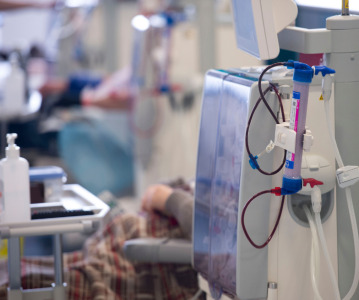
News US FDA adds haemodialysis bloodlines to devices shortage list
On March 14, 2025, the US FDA published an open letter to healthcare providers citing continuing supply disruptions of haemodialysis bloodlines, an essential component of dialysis machines.
-

News Vertex Pharmaceuticals stock jumps as FDA approves non-opioid painkiller
UK-based Vertex Pharmaceuticals saw their stock shares soar as the US FDA signed off on the non-opioid painkiller Journavx, also known as suzetrigine, for patients with moderate to severe acute pain, caused by surgery, accidents, or injuries.
-

News Lessons from CPHI Milan 2024: Sunny Intervals for Pharma Manufacturing?
As the 2024 CPHI conference wrapped up in Milan, we caught up with L.E.K. Consulting – a global strategy consulting firm with deep expertise in pharma manufacturing – to discuss evolving market perspectives and business outlook. -

News US BIOSECURE Act passed by US House of Representatives
The controversial act, which has already impacted several foreign companies operating in the US, was passed by the House of Representatives on September 9, 2024. It is now headed for the US Senate before it can be signed into law by President Joe Biden... -
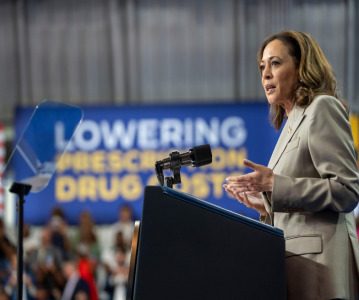
News Drug prices agreed upon as part of the US Inflation Reduction Act
The Inflation Reduction Act brought into constitution by the Biden administation in 2022, which proposed a drug price negotiation between the government and pharmaceutical companies, has reached it's first agreement.