
Investing in blistering capabilities to boost flexibility
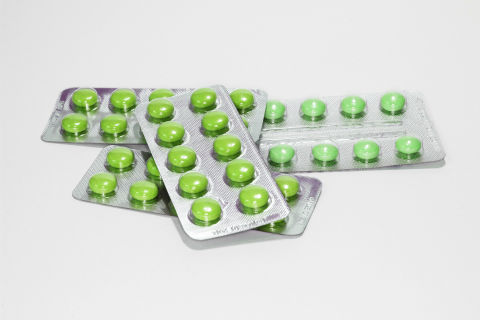
Postponement printing is presenting interesting benefits for the pharmaceutical supply chain.
Global contract packaging organisation (CPO), Tjoapack has invested in its blistering capacity, adding a new line that will be equipped with late-stage customisation printing capabilities.
Expected to be operational by the end of Q3 2018, the new line, at the company’s facility in Etten-Leur, Netherlands, will take its total number of blistering lines to eight.
Tjoapack currently packs 26 million packs every year. This line will enable the company to offer another 4 million packs of additional capacity. "We’re optimising this line for flexibility and not for high volume throughput. It’ll be capable to handle a lot of different SKUs in smaller volumes, which is one of our areas of expertise," commented Dexter Tjoa, Director of Corporate Strategy at Tjoapack.
“At Tjoapack we’re committed to ensuring our customers continue to receive the efficient and flexible service that they’re used to, so we’re always looking for ways to further improve our operations to allow us to better cater for their projects.
“We have a strategic growth plan in place and increasing our blistering capacity will allow us to cater for increasing demand from both current and new customers.”
The investment will also expand Tjoapack’s current postponement printing offering, enabling the CPO to offer drop-on-demand digital printing for blisters.
The benefits of drop-on-demand and postponement printing
Drop-on-demand printing is used for late-stage customisation. "The idea is that stock remains market agnostic for as long as possible and then when demand for the product arises, companies can print directly onto blister packaging to meet the intended market requirements. In other words, stock is only being finalised as and when there is a requirement. This gives our customers' supply chains added flexibility to handle market-related fluctuations, reducing wastage and the need for rework at a later stage," explained Mr Tjoa.
He continued: "Postponement offers an increased level of flexibility to meet varying market demands, meaning it is easy to scale up and down your packaging for different markets. With the right set up, you could reduce your time-to-market and fulfilment cycles by several weeks, helping prevent stock-out scenarios, and assuring patients can receive the medicine they need on time.
"In addition, by keeping the product market-agnostic for as long as possible and by packing only when you need the product, you’re not only drastically reducing waste across the supply chain, but also minimising your working capital by reducing finished goods’ inventories and shortening your return-on-investment cycle.
“Late-stage customisation, or postponement printing, is presenting some interesting benefits for the pharmaceutical supply chain. The process of only making packaging market-specific once there is a demand could be hugely beneficial in terms of reducing waste from repackaging, overall costs and time to market.
“We’ve started to explore this type of packaging with some of our customers already and as more complex molecules continue to enter the drug pipeline, demand for last-minute packaging is likely to increase. This investment will allow us to futureproof our lines for projected demands.”
Up until now, postponement packaging remains relatively unexplored in the pharmaceutical industry. As companies look for ways to improve efficiencies, postponement packaging is something Tjoapack is increasingly seeing them consider. In addition, postponement is well suited to small volumes and as more personalised medicines enter the market, late-stage customisation could be an ideal way to handle these products.
Related News
-

News Pharmaceutical Supply Chain People Moves
The latest appointments, promotions, and structural changes across the pharmaceutical supply chain.
-

News Merck KGaA to buy US biotech SpringWorks for US$3.9 billion
The German multinational pharmaceutical company Merck KGaA have signed a deal to buy US biotech company SpringWorks Therapeutics at an equity value of US$3.9 billion in a move to add rare cancer therapeutics to their pipelines.
-

News Cassava Sciences halts Alzheimer's drug trial after limited progress
Cassava Sciences have drawn a close to their investigations and development of the drug simufilam, which they intended to be used for the treatment of Alzheimer’s disease.
-
News US FDA adds haemodialysis bloodlines to devices shortage list
On March 14, 2025, the US FDA published an open letter to healthcare providers citing continuing supply disruptions of haemodialysis bloodlines, an essential component of dialysis machines.
-

News Vertex Pharmaceuticals stock jumps as FDA approves non-opioid painkiller
UK-based Vertex Pharmaceuticals saw their stock shares soar as the US FDA signed off on the non-opioid painkiller Journavx, also known as suzetrigine, for patients with moderate to severe acute pain, caused by surgery, accidents, or injuries.
-
News Lessons from CPHI Milan 2024: Sunny Intervals for Pharma Manufacturing?
As the 2024 CPHI conference wrapped up in Milan, we caught up with L.E.K. Consulting – a global strategy consulting firm with deep expertise in pharma manufacturing – to discuss evolving market perspectives and business outlook. -
News US BIOSECURE Act passed by US House of Representatives
The controversial act, which has already impacted several foreign companies operating in the US, was passed by the House of Representatives on September 9, 2024. It is now headed for the US Senate before it can be signed into law by President Joe Biden... -

News Drug prices agreed upon as part of the US Inflation Reduction Act
The Inflation Reduction Act brought into constitution by the Biden administation in 2022, which proposed a drug price negotiation between the government and pharmaceutical companies, has reached it's first agreement.