
Irvine Scientific introduces medium for large-scale transient transfection

The new medium is chemically-defined, animal component free, and has been specifically designed to support sustained, high growth with increased transfection efficiency that can yield gram-scale protein expression.
Irvine Scientific has released BalanCD Transfectory CHO, a cell culture medium for rapid, scalable production of recombinant proteins through transient transfection in CHO cells. The new medium is chemically-defined, animal component free, and has been specifically designed to support sustained, high growth with increased transfection efficiency that can yield gram-scale protein expression.
Transient gene expression (TGE) has evolved into a cost-effective, rapid alternative to stable cell line engineering for the production of recombinant proteins and antibodies needed for early-stage biopharmaceutical development activities. CHO cells are the most prevalent platform used for commercial production of biopharmaceuticals, they are therefore viewed as preferential hosts for TGE. The challenge, however, has been in obtaining protein yield of sufficient quantity and quality, leading many scientists to focus on 293HEK transfection. The ability to obtain gram-scale yields by transient transfection in CHO cells is a real step forward towards cutting costs and development time for biotherapeutic research.
Commenting on this latest addition to the BalanCD portfolio, Dr Jessie Ni, Chief Scientific Officer at Irvine Scientific, said: “Our goal is to provide a platform of chemically-defined and animal-derived component free formulas designed to produce high yields, while maintaining protein quality through every phase of development and at all production scales. The addition of BalanCD Transfectory CHO extends the capability of the BalanCD portfolio, thus enabling scientists to produce the proteins needed to assess candidates using rapid and cost effective methods.”
Related News
-

News Pharmaceutical Supply Chain People Moves
The latest appointments, promotions, and structural changes across the pharmaceutical supply chain.
-

News Merck KGaA to buy US biotech SpringWorks for US$3.9 billion
The German multinational pharmaceutical company Merck KGaA have signed a deal to buy US biotech company SpringWorks Therapeutics at an equity value of US$3.9 billion in a move to add rare cancer therapeutics to their pipelines.
-

News Cassava Sciences halts Alzheimer's drug trial after limited progress
Cassava Sciences have drawn a close to their investigations and development of the drug simufilam, which they intended to be used for the treatment of Alzheimer’s disease.
-
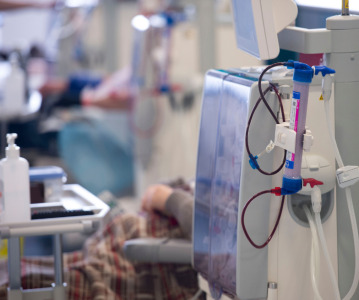
News US FDA adds haemodialysis bloodlines to devices shortage list
On March 14, 2025, the US FDA published an open letter to healthcare providers citing continuing supply disruptions of haemodialysis bloodlines, an essential component of dialysis machines.
-

News Vertex Pharmaceuticals stock jumps as FDA approves non-opioid painkiller
UK-based Vertex Pharmaceuticals saw their stock shares soar as the US FDA signed off on the non-opioid painkiller Journavx, also known as suzetrigine, for patients with moderate to severe acute pain, caused by surgery, accidents, or injuries.
-

News Lessons from CPHI Milan 2024: Sunny Intervals for Pharma Manufacturing?
As the 2024 CPHI conference wrapped up in Milan, we caught up with L.E.K. Consulting – a global strategy consulting firm with deep expertise in pharma manufacturing – to discuss evolving market perspectives and business outlook. -
News US BIOSECURE Act passed by US House of Representatives
The controversial act, which has already impacted several foreign companies operating in the US, was passed by the House of Representatives on September 9, 2024. It is now headed for the US Senate before it can be signed into law by President Joe Biden... -
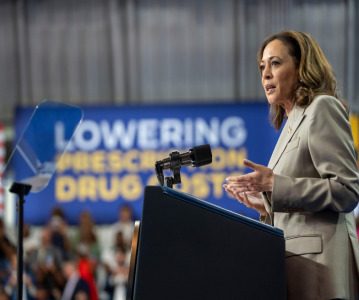
News Drug prices agreed upon as part of the US Inflation Reduction Act
The Inflation Reduction Act brought into constitution by the Biden administation in 2022, which proposed a drug price negotiation between the government and pharmaceutical companies, has reached it's first agreement.