
Israel’s Scientific Ethos Driving Pharma Industry Value Beyond $2.3 Billion by 2020

Israel’s pharmaceutical market value will increase from approximately $1.9 billion in 2013 to $2.34 billion by 2020, driven by medical technology advances, high R&D expenditure and a robust economy, according to research and consulting firm GlobalData.
Furthermore, the company’s latest report* states that this rise, which represents a modest compound annual growth rate (CAGR) of 2.8%, will occur in a country with high levels of generic production and pharmaceutical exports.
Israel is home to Teva Pharmaceuticals, which is one of the world’s largest generics manufacturers and exporters. The country’s entire pharmaceutical exports were worth approximately $7.1 billion in 2013, more than four times the value of its imports, which was just over $1.7 billion.
Joshua Owide, GlobalData’s Director of Healthcare Industry Dynamics, says: “Israel is one of the major healthcare markets in the Middle East.
“Pharmaceuticals represent the largest and most established sector of the Israeli life science industry, with a total of 76 companies, of which 22% are involved in drug discovery and 17% in drug delivery.”
The director adds that this commitment to scientific development is fortified by a highly skilled population, with Invest in Israel highlighting that the country is ranked second in the world for percentage of engineers and scientists in the workforce.
Owide continues: “Approximately 24% of Israel’s workers hold university degrees, placing it third among the industrialised countries, after the US and Netherlands.
“Israel’s pharmaceutical sector is supported by a network of recognised academic and research institutes, R&D facilities, and well-developed medical centers. Indeed, Israeli research expertise and clinical advances have led to the development of blockbuster drugs and promising treatments.”
Such products include Johnson and Johnson’s Doxil for ovarian cancer, which was originally developed at the Hadassah Medical Center, as well as Teva Pharmaceuticals and the Weizmann Institute’s Copaxone for multiple sclerosis, and Novartis’ Exelon for Alzheimer’s disease, originating from research conducted at the Hebrew University.
*CountryFocus: Healthcare, Regulatory and Reimbursement Landscape — Israel
Related News
-

News Pharmaceutical Supply Chain People Moves
The latest appointments, promotions, and structural changes across the pharmaceutical supply chain.
-

News Merck KGaA to buy US biotech SpringWorks for US$3.9 billion
The German multinational pharmaceutical company Merck KGaA have signed a deal to buy US biotech company SpringWorks Therapeutics at an equity value of US$3.9 billion in a move to add rare cancer therapeutics to their pipelines.
-

News Cassava Sciences halts Alzheimer's drug trial after limited progress
Cassava Sciences have drawn a close to their investigations and development of the drug simufilam, which they intended to be used for the treatment of Alzheimer’s disease.
-
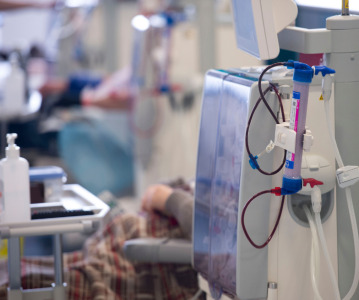
News US FDA adds haemodialysis bloodlines to devices shortage list
On March 14, 2025, the US FDA published an open letter to healthcare providers citing continuing supply disruptions of haemodialysis bloodlines, an essential component of dialysis machines.
-

News Vertex Pharmaceuticals stock jumps as FDA approves non-opioid painkiller
UK-based Vertex Pharmaceuticals saw their stock shares soar as the US FDA signed off on the non-opioid painkiller Journavx, also known as suzetrigine, for patients with moderate to severe acute pain, caused by surgery, accidents, or injuries.
-

News Lessons from CPHI Milan 2024: Sunny Intervals for Pharma Manufacturing?
As the 2024 CPHI conference wrapped up in Milan, we caught up with L.E.K. Consulting – a global strategy consulting firm with deep expertise in pharma manufacturing – to discuss evolving market perspectives and business outlook. -
News US BIOSECURE Act passed by US House of Representatives
The controversial act, which has already impacted several foreign companies operating in the US, was passed by the House of Representatives on September 9, 2024. It is now headed for the US Senate before it can be signed into law by President Joe Biden... -
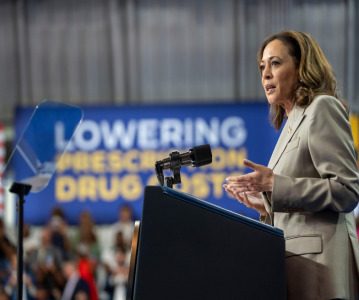
News Drug prices agreed upon as part of the US Inflation Reduction Act
The Inflation Reduction Act brought into constitution by the Biden administation in 2022, which proposed a drug price negotiation between the government and pharmaceutical companies, has reached it's first agreement.