
Key trends boosting the post-pandemic CRO market
.jpg)
Hybrid clinical trials leveraging safety-focused, direct-to-consumer logistical solutions are taking center stage, ensuring research continuity.
Recent analysis, "Hybridization of Clinical Trial Designs Reviving Global CRO Market Post-pandemic; 2019-2024", by Frost & Sullivan, reveals that hybrid clinical trials and remote patient monitoring are key trends driving the global contract research organization (CRO) market.
With the increased threat of COVID-19 and worldwide lockdowns in effect, however, the CRO market is experiencing interruptions in ongoing clinical trials and delays in new trials.
Recovery is expected to commence from 2023; although it will be staggered, it will take revenue to the original growth trajectory by 2024–2025. As per the revised forecast after the impact of the COVID-19 pandemic, the market is estimated to garner revenue of $63.83 billion by 2024 from $43.03 billion in 2019.
"Due to the impact of the coronavirus, many large pharmaceutical companies have placed new trials on hold and numerous small, mid-size, and large enterprises have suspended ongoing ones, thereby demonstrating the magnitude of the disruption," said Unmesh Lal, Healthcare Industry Principal at Frost & Sullivan.
"To minimize the adverse effect of the pandemic, organizations such as site management organizations (SMOs) and patient recruitment organizations (PROs), that operate traditionally, will have to explore collaboration opportunities with emerging virtual trial platform vendors, eRecruitment providers, and remote monitoring solutions providers to expand the capability to support distributed/hybrid CT models."
As a result of COVID-19, pharmaceutical companies have decreased R&D spending by 2–3% compared with their original forecast. This is will have a knock-on effect on outsourcing to CROs - further revenue erosions across drug discovery and preclinical segments, particularly in North America and Europe.
On a positive note, Lal suggests the proliferation of new clinical trial approaches/models, which make use of virtual trial tools and evolving regulatory policies will aid rapid recovery. Similarly, Asia-Pacific will also recover when sites go online as the pandemic eases. The rest of the world, however, will see a slow recovery period because of correspondingly slower adoption of clinical trial IT solutions."
Related News
-

News Pharmaceutical Supply Chain People Moves
The latest appointments, promotions, and structural changes across the pharmaceutical supply chain.
-

News Merck KGaA to buy US biotech SpringWorks for US$3.9 billion
The German multinational pharmaceutical company Merck KGaA have signed a deal to buy US biotech company SpringWorks Therapeutics at an equity value of US$3.9 billion in a move to add rare cancer therapeutics to their pipelines.
-

News Cassava Sciences halts Alzheimer's drug trial after limited progress
Cassava Sciences have drawn a close to their investigations and development of the drug simufilam, which they intended to be used for the treatment of Alzheimer’s disease.
-

News US FDA adds haemodialysis bloodlines to devices shortage list
On March 14, 2025, the US FDA published an open letter to healthcare providers citing continuing supply disruptions of haemodialysis bloodlines, an essential component of dialysis machines.
-

News Vertex Pharmaceuticals stock jumps as FDA approves non-opioid painkiller
UK-based Vertex Pharmaceuticals saw their stock shares soar as the US FDA signed off on the non-opioid painkiller Journavx, also known as suzetrigine, for patients with moderate to severe acute pain, caused by surgery, accidents, or injuries.
-

News Lessons from CPHI Milan 2024: Sunny Intervals for Pharma Manufacturing?
As the 2024 CPHI conference wrapped up in Milan, we caught up with L.E.K. Consulting – a global strategy consulting firm with deep expertise in pharma manufacturing – to discuss evolving market perspectives and business outlook. -

News US BIOSECURE Act passed by US House of Representatives
The controversial act, which has already impacted several foreign companies operating in the US, was passed by the House of Representatives on September 9, 2024. It is now headed for the US Senate before it can be signed into law by President Joe Biden... -
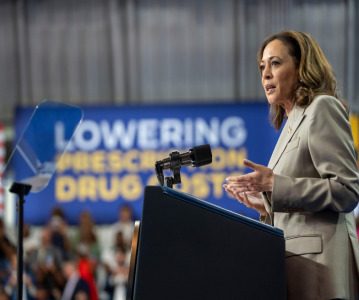
News Drug prices agreed upon as part of the US Inflation Reduction Act
The Inflation Reduction Act brought into constitution by the Biden administation in 2022, which proposed a drug price negotiation between the government and pharmaceutical companies, has reached it's first agreement.