
Key US Patents Granted for GPCR-Focused Drug Discovery Platform

MRC Technology (MRCT) is pleased to highlight that Heptares Therapeutics (Heptares) recently announced the grant of multiple key patents in the US relating to its GPCR-focused drug discovery platform. Heptares was formed in 2007 as a spin-out from the Medical Research Council’s (MRC’s) Laboratory of Molecular Biology and National Institute of Medical Research, where the pioneering technology originated.
The patents granted cover Heptares’ technology platform for the creation of thermostabilised GPCRs (or StaR proteins) and their use for drug screening and structure-based drug design. The company focuses on new medicines targeting previously undruggable or challenging GPCRs linked to a wide range of human disease, including Alzheimer’s disease, attention deficit hyperactivity disorder, diabetes, schizophrenia and migraine. GPCRs provide an almost universal mechanism for transmitting signals into and out of cells. There are over 800 GPCRs encoded by the human genome and each one is specific to a particular signal. Approximately 30–40% of all drugs marketed across all conditions act on GPCRs, making them one of the most important drug target families known.
Dave Tapolczay, MRC Technology’s CEO, said: “We are delighted by this news as it is a further example of how MRC Technology can assist in translating pioneering research into commercial and therapeutic reality. The smooth and robust transition of IP from MRC to the new company was of particular importance and seeing Heptares go on to build a strong internally generated global patent estate is testament to the founding work of MRCT’s IP team. We wish Heptares every success in bringing new GPCR-based therapies to patients.”
Malcolm Weir, CEO of Heptares, added: “I joined MRCT in 2006 and, with our CSO Fiona Marshall and colleagues from MRC’s Laboratory of Molecular Biology, formed Heptares the following year. The grant of these US patents is another significant milestone in the company’s development and one it would not have reached without MRC’s original first-class science and the ongoing ‘translational’ support from MRCT.”
Related News
-

News Pharmaceutical Supply Chain People Moves
The latest appointments, promotions, and structural changes across the pharmaceutical supply chain.
-

News Merck KGaA to buy US biotech SpringWorks for US$3.9 billion
The German multinational pharmaceutical company Merck KGaA have signed a deal to buy US biotech company SpringWorks Therapeutics at an equity value of US$3.9 billion in a move to add rare cancer therapeutics to their pipelines.
-

News Cassava Sciences halts Alzheimer's drug trial after limited progress
Cassava Sciences have drawn a close to their investigations and development of the drug simufilam, which they intended to be used for the treatment of Alzheimer’s disease.
-

News US FDA adds haemodialysis bloodlines to devices shortage list
On March 14, 2025, the US FDA published an open letter to healthcare providers citing continuing supply disruptions of haemodialysis bloodlines, an essential component of dialysis machines.
-

News Vertex Pharmaceuticals stock jumps as FDA approves non-opioid painkiller
UK-based Vertex Pharmaceuticals saw their stock shares soar as the US FDA signed off on the non-opioid painkiller Journavx, also known as suzetrigine, for patients with moderate to severe acute pain, caused by surgery, accidents, or injuries.
-

News Lessons from CPHI Milan 2024: Sunny Intervals for Pharma Manufacturing?
As the 2024 CPHI conference wrapped up in Milan, we caught up with L.E.K. Consulting – a global strategy consulting firm with deep expertise in pharma manufacturing – to discuss evolving market perspectives and business outlook. -

News US BIOSECURE Act passed by US House of Representatives
The controversial act, which has already impacted several foreign companies operating in the US, was passed by the House of Representatives on September 9, 2024. It is now headed for the US Senate before it can be signed into law by President Joe Biden... -
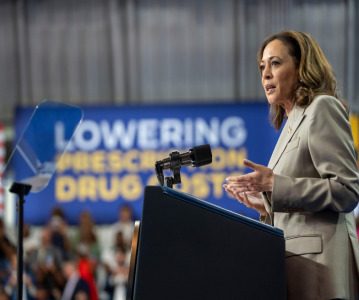
News Drug prices agreed upon as part of the US Inflation Reduction Act
The Inflation Reduction Act brought into constitution by the Biden administation in 2022, which proposed a drug price negotiation between the government and pharmaceutical companies, has reached it's first agreement.