
Major life sciences roundtable debate reveals growth in regulatory outsourcing
Growth due to increasing complexity around affiliates’ roles.
A major industry debate by a Who’s Who of the life sciences industry has revealed growing interest in outsourcing of regulatory affairs (RA) activities due to the increased complexity in the role of international affiliate organisations. The debate’s findings, which have been distilled into a summary paper published by outsourcing and consulting services specialist ProductLife Group (PLG), will be aired via an exclusive webinar on 12 April.
The PLG Evolve roundtable debate, Brave New World: Outsourcing and the Changing Role of the Affiliate, brings together senior representatives from Merck, LEO Pharma, AbbVie, Sanofi and Lundbeck. During this seminal session, they debate the conflicting needs of local sales operations and corporate RA teams, and the role of specialist external services in helping to bridge these differences.
The panelists discuss variants in affiliate operating models, and explore how an outsourced approach to managing local regulatory activities, as well as safety documentation and managing safety case reports, can help overcome current challenges, enabling in-country affiliates to focus on building the business unfettered by administrative bureaucracy, while ensuring the quality, consistency and transparency needed at a corporate level to achieve compliance.
In the words of panellist Jesper Kihl, Vice President for Global Regulatory Affairs at LEO Pharma: “The environment in which we operate has become far more complex, margins are being squeezed, and room for manoeuvre is shrinking. Affiliates need to focus on commercial activities, so outsourcing regulatory, pharmacovigilance, and other activities, makes sense.”
The PLG Evolve virtual discussion covers concerns about and first-hand experiences of outsourcing affiliate RA and pharmacovigilance documentation activities, including the learning curve involved when shifting from internally managed processes to the outsourcing of affiliate administrative activities.
Related News
-

News Pharmaceutical Supply Chain People Moves
The latest appointments, promotions, and structural changes across the pharmaceutical supply chain.
-

News Merck KGaA to buy US biotech SpringWorks for US$3.9 billion
The German multinational pharmaceutical company Merck KGaA have signed a deal to buy US biotech company SpringWorks Therapeutics at an equity value of US$3.9 billion in a move to add rare cancer therapeutics to their pipelines.
-

News Cassava Sciences halts Alzheimer's drug trial after limited progress
Cassava Sciences have drawn a close to their investigations and development of the drug simufilam, which they intended to be used for the treatment of Alzheimer’s disease.
-

News US FDA adds haemodialysis bloodlines to devices shortage list
On March 14, 2025, the US FDA published an open letter to healthcare providers citing continuing supply disruptions of haemodialysis bloodlines, an essential component of dialysis machines.
-

News Vertex Pharmaceuticals stock jumps as FDA approves non-opioid painkiller
UK-based Vertex Pharmaceuticals saw their stock shares soar as the US FDA signed off on the non-opioid painkiller Journavx, also known as suzetrigine, for patients with moderate to severe acute pain, caused by surgery, accidents, or injuries.
-

News Lessons from CPHI Milan 2024: Sunny Intervals for Pharma Manufacturing?
As the 2024 CPHI conference wrapped up in Milan, we caught up with L.E.K. Consulting – a global strategy consulting firm with deep expertise in pharma manufacturing – to discuss evolving market perspectives and business outlook. -

News US BIOSECURE Act passed by US House of Representatives
The controversial act, which has already impacted several foreign companies operating in the US, was passed by the House of Representatives on September 9, 2024. It is now headed for the US Senate before it can be signed into law by President Joe Biden... -
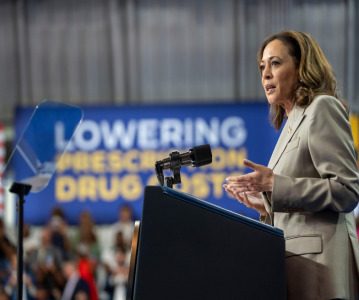
News Drug prices agreed upon as part of the US Inflation Reduction Act
The Inflation Reduction Act brought into constitution by the Biden administation in 2022, which proposed a drug price negotiation between the government and pharmaceutical companies, has reached it's first agreement.