
Major players in type 2 diabetes shifting focus to pricing to maintain market share

With cost pressures burdening many health systems, competitive pricing is a strategy that other companies are likely to adopt with me-too drugs in late-stage development, says GlobalData.
The highly mature type 2 diabetes (T2D) market, which is forecast to be valued at $58.7 billion by 2025, will see pharmaceutical companies prioritizing competitive pricing in order to offset the impact of patent expiries ahead of improving existing products, says research and consulting firm GlobalData.
According to the company’s report — PharmaPoint: Type 2 Diabetes – Global Drug Forecast and Market Analysis to 2025 — human insulins and many insulin analogs are currently off patent or will soon lose their patents. The patents for Humulin and Novolin expired in 2001 and 2002, respectively. More recent patent losses include Eli Lill’ys Humalog (insulin lispro) in 2013, Novo Nordisk’s NovoLog/NovoRapid (insulin aspart) in 2014, and Sanofi’s Lantus (insulin glargine) in 2014–2015. Lantus is already beginning to suffer erosion to the first to market insulin biosimilar, Eli Lilly’s Abasaglar (insulin glargine).
Jesus Cuaron, GlobalData’s Senior Analyst covering Cardiovascular and Metabolic Disorders, explains: “Sanofi, historically a major player in the T2D space, is a good example of a company which has turned its attention to price rather than therapeutic value as the late-stage pipeline becomes saturated with me-too drugs. The company’s recently marketed drug Lyxumia (lixisenatide) was launched at a heavy discount to rival glucagon-like peptide-1 receptor agonists (GLP-1RAs), AstraZeneca’s Byetta (exenatide) and Novo Nordisk’s Victoza (liraglutide).
“As Lyxumia is the fourth-to-market GLP-1RA product, with a low level of differentiation in the GLP-1RA space, Sanofi had to offer a competitive price in order to win market share. With health systems in many markets facing cost pressures today, this is likely a strategy that other companies will adopt with their me-too drugs that are in late-stage development.”
Although a waning factor, major players in the T2D market are also responding to the emergence of insulin biosimilars by offering improvements on existing therapies. Sanofi also recently launched Toujeo (insulin glargine, U300), a superior version of its own product Lantus, in addition to developing a fixed-dose combination of Lantus and its Lyxumia (lixisenatide) in order to protect its franchise.
Cuaron notes: “In addition to recently launched Toujeo, Sanofi is developing a biosimilar candidate of its own: SAR-342434. Currently in Phase III trials, SAR-342434 is an insulin lispro biosimilar to Eli Lilly’s Humalog.
“Overall, GlobalData believes that Novo Nordisk will maintain its lead in the insulin market by 2025, with its several marketed insulin analogs and ultra-rapid acting insulin, FIAsp (faster-acting insulin aspart), which is currently in Phase III trials.”
Related News
-

News Pharmaceutical Supply Chain People Moves
The latest appointments, promotions, and structural changes across the pharmaceutical supply chain.
-

News Merck KGaA to buy US biotech SpringWorks for US$3.9 billion
The German multinational pharmaceutical company Merck KGaA have signed a deal to buy US biotech company SpringWorks Therapeutics at an equity value of US$3.9 billion in a move to add rare cancer therapeutics to their pipelines.
-

News Cassava Sciences halts Alzheimer's drug trial after limited progress
Cassava Sciences have drawn a close to their investigations and development of the drug simufilam, which they intended to be used for the treatment of Alzheimer’s disease.
-
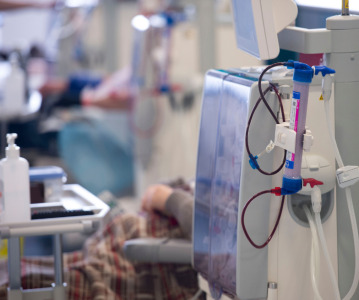
News US FDA adds haemodialysis bloodlines to devices shortage list
On March 14, 2025, the US FDA published an open letter to healthcare providers citing continuing supply disruptions of haemodialysis bloodlines, an essential component of dialysis machines.
-
News Vertex Pharmaceuticals stock jumps as FDA approves non-opioid painkiller
UK-based Vertex Pharmaceuticals saw their stock shares soar as the US FDA signed off on the non-opioid painkiller Journavx, also known as suzetrigine, for patients with moderate to severe acute pain, caused by surgery, accidents, or injuries.
-
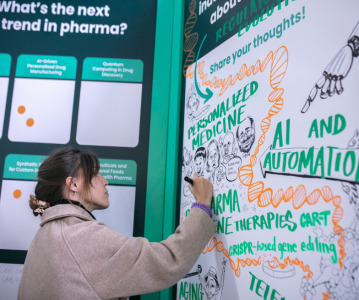
News Lessons from CPHI Milan 2024: Sunny Intervals for Pharma Manufacturing?
As the 2024 CPHI conference wrapped up in Milan, we caught up with L.E.K. Consulting – a global strategy consulting firm with deep expertise in pharma manufacturing – to discuss evolving market perspectives and business outlook. -
News US BIOSECURE Act passed by US House of Representatives
The controversial act, which has already impacted several foreign companies operating in the US, was passed by the House of Representatives on September 9, 2024. It is now headed for the US Senate before it can be signed into law by President Joe Biden... -
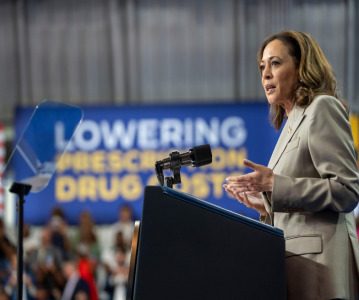
News Drug prices agreed upon as part of the US Inflation Reduction Act
The Inflation Reduction Act brought into constitution by the Biden administation in 2022, which proposed a drug price negotiation between the government and pharmaceutical companies, has reached it's first agreement.