
Malvern Releases New Guidance on the Use of Automated Imaging for Agglomerate Detection
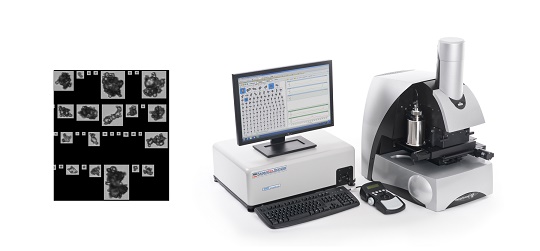
Malvern Instruments has released new guidance on using automated image analysis to detect and quantify agglomerates. The ability of uncontrolled agglomeration to substantially impact the performance and value of powder products makes efficient agglomerate detection vital across a number of industries. ‘Identification of agglomerates using automated image analysis’ presents practical strategies for efficiently and robustly differentiating agglomerates from primary particles, to support product development, QC and process troubleshooting. To view the application note, go to https://www.malvern.com/identifying-agglomerates.
Agglomerates are formed through the adhesion or cohesion of smaller primary particles. They can have serious implications for product performance, value and, in the case of pharmaceutical products, safety. Any tendency towards agglomeration must therefore be thoroughly investigated during product development, controlled during manufacture and checked in final product QC.
Automated imaging is a fast and efficient technique for studying the morphological characteristics of particulate materials. The new guidance shows how the combination of size and shape data can be used to securely classify particles as agglomerates, enabling the amount of agglomerated material present in a blend to be quantified. In particular, shape parameters such as particle convexity and circularity are shown to be important in differentiating primary particles and agglomerates.
Malvern’s Sysmex FPIA 3000 and Morphologi G3 image analysis-based particle characterisation systems employ advanced optics to record and analyze images of thousands of particles within suspensions, emulsions and dry powders in a matter of minutes. The Morphologi G3-ID extends the capabilities of image analysis by applying the technique of Morphologically Directed Raman Spectroscopy to enable the chemical identification of multi-component agglomerates that cannot be reliably classified on the basis of size and shape alone. Together, these automated imaging systems provide an efficient solution for robust agglomeration detection.
Related News
-

News Pharmaceutical Supply Chain People Moves
The latest appointments, promotions, and structural changes across the pharmaceutical supply chain.
-

News Merck KGaA to buy US biotech SpringWorks for US$3.9 billion
The German multinational pharmaceutical company Merck KGaA have signed a deal to buy US biotech company SpringWorks Therapeutics at an equity value of US$3.9 billion in a move to add rare cancer therapeutics to their pipelines.
-

News Cassava Sciences halts Alzheimer's drug trial after limited progress
Cassava Sciences have drawn a close to their investigations and development of the drug simufilam, which they intended to be used for the treatment of Alzheimer’s disease.
-

News US FDA adds haemodialysis bloodlines to devices shortage list
On March 14, 2025, the US FDA published an open letter to healthcare providers citing continuing supply disruptions of haemodialysis bloodlines, an essential component of dialysis machines.
-

News Vertex Pharmaceuticals stock jumps as FDA approves non-opioid painkiller
UK-based Vertex Pharmaceuticals saw their stock shares soar as the US FDA signed off on the non-opioid painkiller Journavx, also known as suzetrigine, for patients with moderate to severe acute pain, caused by surgery, accidents, or injuries.
-

News Lessons from CPHI Milan 2024: Sunny Intervals for Pharma Manufacturing?
As the 2024 CPHI conference wrapped up in Milan, we caught up with L.E.K. Consulting – a global strategy consulting firm with deep expertise in pharma manufacturing – to discuss evolving market perspectives and business outlook. -
News US BIOSECURE Act passed by US House of Representatives
The controversial act, which has already impacted several foreign companies operating in the US, was passed by the House of Representatives on September 9, 2024. It is now headed for the US Senate before it can be signed into law by President Joe Biden... -

News Drug prices agreed upon as part of the US Inflation Reduction Act
The Inflation Reduction Act brought into constitution by the Biden administation in 2022, which proposed a drug price negotiation between the government and pharmaceutical companies, has reached it's first agreement.