
Merck KGaA, AMCM/EOS co-operate in 3D printing of tablets
.jpg)
A cooperation agreement between German pharma firm Merck KGaA and additive manufacturing specialist AMCM on 3D printing of tablets could eventually lead to scalable active pharmaceutical ingredient (API) formulation and faster, cheaper production, the two companies said Thursday.
The pharma industry sees much potential in 3D printing technology as it offers potential solutions to the challenges around producing personalised medicines and tailored dosages. AMCM offers customized additive manufacturing solutions and is a sister company of 3D printing leader EOS.
The partnership will initially target GMP-compliant tablet formulation development and production for clinical trials before extending to commercial manufacturing services.
“Our partnership with AMCM/EOS could revolutionize the way tablets are produced. It will be a massive move towards digitalization of the industry,” said Isabel de Paoli, chief strategy officer at Merck. “Our goal is to develop the industrial application of this technology, which we will make available for clinical trials first, and then move to full digital solutions at commercial scale.”
Marie Langer, CEO of EOS said the co-operation combines Merck’s formulation and excipient expertise with AMCM's additive manufacturing know-how to "help make drug development more flexible and faster.”
The basis of the technology is using powder bed fusion methods -- whereby a laser melts and fuses powder together layer by layer -- to simplify the clinical development process of drugs, the firms said.
It is hoped that 3D printing will make API formulation scalable while avoiding costly reformulations throughout pharmaceutical development and commercial production processes.
According to the two companies, the vision is to achieve flexible and sustainable local tablet production that meets specific market requirements as well as adapting to patient needs.
A project teams at Merck's Innovation Center at its Darmstadt headquarters is working on next-generation tablet manufacturing through 3D printing.

Related News
-

News Pharmaceutical Supply Chain People Moves
The latest appointments, promotions, and structural changes across the pharmaceutical supply chain.
-

News Merck KGaA to buy US biotech SpringWorks for US$3.9 billion
The German multinational pharmaceutical company Merck KGaA have signed a deal to buy US biotech company SpringWorks Therapeutics at an equity value of US$3.9 billion in a move to add rare cancer therapeutics to their pipelines.
-

News Cassava Sciences halts Alzheimer's drug trial after limited progress
Cassava Sciences have drawn a close to their investigations and development of the drug simufilam, which they intended to be used for the treatment of Alzheimer’s disease.
-

News US FDA adds haemodialysis bloodlines to devices shortage list
On March 14, 2025, the US FDA published an open letter to healthcare providers citing continuing supply disruptions of haemodialysis bloodlines, an essential component of dialysis machines.
-

News Vertex Pharmaceuticals stock jumps as FDA approves non-opioid painkiller
UK-based Vertex Pharmaceuticals saw their stock shares soar as the US FDA signed off on the non-opioid painkiller Journavx, also known as suzetrigine, for patients with moderate to severe acute pain, caused by surgery, accidents, or injuries.
-
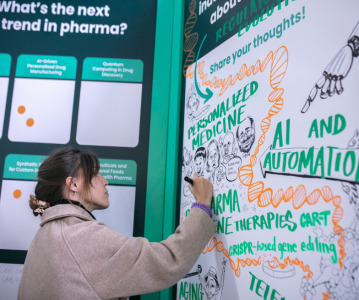
News Lessons from CPHI Milan 2024: Sunny Intervals for Pharma Manufacturing?
As the 2024 CPHI conference wrapped up in Milan, we caught up with L.E.K. Consulting – a global strategy consulting firm with deep expertise in pharma manufacturing – to discuss evolving market perspectives and business outlook. -

News US BIOSECURE Act passed by US House of Representatives
The controversial act, which has already impacted several foreign companies operating in the US, was passed by the House of Representatives on September 9, 2024. It is now headed for the US Senate before it can be signed into law by President Joe Biden... -
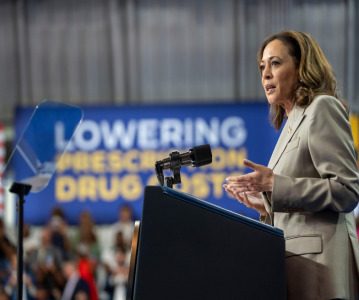
News Drug prices agreed upon as part of the US Inflation Reduction Act
The Inflation Reduction Act brought into constitution by the Biden administation in 2022, which proposed a drug price negotiation between the government and pharmaceutical companies, has reached it's first agreement.