
MRC Technology Negotiates License with Bio-Techne for MRC’s GOPAL Protein Synthesis Technology

MRC Technology, a technology transfer organisation, has negotiated a licence for a protein synthesis technology, Genetically encoded Orthogonal Protection and Activated Ligation (GOPAL), with Bio-Techne, (Techne Corp.), a global life sciences company providing innovative bioactive tools and resources for the research and clinical diagnostic communities. The GOPAL technology was originated at the MRC Laboratory of Molecular Biology.
The licence will enable Bio-Techne to develop reagent products using GOPAL. GOPAL enables the formation of site-specific isopeptide bonds between proteins. Initially GOPAL will be applied to develop ubiquitin dimers, with the potential to also develop trimers and tetramers. The technology offers an advantage over in vitro synthesis as it allows for the production of a homogenous, high quality product, via the cellular expression of ubiquitin with a protected lysine incorporated at a site-specific, user-defined site. Following purification, the specific isopeptide bond enables creation of a ubiquitin dimer.
The technology has already been validated for ubiquitin, however it may also be applied to other proteins. Boston Biochem (a Bio-Techne company) will be applying the technology to its products to determine its full potential, including investigating its use in introducing post-translational modifications into proteins for structural and functional studies.
Dr Ranmali Nawaratne, Senior Business Manager, MRC Technology, said: “We are delighted to have worked with the MRC and Bio-Techne on this license agreement. We have every confidence that the reagents produced will be of great value to researchers.”
Dr Frank Mortari, VP Corporate Development, Bio-Techne, commented: “We are very pleased to have successfully negotiated with MRC Technology the terms on a license for this valuable technology. We look forward to applying GOPAL and realising its full potential in the creation of protein reagents.”
Related News
-

News Pharmaceutical Supply Chain People Moves
The latest appointments, promotions, and structural changes across the pharmaceutical supply chain.
-

News Merck KGaA to buy US biotech SpringWorks for US$3.9 billion
The German multinational pharmaceutical company Merck KGaA have signed a deal to buy US biotech company SpringWorks Therapeutics at an equity value of US$3.9 billion in a move to add rare cancer therapeutics to their pipelines.
-

News Cassava Sciences halts Alzheimer's drug trial after limited progress
Cassava Sciences have drawn a close to their investigations and development of the drug simufilam, which they intended to be used for the treatment of Alzheimer’s disease.
-
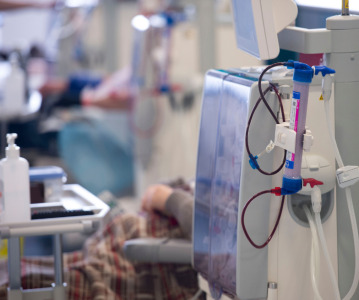
News US FDA adds haemodialysis bloodlines to devices shortage list
On March 14, 2025, the US FDA published an open letter to healthcare providers citing continuing supply disruptions of haemodialysis bloodlines, an essential component of dialysis machines.
-

News Vertex Pharmaceuticals stock jumps as FDA approves non-opioid painkiller
UK-based Vertex Pharmaceuticals saw their stock shares soar as the US FDA signed off on the non-opioid painkiller Journavx, also known as suzetrigine, for patients with moderate to severe acute pain, caused by surgery, accidents, or injuries.
-

News Lessons from CPHI Milan 2024: Sunny Intervals for Pharma Manufacturing?
As the 2024 CPHI conference wrapped up in Milan, we caught up with L.E.K. Consulting – a global strategy consulting firm with deep expertise in pharma manufacturing – to discuss evolving market perspectives and business outlook. -
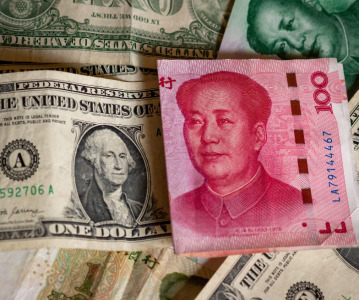
News US BIOSECURE Act passed by US House of Representatives
The controversial act, which has already impacted several foreign companies operating in the US, was passed by the House of Representatives on September 9, 2024. It is now headed for the US Senate before it can be signed into law by President Joe Biden... -
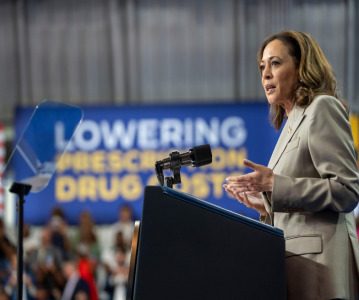
News Drug prices agreed upon as part of the US Inflation Reduction Act
The Inflation Reduction Act brought into constitution by the Biden administation in 2022, which proposed a drug price negotiation between the government and pharmaceutical companies, has reached it's first agreement.