
Mylan invalidates third Teva Copaxone 40 mg/mL patent

US Patent and Trademark Office has ruled in favour of Mylan in its inter partes review proceeding.
Mylan has announced that the US Patent and Trademark Office (PTO) has ruled in favour of Mylan in its inter partes review (IPR) proceeding and found all claims of US Patent No. 8,969,302, which is owned by Yeda Research & Development and licensed to Teva Pharmaceuticals Industries, unpatentable. This is the third patent related to Copaxone 40 mg/mL to be found unpatentable in the last week.
On 24 August, the PTO's Patent Trial and Appeal Board (PTAB) found Teva's first two patents, US Patent Nos. are 8,232,250 and 8,399,413, unpatentable in Mylan's IPR challenge of these patents.
Mylan CEO Heather Bresch commented: "Through significant investment in research and development and by challenging these invalid patents, we are working to bring a more affordable generic alternative of Copaxone to market. Challenging patents is just one of the ways that Mylan helps to ensure patient access to medicines. In the last few years alone, Mylan's patent challenges have allowed earlier access to generic competition for brand products equating to nearly $20 billion in annual brand sales product and reducing more than 60 years of patent life that otherwise could have blocked generics from entering the market."
On 15 August, the PTAB found Mylan's petition against a fourth Copaxone 40 mg/mL patent, US Patent No. 9,155,776, ineligible for post-grant review for procedural reasons. However, Mylan believes that today's favourable ruling in the IPR against the '302 patent and the earlier favourable rulings in Mylan's IPRs against the '250 and '413 patents strongly undermines the '776 patent as well. As such, Mylan will proceed with pursuing all avenues to challenge the '776 patent.
Mylan believes it is one of the first companies to have filed a substantially complete abbreviated new drug application containing a Paragraph IV certification for a three times per week Glatiramer Acetate Injection 40 mg/mL, and expects to be eligible for 180 days of marketing exclusivity in the US upon final FDA approval.
Related News
-

News Pharmaceutical Supply Chain People Moves
The latest appointments, promotions, and structural changes across the pharmaceutical supply chain.
-

News Merck KGaA to buy US biotech SpringWorks for US$3.9 billion
The German multinational pharmaceutical company Merck KGaA have signed a deal to buy US biotech company SpringWorks Therapeutics at an equity value of US$3.9 billion in a move to add rare cancer therapeutics to their pipelines.
-

News Cassava Sciences halts Alzheimer's drug trial after limited progress
Cassava Sciences have drawn a close to their investigations and development of the drug simufilam, which they intended to be used for the treatment of Alzheimer’s disease.
-
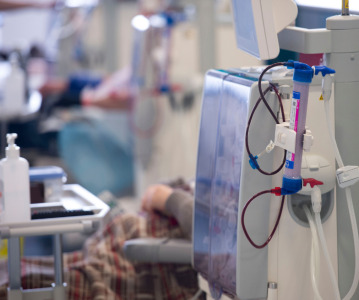
News US FDA adds haemodialysis bloodlines to devices shortage list
On March 14, 2025, the US FDA published an open letter to healthcare providers citing continuing supply disruptions of haemodialysis bloodlines, an essential component of dialysis machines.
-

News Vertex Pharmaceuticals stock jumps as FDA approves non-opioid painkiller
UK-based Vertex Pharmaceuticals saw their stock shares soar as the US FDA signed off on the non-opioid painkiller Journavx, also known as suzetrigine, for patients with moderate to severe acute pain, caused by surgery, accidents, or injuries.
-

News Lessons from CPHI Milan 2024: Sunny Intervals for Pharma Manufacturing?
As the 2024 CPHI conference wrapped up in Milan, we caught up with L.E.K. Consulting – a global strategy consulting firm with deep expertise in pharma manufacturing – to discuss evolving market perspectives and business outlook. -
News US BIOSECURE Act passed by US House of Representatives
The controversial act, which has already impacted several foreign companies operating in the US, was passed by the House of Representatives on September 9, 2024. It is now headed for the US Senate before it can be signed into law by President Joe Biden... -
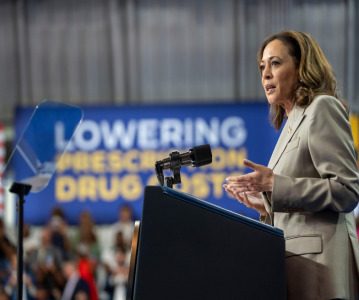
News Drug prices agreed upon as part of the US Inflation Reduction Act
The Inflation Reduction Act brought into constitution by the Biden administation in 2022, which proposed a drug price negotiation between the government and pharmaceutical companies, has reached it's first agreement.