
New Study Indicates Significant Survival Increase for Liver Transplant Patients with Advagraf

Results of a large observational study published in the American Journal of Transplantation (AJT) has demonstrated that early and sustained use of Advagraf, a once-daily immunosuppressant, offers a significant graft survival benefit in liver transplant patients over twice-daily tacrolimus (tacrolimus BID or immediate release). Tacrolimus is currently the standard of care for the prevention of organ rejection in liver transplantation.
The results of the study showed a significant graft survival benefit of 8% at 3 years (p=0.01) in liver transplant patients on Advagraf versus tacrolimus immediate release. The study, a retrospective analysis, was conducted by the European Liver Transplant Registry (ELTR), one of the largest and most robust independent registries, that holds data for 98% of liver transplants conducted in Europe.
Whereas for a large number of diseases, such as cancer and diabetes, the standardised mortality rate is falling, for liver disease, mortality rates have been increasing over the past few decades. In addition, more than 500 patients are on the UK’s active liver transplant list (as of March 2014), which is a 12% increase since 2013 and 880 transplants have taken place between 2013 and 2014 in the UK. It is also estimated that over the past 20 years, the number of potential patients in the UK who could benefit from a liver transplant has increased by 90%, whilst the number of available donations has remained the same.
Both Advagraf and tacrolimus immediate release are immunosuppressants licensed for the prevention of organ rejection in patients receiving Liver and Kidney transplants. Due to its distinctive pharmacokinetic profile, Advagraf offers patients a more convenient reduced pill intake, as it permits once daily administration, over tacrolimus immediate release which is twice daily.
Dr Varuna Aluvihare, Consultant Hepatologist, King’s College, London said: “A graft survival benefit means better patient survival, meaning that for every 13 patients treated with Advagraf, we could potentially save 1 life when compared to people being treated with the usual twice daily tacrolimus. Whilst we do not know the underlying reason for this benefit, it is exciting to speculate that this may due to some benefits inherent in this formulation of tacrolimus, as well as the undoubted fact that patients find it easier to take.”
Andrew Langford from the British Liver Trust said: “We know that, compared to other major diseases, liver disease mortality is increasing at an alarming rate over the past 30 years and is the UK’s third commonest cause of premature death. Although liver transplant is a life saver for some, it is concerning that around a quarter of patients will still die within five years of their transplant.”
“Therefore, the data we are seeing from the ELTR’s real-world study are very significant and an increase in graft survival has important implications for patient survival. In addition, reducing from twice daily to once daily has a positive impact on a person’s quality of life.”
Dr Alan McDougall, Medical Director, Astellas Pharma Ltd UK said: “Astellas are dedicated to delivering innovative and high quality treatments to patients. These real-world data suggest that the once daily formulation of Advagraf, when compared to twice daily immediate release tacrolimus, has the potential to benefit hundreds of liver transplant patients in the UK.”
The benefit was still seen when the propensity score matching (population number n=810) for baseline characteristics was applied and Advagraf continued to demonstrate an observed 8% reduction in graft loss at 3 years vs. tacrolimus immediate release.
Related News
-

News Pharmaceutical Supply Chain People Moves
The latest appointments, promotions, and structural changes across the pharmaceutical supply chain.
-

News Merck KGaA to buy US biotech SpringWorks for US$3.9 billion
The German multinational pharmaceutical company Merck KGaA have signed a deal to buy US biotech company SpringWorks Therapeutics at an equity value of US$3.9 billion in a move to add rare cancer therapeutics to their pipelines.
-

News Cassava Sciences halts Alzheimer's drug trial after limited progress
Cassava Sciences have drawn a close to their investigations and development of the drug simufilam, which they intended to be used for the treatment of Alzheimer’s disease.
-
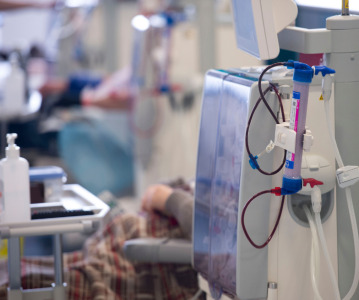
News US FDA adds haemodialysis bloodlines to devices shortage list
On March 14, 2025, the US FDA published an open letter to healthcare providers citing continuing supply disruptions of haemodialysis bloodlines, an essential component of dialysis machines.
-

News Vertex Pharmaceuticals stock jumps as FDA approves non-opioid painkiller
UK-based Vertex Pharmaceuticals saw their stock shares soar as the US FDA signed off on the non-opioid painkiller Journavx, also known as suzetrigine, for patients with moderate to severe acute pain, caused by surgery, accidents, or injuries.
-

News Lessons from CPHI Milan 2024: Sunny Intervals for Pharma Manufacturing?
As the 2024 CPHI conference wrapped up in Milan, we caught up with L.E.K. Consulting – a global strategy consulting firm with deep expertise in pharma manufacturing – to discuss evolving market perspectives and business outlook. -

News US BIOSECURE Act passed by US House of Representatives
The controversial act, which has already impacted several foreign companies operating in the US, was passed by the House of Representatives on September 9, 2024. It is now headed for the US Senate before it can be signed into law by President Joe Biden... -
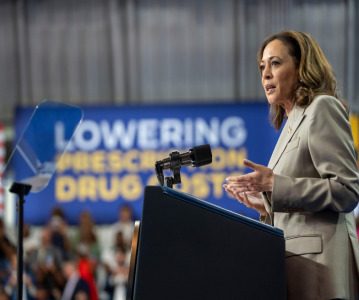
News Drug prices agreed upon as part of the US Inflation Reduction Act
The Inflation Reduction Act brought into constitution by the Biden administation in 2022, which proposed a drug price negotiation between the government and pharmaceutical companies, has reached it's first agreement.