
Omega-3s from fish oil supplements no better than placebo for dry eye
NIH-funded study finds omega-3 fails to yield beneficial results in the clinic.
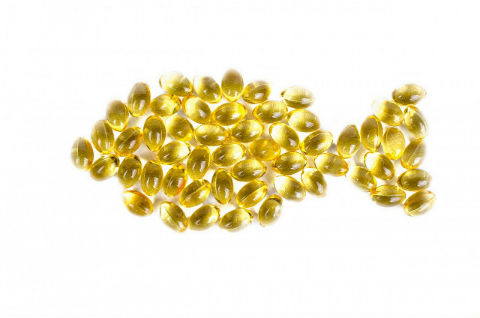
Omega-3 fatty acid supplements taken orally proved no better than placebo at relieving symptoms or signs of dry eye, according to the findings of a well-controlled trial funded by the National Eye Institute (NEI), part of the National Institutes of Health.
“The trial provides the most reliable and generalizable evidence thus far on omega-3 supplementation for dry eye disease,” said Maryann Redford, program officer for clinical research at NEI. Despite insufficient evidence establishing the effectiveness of omega-3s, clinicians and their patients have been inclined to try the supplements for a variety of conditions with inflammatory components, including dry eye. “This well-controlled investigation conducted by the independently-led Dry Eye Assessment and Management (DREAM) Research Group shows that omega-3 supplements are no better than placebo for typical patients who suffer from dry eye.”
The 27-center trial enrolled 535 participants with at least a 6-month history of moderate to severe dry eye. Among them, 349 people were randomly assigned to receive 3 g daily of fish-derived omega-3 fatty acids in five capsules. Each daily dose contained 2000 mg eicosapentaenoic acid (EPA) and 1000 mg docosahexaenoic acid (DHA). This dose of omega-3 is the highest ever tested for treating dry eye disease. The 186 people randomly assigned to the placebo group received 5 g daily of olive oil (about 1 teaspoon) in identical capsules. Study participants and the researchers did not know their group assignment.
Blood tests at 12 months confirmed that 85% of people in the omega-3 group were still compliant with the therapy. In the omega-3 group, mean EPA levels quadrupled versus no change in the placebo group. Mean levels of oleic acid, the constituent of olive oil, remained stable in both treatment groups.
Importantly, unlike in most industry-sponsored trials, all participants were free to continue taking their previous medications for dry eye, such as artificial tears and prescription anti-inflammatory eye drops.
“Omega-3s are generally used as an add-on therapy. The study results are in the context of this real-world experience of treating symptomatic dry eye patients who request additional treatment,” said study chair for the trial, Penny A. Asbell, of the Department of Ophthalmology at the Icahn School of Medicine at Mount Sinai in New York City.
Patient-reported symptoms were measured as change from baseline in the Ocular Surface Disease Index, a 100-point scale for assessing dry eye symptoms, with higher values representing greater severity. After 12 months, mean symptoms scores for people in both groups had improved substantially, but there was no significant difference in the degree of symptom improvement between the groups. Symptom scores improved by a mean of 13.9 points in the omega-3 group and 12.5 points in the placebo group. A reduction of at least 10 points on the index is considered significant enough for a person to notice improvement. Overall, 61% of people in the omega-3 group and 54% of those in the control group achieved at least a 10-point improvement in their symptom score, but the difference between the groups was not statistically significant.
Likewise, there were no significant differences between the groups in terms of improvement in signs of dry eye. Signs of dry eye were evaluated by the clinician using standardized tests that measure the amount and quality of tears and the integrity of the cornea and the conjunctiva, the surface tissue that covers the front of the eye.
“The findings also emphasize the difficulty in judging whether a treatment really helps a particular dry eye patient,” said the leader of the coordinating center for the study, Maureen G. Maguire, of the Department of Ophthalmology at the Perelman School of Medicine at the University of Pennsylvania, Philadelphia. “More than half the people taking placebo reported substantial symptom improvement during the year-long study.”
“The results of the DREAM study do not support use of omega-3 supplements for patients with moderate to severe dry eye disease,“ Dr. Asbell concluded.
Dry eye disease occurs when the film that coats the eye no longer maintains a healthy ocular surface, which can lead to discomfort and visual impairment. The condition affects an estimated 14% of adults in the US. The paper was published online April 13 in the New England Journal of Medicine.
Related News
-

News Pharmaceutical Supply Chain People Moves
The latest appointments, promotions, and structural changes across the pharmaceutical supply chain.
-

News Merck KGaA to buy US biotech SpringWorks for US$3.9 billion
The German multinational pharmaceutical company Merck KGaA have signed a deal to buy US biotech company SpringWorks Therapeutics at an equity value of US$3.9 billion in a move to add rare cancer therapeutics to their pipelines.
-

News Cassava Sciences halts Alzheimer's drug trial after limited progress
Cassava Sciences have drawn a close to their investigations and development of the drug simufilam, which they intended to be used for the treatment of Alzheimer’s disease.
-

News US FDA adds haemodialysis bloodlines to devices shortage list
On March 14, 2025, the US FDA published an open letter to healthcare providers citing continuing supply disruptions of haemodialysis bloodlines, an essential component of dialysis machines.
-

News Vertex Pharmaceuticals stock jumps as FDA approves non-opioid painkiller
UK-based Vertex Pharmaceuticals saw their stock shares soar as the US FDA signed off on the non-opioid painkiller Journavx, also known as suzetrigine, for patients with moderate to severe acute pain, caused by surgery, accidents, or injuries.
-

News Lessons from CPHI Milan 2024: Sunny Intervals for Pharma Manufacturing?
As the 2024 CPHI conference wrapped up in Milan, we caught up with L.E.K. Consulting – a global strategy consulting firm with deep expertise in pharma manufacturing – to discuss evolving market perspectives and business outlook. -

News US BIOSECURE Act passed by US House of Representatives
The controversial act, which has already impacted several foreign companies operating in the US, was passed by the House of Representatives on September 9, 2024. It is now headed for the US Senate before it can be signed into law by President Joe Biden... -

News Drug prices agreed upon as part of the US Inflation Reduction Act
The Inflation Reduction Act brought into constitution by the Biden administation in 2022, which proposed a drug price negotiation between the government and pharmaceutical companies, has reached it's first agreement.