
Open letter challenges EU Commission on medicine supply chain

In an open letter to the European Commission, Medicines for Europe calls for a new medicine security contract with their goal to improve access to medicine and ensure a secure supply chain to Europe.
Due to the major disruption of the last few years, the pandemic, the economic downturn, the increasing energy crisis, and massive geopolitical turmoil, availability of medicines is at serious risk in the EU, and could lead to a major shortage.
The increasing costs of raw materials, manufacturing, packaging, and transport are making it more difficult to meet demand, especially as price caps applied to medicines are not being equally adjusted in line with inflation.
Medicines for Europe are adamant about the occurrence of further shortages in medicines in 2023, and in this open letter to the European Commission, call for EU regulators and member states to reform and work on contingency plans to mitigate these very real risks.
The letter initially details the root cause of supply chain issues, mostly putting it down to a series of cost reduction tactics and price caps, alongside an increase in demand meaning a scale-up in production, which is necessary and expected, even with the aforementioned cost reductions. Medicines for Europe stress that there is no capacity in the supply chain for meeting a surge in demand, leaving them vulnerable.
Events of the past few years, granted many unforeseen, have left the pharmaceutical industry on it’s knees due to a lack of effective mitigation.
Brexit facilitated the severance of the UK (a major player in the market) from the EU; the COVID-19 pandemic led to the addition of costly new hygiene measures, that had to be put in place whilst the demand on the industry to develop and scale up medicines had never been higher. The invasion of Ukraine by Russia added to the demand for emergency medicine, while the resulting rise in inflation crippled companies due to capped pricing as part of the EU measures. The COVID-19 policy in China disrupted supply chains, the result of which has been felt by companies on a global scale. All of these impacts have been absorbed by the pharmaceutical industry, leading to a build-up of economic stress.
Medicines for Europe have responded to this crisis with a series of suggestions for short- and medium-term mitigation strategies.
Short term
1. Regulatory flexibility
As the industry proved during the pandemic, given certain exceptions, a surge in demand can be met. What we need to do now is to learn from this – what worked and what didn’t – and apply this to updated regulations for a range of situations. Emergency use approval of drugs, packaging flexibility to be able to reallocate drugs, and changes to measures pertaining to shelf-life and localised regulations.
2. Open a conversation around generic medicines and cost of inflation
Currently EU member states are polarised on the issue, with some overturning laws to ensure prices can change to reflect inflation, and others are leaning into further price reductions under the guise of clawback taxes. Some open communication could lead to a healthy compromise.
3. Improving preparedness around demand surges by more data sharing
Informing the pharma industry about potential shortages earlier can allow for adaptions to optimise the supply chain for greater efficiency. Sharing of epidemiological data can also help to predict outbreaks of infectious diseases and ready the industry to meet a spike in demand in a certain field.
Medium term
1. Increasing the efficiency of the EU Pharmaceutical Strategy
The letter suggests that processes should be consolidated and standardised across platforms, removing archaic steps though automation and digitalisation. This would come along with a commitment to take advantage of big data in the industry and use the information provided to better mitigate risk factors.
2. Secure the supply chain in generics
By putting in place legal guidance in regard to implementation of supply criteria in the Public Procurement Directive. They also encourage The Commission to confer with the Transparency Commission on the possibility of re-imaging the Transparency Directive in the context of providing security in the supply chain. Similar measures have already been implemented in other countries, such as Canada and Germany.
3. Diversification in manufacturing
Especially towards more green technologies. Aid and investment will depend on how flexible and innovative the industry shows it can be, with the production of medicines and APIs through greater automation and more sustainable processes. Things that would also help to secure the supply chain and respond to changes in demand.
Medicines for Europe stresses that they don’t intend to encourage a reactionary response from the EU on this matter, with little consideration for long term effects, but rather coming up with a plan with durable strategies for the industry.
The letter concludes with:
“Europe is facing major shortage risks this year. We want to work with you to make short- and medium-term changes to prevent medicine shortages in the future. We look forward to working with you on a new contract for medicines security in Europe.”
To read the full letter to The Commission click the link below.
Related News
-

News Pharmaceutical Supply Chain People Moves
The latest appointments, promotions, and structural changes across the pharmaceutical supply chain.
-

News Merck KGaA to buy US biotech SpringWorks for US$3.9 billion
The German multinational pharmaceutical company Merck KGaA have signed a deal to buy US biotech company SpringWorks Therapeutics at an equity value of US$3.9 billion in a move to add rare cancer therapeutics to their pipelines.
-

News Cassava Sciences halts Alzheimer's drug trial after limited progress
Cassava Sciences have drawn a close to their investigations and development of the drug simufilam, which they intended to be used for the treatment of Alzheimer’s disease.
-
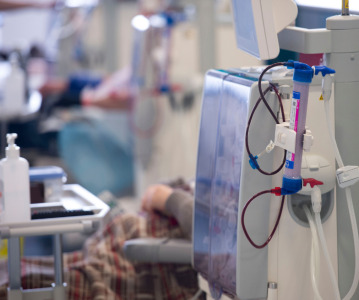
News US FDA adds haemodialysis bloodlines to devices shortage list
On March 14, 2025, the US FDA published an open letter to healthcare providers citing continuing supply disruptions of haemodialysis bloodlines, an essential component of dialysis machines.
-

News Vertex Pharmaceuticals stock jumps as FDA approves non-opioid painkiller
UK-based Vertex Pharmaceuticals saw their stock shares soar as the US FDA signed off on the non-opioid painkiller Journavx, also known as suzetrigine, for patients with moderate to severe acute pain, caused by surgery, accidents, or injuries.
-

News Lessons from CPHI Milan 2024: Sunny Intervals for Pharma Manufacturing?
As the 2024 CPHI conference wrapped up in Milan, we caught up with L.E.K. Consulting – a global strategy consulting firm with deep expertise in pharma manufacturing – to discuss evolving market perspectives and business outlook. -
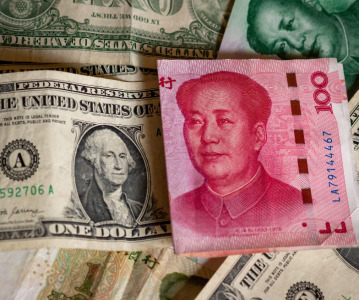
News US BIOSECURE Act passed by US House of Representatives
The controversial act, which has already impacted several foreign companies operating in the US, was passed by the House of Representatives on September 9, 2024. It is now headed for the US Senate before it can be signed into law by President Joe Biden... -
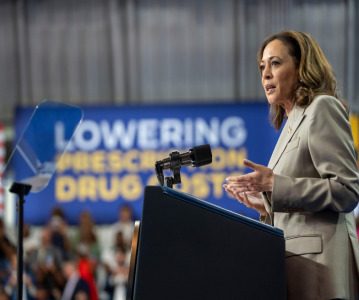
News Drug prices agreed upon as part of the US Inflation Reduction Act
The Inflation Reduction Act brought into constitution by the Biden administation in 2022, which proposed a drug price negotiation between the government and pharmaceutical companies, has reached it's first agreement.