
Partnership in AI and machine learning for target discovery

LifeArc and Milner Therapeutics Institute to develop, validate and integrate cutting-edge machine learning approaches into drug discovery processes.
LifeArc and the Milner Therapeutics Institute at the University of Cambridge have announced a new partnership to identify and validate new drug targets in immuno-oncology and respiratory diseases. Under this new collaborative project, cutting-edge machine learning approaches will be developed, validated and integrated into drug discovery processes to identify novel therapeutic targets, stratify patient populations, and predict efficacy of new and existing drugs.
Combining the drug discovery expertise of LifeArc with the machine-learning and bioinformatics expertise of the Milner Therapeutics Institute will facilitate the identification and selection of novel targets for drug discovery. Data generated will enhance the design of key experiments to validate and prioritise targets. Scientists involved in this project will be co-located at LifeArc and the Milner Therapeutics Institute to take full advantage of both environments.
Prof Tony Kouzarides, Director of the Milner Therapeutics Institute said: “We are delighted to be working closely with LifeArc in applying artificial intelligence and machine learning approaches to drug discovery. There is a lot of interest in these methods for the potential benefit patients. The drug discovery insight and investment from LifeArc will be important in realising this.”
Dr Justin Bryans, Executive Director, Drug Discovery at LifeArc said: "Drug discovery is a long and risky process and our collaboration with the Milner Therapeutics Institute represents a powerful way to unlock new potential approaches to help patients. We are excited about the opportunity to work at the interface of drug discovery and AI, and apply the knowledge in this field to help expedite the delivery of new treatments to patients.”
Related News
-

News Pharmaceutical Supply Chain People Moves
The latest appointments, promotions, and structural changes across the pharmaceutical supply chain.
-

News Merck KGaA to buy US biotech SpringWorks for US$3.9 billion
The German multinational pharmaceutical company Merck KGaA have signed a deal to buy US biotech company SpringWorks Therapeutics at an equity value of US$3.9 billion in a move to add rare cancer therapeutics to their pipelines.
-
News Cassava Sciences halts Alzheimer's drug trial after limited progress
Cassava Sciences have drawn a close to their investigations and development of the drug simufilam, which they intended to be used for the treatment of Alzheimer’s disease.
-
News US FDA adds haemodialysis bloodlines to devices shortage list
On March 14, 2025, the US FDA published an open letter to healthcare providers citing continuing supply disruptions of haemodialysis bloodlines, an essential component of dialysis machines.
-

News Vertex Pharmaceuticals stock jumps as FDA approves non-opioid painkiller
UK-based Vertex Pharmaceuticals saw their stock shares soar as the US FDA signed off on the non-opioid painkiller Journavx, also known as suzetrigine, for patients with moderate to severe acute pain, caused by surgery, accidents, or injuries.
-
News Lessons from CPHI Milan 2024: Sunny Intervals for Pharma Manufacturing?
As the 2024 CPHI conference wrapped up in Milan, we caught up with L.E.K. Consulting – a global strategy consulting firm with deep expertise in pharma manufacturing – to discuss evolving market perspectives and business outlook. -
News US BIOSECURE Act passed by US House of Representatives
The controversial act, which has already impacted several foreign companies operating in the US, was passed by the House of Representatives on September 9, 2024. It is now headed for the US Senate before it can be signed into law by President Joe Biden... -
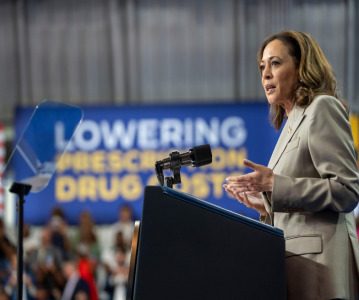
News Drug prices agreed upon as part of the US Inflation Reduction Act
The Inflation Reduction Act brought into constitution by the Biden administation in 2022, which proposed a drug price negotiation between the government and pharmaceutical companies, has reached it's first agreement.