
Pew and Other Groups Identify Potential Measures to Address Drug Shortages

Pew and other health care organizations have released a report exploring measures that should be considered to address the ongoing issue of drug shortages in the US, which impacts lifesaving medicines including antibiotics, chemotherapy and cardiovascular drugs. The report summarizes manufacturing, regulatory, and economic issues related to drug shortages, as well as potential solutions identified at a 2014 Summit attended by 22 stakeholder groups, including health care professionals, nonprofit organizations, industry, public interest and government agencies.
The report explores the potential manufacturing, economic, and regulatory causes of drug shortages, and considers several possible solutions that merit further exploration, including
• Improving quality systems in pharmaceutical manufacturing to better prevent production problems that can lead to shortages by encouraging companies to foster a corporate quality culture, and use FDA’s set of quality metrics to support early collaboration between manufacturers and the agency.
• Identifying regulatory efficiencies, such as synchronizing reviews by regulators in different countries to shorten the overall time for full approvals for facility upgrades.
• Allowing for commercialization of trial batches of drugs that meet quality specifications to help mitigate losses during the approval process for upgrades to plants or production lines.
• Incentivizing manufacturer investments in capacity and reliability by increasing contractual penalties for failing to supply a product, and also allowing price increases.
• Supporting the market through better guarantees of demand by committing to the purchase of specified volumes of drugs vulnerable to shortage, either by a group purchasing organization or through a government program.
• Establishing limited and/or shared exclusivity agreements to incentivize companies to produce needed drugs where there are no active producers.
• Standardizing commonly used doses and concentrations in unit-o-fuse packaging to reduce waste and avoid contamination.
The 2014 Drug Shortages Summit was organized by the American Hospital Association, the American Society of Anesthesiologists, the American Society of Clinical Oncology, the American Society of HealthSystem Pharmacists, the Institute for Safe Medication Practices, and The Pew Charitable Trusts. Previous summits
were held in 2010 and 2013.
Related News
-

News Pharmaceutical Supply Chain People Moves
The latest appointments, promotions, and structural changes across the pharmaceutical supply chain.
-

News Merck KGaA to buy US biotech SpringWorks for US$3.9 billion
The German multinational pharmaceutical company Merck KGaA have signed a deal to buy US biotech company SpringWorks Therapeutics at an equity value of US$3.9 billion in a move to add rare cancer therapeutics to their pipelines.
-

News Cassava Sciences halts Alzheimer's drug trial after limited progress
Cassava Sciences have drawn a close to their investigations and development of the drug simufilam, which they intended to be used for the treatment of Alzheimer’s disease.
-

News US FDA adds haemodialysis bloodlines to devices shortage list
On March 14, 2025, the US FDA published an open letter to healthcare providers citing continuing supply disruptions of haemodialysis bloodlines, an essential component of dialysis machines.
-

News Vertex Pharmaceuticals stock jumps as FDA approves non-opioid painkiller
UK-based Vertex Pharmaceuticals saw their stock shares soar as the US FDA signed off on the non-opioid painkiller Journavx, also known as suzetrigine, for patients with moderate to severe acute pain, caused by surgery, accidents, or injuries.
-

News Lessons from CPHI Milan 2024: Sunny Intervals for Pharma Manufacturing?
As the 2024 CPHI conference wrapped up in Milan, we caught up with L.E.K. Consulting – a global strategy consulting firm with deep expertise in pharma manufacturing – to discuss evolving market perspectives and business outlook. -

News US BIOSECURE Act passed by US House of Representatives
The controversial act, which has already impacted several foreign companies operating in the US, was passed by the House of Representatives on September 9, 2024. It is now headed for the US Senate before it can be signed into law by President Joe Biden... -
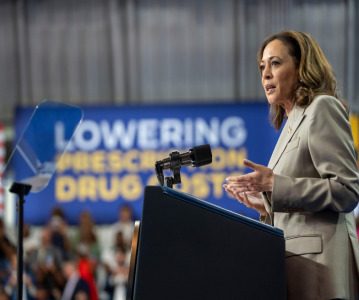
News Drug prices agreed upon as part of the US Inflation Reduction Act
The Inflation Reduction Act brought into constitution by the Biden administation in 2022, which proposed a drug price negotiation between the government and pharmaceutical companies, has reached it's first agreement.